In France, people often wonder whether horseback riding is a sport or just a chic pastime. Is it a Sunday activity or a serious sport? Riders often say that it is physically demanding, that they sweat, and that they set specific goals.
If we look at the numbers, it becomes clearer. According to the 2016 Nature Sports and Leisure Barometer, 4,014 French people were surveyed. This study proves that horseback riding attracts many people, and not just those we might imagine.
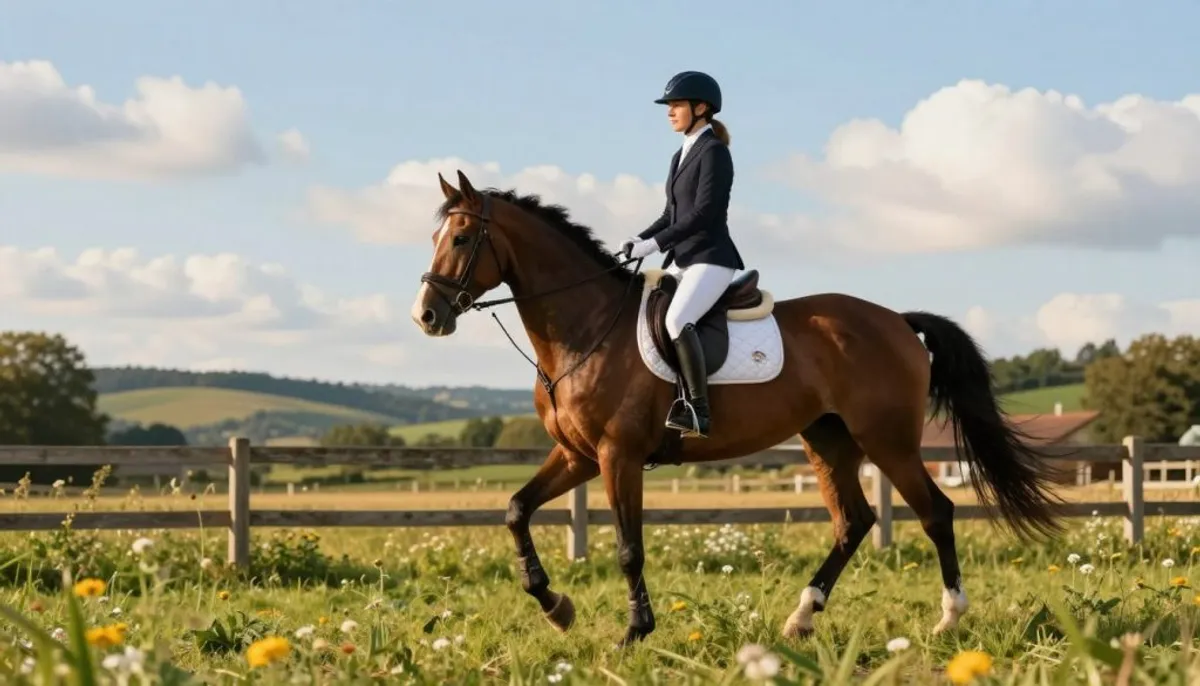
During a riding session, it is physical. You need to maintain your posture, improve your coordination, and manage your balance and breathing. For most people, it is a real sport. Then, there is the horse. It can be unpredictable, making the session more challenging.
The subject goes beyond the physical. It also involves clubs, coaching, and the moments shared with family and friends. Events like Lamotte-Beuvron are crucial. Finally, there is the economic aspect, with the cost of maintaining a horse and the importance of this sector in France.
Key Points
- The question is horseback riding a sport often contrasts sport, leisure, and performance.
- French data allows us to position horseback riding as a large-scale sporting activity.
- Riding a horse involves real physical activity: posture, core strength, and coordination.
- The horse acts as a partner, making the sport exercise more complex and demanding.
- The sporting practice relies on clubs, rules, and a collective culture.
- Competition, events, and costs show a discipline that is both sporty and organized.
Overview of Horseback Riding in France: A Mass Sporting Practice
In France, many people ride horses. You can ride at a club, go for rides, or participate in competitions. For some, wondering whether horseback riding is a sport comes from seeing the effort it requires, the technique, and how one must be with the horse.
We see many different people practicing horseback riding. Whether you are a beginner or experienced, it is a good physical activity. It requires good coordination of movements, maintaining good posture, and staying attentive. When talking about horseback riding, one quickly realizes that practicing regularly is as important as being skilled.
2.7 million enthusiasts and 5.8% of the French population involved over 12 months
The numbers are clear about its popularity. In 2016, about 2.7 million people said they had ridden at least once in the year. This concerns 5.8% of the French population aged 15 to 70.
Many people ride horses, not just for competition. This includes lessons for beginners, riding in arenas, and excursions. Horseback riding is truly a physical activity, even if done for pleasure.
Regularity of Practice: All Year Round, During Holidays, or Occasionally
Practice habits vary. Some ride every week, while others take advantage of holidays to do so. This flexibility makes horseback riding accessible, regardless of one’s schedule.
| Declared Rhythm | Share of Practitioners | What It Reflects |
|---|---|---|
| All year round | 41% | Established habit, monitored progress, regular coaching |
| During holidays | 19.7% | Intensive courses, re-riding, more focused discovery |
| Only at certain times | 10.9% | Seasonal return, weather, occasional goals |
| Occasionally throughout the year | 28.4% | Flexible practice, sessions depending on weather and budget |
More than a million regular practitioners: what this says about commitment
Many practice horseback riding regularly. They make up about 2.4% of the population, which is over a million people. It is often said that 39% of riders will ride each week.
Owning a horse is more than just taking lessons. You have to take care of it, prepare it, and sometimes transport it. This is where many realize how sporty horseback riding is. The practice goes beyond the time spent in the saddle and includes the physical activity of the week.
Is Horseback Riding a Sport: Definition, Criteria, and Debate in France
Many wonder if horseback riding is considered a sport in France. We often see riders training but also families going for horseback rides. Looking more closely at the physical work involved makes it seem more evident. Horseback riding combines sensation, technique, and preparation, bringing it closer to a true sport.
What complicates the debate is the mix of pleasure, learning, and performance. Special equipment, space, and often a coach are needed. Compared to other activities that are easier to start, this changes how we view horseback riding.
Physical Activity, Effort, Technical Progression: Markers of a Sporting Exercise
When riding a horse, it is not just about sitting still. The rider works their torso, uses their abs, breathes well, and controls their legs. With movements like trotting or galloping, the effort is noticeable through posture and the organization of movements.
There is always a goal to improve technically in horseback riding. Training aims to perfect the position, the contact with the horse, and precision. We follow routines: we start by warming up, then do exercises, and finish by calming down and stretching.
| Observed Criteria | What the Rider Does | What is Measured in the Session |
|---|---|---|
| Effort | Core strength, balance control, leg and hip action | Fatigue, frequency of breaks, ability to maintain gesture quality |
| Technical Progression | Adjustment of aids, trajectories, transitions, precision | Regularity, accuracy, reduction of repeated errors |
| Coordination | Hand-leg dissociation, timing, adaptation to the horse's rhythm | Fluidity, upper body stability, continuity of movement |
| Posture | Alignment, tone, targeted relaxation | Symmetry, stability while turning, horse comfort |
The Role of the Horse: Living Partner, Factor of Uncertainty and Performance
Horseback riding is unique because you interact with a living horse. It is a partner that feels stress, noise, and reacts to the environment. The rider must therefore be very attentive to the horse's reactions and adapt quickly.
To succeed, you must take care of your horse and communicate well. Proper warming up, choosing the right equipment, and managing energy are crucial. A rider trains both on the horse and by observing its daily behavior.
Sport or Leisure? Why Horseback Riding Sometimes Blurs the Categories
In the same place, you can find different equestrian activities. This can range from a simple ride to intensive training. This variety can lead to the impression that horseback riding is not always taken as a sport. But depending on the intensity and purpose, it remains an important physical activity.
Equipment and infrastructures play a significant role. Having access to a well-equipped stable with professionals reassures and guides riders. This may seem more like a leisure activity, but the physical efforts and technical progression are indeed those of an athlete.
Sporting Equestrianism and Equestrian Sport: What Disciplines and What Requirements?
In France, sporting equestrianism is more than just a sport. It is a blend of training and daily life. It requires teamwork between the rider and their horse. Everything relies on good technique and regular horse maintenance.
Show Jumping, Dressage, Eventing, Cross-Country, Vaulting: Codified Sporting Disciplines
Show jumping requires precision, rhythm, and clear trajectories. Dressage demands finesse in every movement. Each event has its own rules and ways of being judged.
Eventing is a test of versatility and endurance. Cross-country challenges the ability to anticipate and stay calm. Vaulting requires balance and coordination on a moving horse.
Races, whether mounted or in sulkies, emphasize speed. However, safety and horse training are crucial.
Leisure vs. Equestrian Competition: Intensity, Goals, and Preparation
In leisure, everyone progresses at their own pace without a specific goal. It is an opportunity to have fun with various activities like horseback archery.
In competition, the stakes are different. You aim to measure yourself and excel. Preparation becomes more intense, with coaching and a tight schedule.
| Aspect | Leisure | Equestrian Competition |
|---|---|---|
| Objective | Discover, relax, progress without pressure | Surpass oneself, aim for a ranking, validate a level |
| Rhythm | Flexible, depending on time and desire | Structured, with cycles and regularity |
| Preparation | Simple warm-up, standard equipment | Training plan, course strategy, recovery |
| Organization | Occasional outings, few constraints | Transport, schedules, relaxation, reconnaissance, paperwork, and equipment |
Categories and Formats: Solo, Team, Races, and Hybrid Practices
Events can be individual or team-based, changing how they are approached. In show jumping, the rider-horse relationship must be perfect. For eventing, one must manage their effort well.
There are competitions that combine fun and technique. In any case, sporting equestrianism demands strong commitment from the human and great respect for the horse.
A Highly Structured Sporting Practice: Clubs, Associative and Commercial Structures
In France, horseback riding is not decided at the last minute. It requires specific locations, set times, and a whole system to ensure the safety of riders and horses. Daily life in this sport is as crucial as the training itself.
Infrastructures play a significant role in learning. Between training grounds, equipment, and coaching, they make the activity feasible and enjoyable. This also helps to progress, whether for pleasure or competition.
Where Riders Ride: Predominantly Associative Structures and Commercial Offerings
Most riders prefer associations, often linked to a local club. Some choose the varied services of a commercial structure. A small portion prefers to ride independently, often through owners or small groups.
| Place of Practice (France, 2016) | Share of Practitioners | What This Implies Daily |
|---|---|---|
| Associative Structure | 56% | Club life, group lessons, shared facilities, friendly atmosphere |
| Commercial Structure | 16% | Varied service offerings, different time slots, sometimes more services around the horse |
| Independent Practice | 32% | Personal organization, access to manage grounds, more direct responsibilities |
Independence and Supervision: Why Infrastructure Matters More Than in Other Sports
Horseback riding is more than just exercise. It is cooperating with a living animal that can be unpredictable. Hence the need for safe facilities and precise rules.
At least 39% of riders benefit from supervision. On the other hand, 23% do not. Less than half of these seek advice from other riders, which is 9% of the total.
The need for infrastructure is also explained by maintenance: surfaces, obstacles, lighting—this all costs time and money. Clubs and commercial structures often ensure these needs in the long term.
Events and Gatherings: A Sporting Culture Beyond Competition
The equestrian community does not live solely for competitions. Nearly 39% of riders never participate in sporting events. However, 42% attend at least twice a year for friendly activities or training.
This atmosphere stimulates motivation and enriches the practice of horseback riding. Opportunities abound: hikes, various training sessions, club activities. The social dimension of this sport is strong, even without a competitive spirit.
Who Are the Riders in France? Profile, Age, Level, and Motivations
Is horseback riding really a sport? To find out, let’s look at who the riders are. Their varied activities, between leisure and competition, fuel this debate. The practice changes according to their schedules.
A Predominantly Female and Relatively Young Activity
The majority of riders in France are women, 67% to be precise. Looking at age, 44% are between 15 and 29 years old. Those aged 30-49 represent 39%, and those over 50 years old make up 17%.
Equestrian clubs see 20% of young students and students. The working population is 60%, and retirees make up 7%. The atmosphere changes according to the times. The benefits of horseback riding are as important as the results. They include better breathing, posture, self-confidence, and a bond with the horse.
Declared Level: Beginner, Intermediate, Good Level, Expert
Riders often clearly assess their level. 35% see themselves as intermediate. 22% think they have a good level, and 19% consider themselves experts. Beginners make up 23%.
The type of training varies according to individual goals. A beginner rider does not have the same ambitions as an experienced rider.
| Declared Profile | Share of Riders | What This Often Changes in the Session | Frequent Expectations |
|---|---|---|---|
| Beginner or Almost | 23% | Learning aids, mounting, safety | Feeling comfortable, progressing quickly |
| Intermediate Level (3/5) | 35% | Regularity, work on balance and precision | Gaining control, varying disciplines |
| Good Level (4/5) | 22% | Technical goals, more structured preparation | Becoming more efficient, sometimes competing |
| Expert (5/5) | 19% | Fine management of the horse, strategy, consistency | Optimizing the partnership, aiming for demanding events |
Starting Early: The Role of Family, Friends, and Clubs (Median Age Around 12 Years)
Most start horseback riding around the age of 12. Beginnings are often with family for 34%, at a club for 36%. With friends for 30%, and a few, 4%, through colleagues or school. A notable detail: 18% start alone.
Sporty parents have a significant influence, with 70% of riders having them. Horseback riding often becomes part of an active lifestyle. Riders engage in an average of 6.4 outdoor activities per year. Hiking, cycling, and mountain biking are the most popular. This attracts already active people who enjoy being outdoors.
Horseback Riding and Physical Activity: What Physical Demands for the Equestrian Athlete?
When riding a horse, the body is always active. The equestrian athlete must maintain their balance while following the horse's movements. This makes each session a true sporting activity. Although the effort is not always visible, it is real and constant during the meticulous adjustments at each step of the horse.
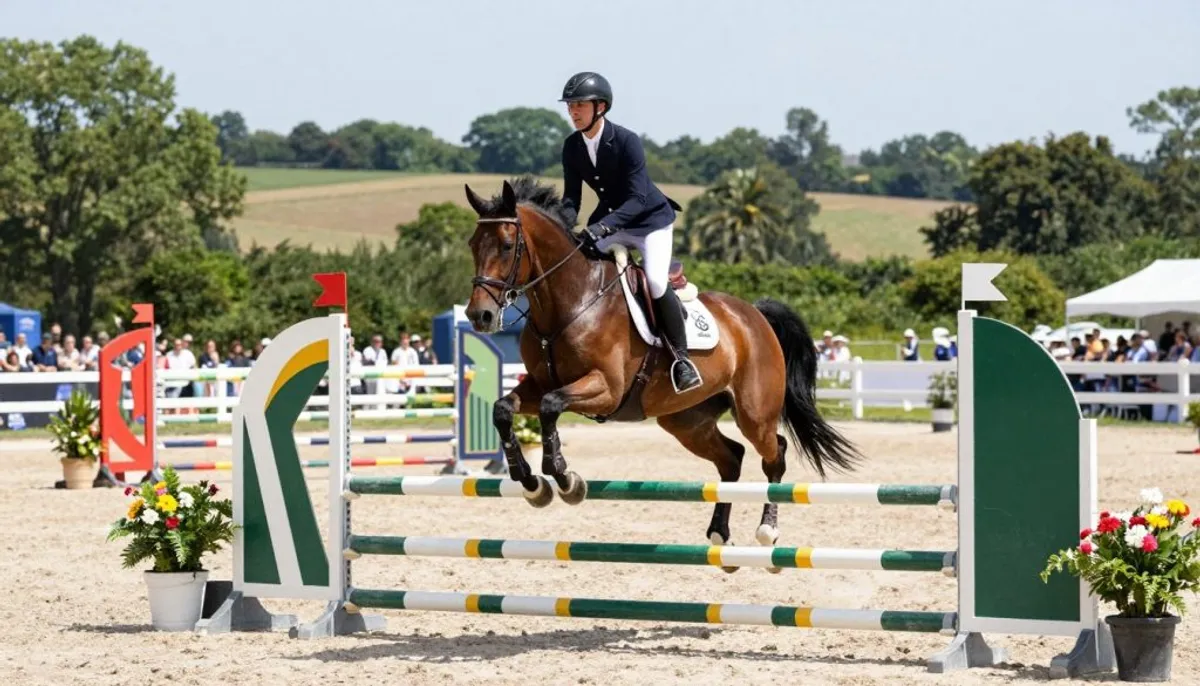
The method is simple: as the horse moves, the rider absorbs and rebalances their body. If the horse's pace changes, the rider adjusts their torso and keeps their shoulders relaxed. This resembles a mental endurance exercise rather than an intense physical effort.
Posture, core strength, coordination: The torso is constantly engaged. The deep muscles activate to keep the rider upright. The hands and legs provide the necessary aids for good control. Thanks to this coordination, the rider avoids being thrown off by the movement and maintains a steady ride.
Whether making a circle, transitioning, or jumping, the key is stability. Excessive movement of the pelvis or a too-rigid torso can throw one off balance. The athlete learns to remain dynamic without tensing up.
Balance and dissociation: it is a unique motor skill. The upper body remains calm while the rest follows the movement. This is crucial in varied terrain or when the horse reacts suddenly to its environment.
During the rising trot, outdoor gallops, or over a jump course, the rider adjusts quickly. This makes horseback riding a sport where concentration is as important as physical strength. Over time, these adjustments become more natural and automatic.
Physical condition and prevention: Daily activities with the horse also contribute to physical fitness. Grooming, care, leading on foot, and preparing equipment increase daily movement. Most training accumulates throughout the week.
Good recovery is essential for long-term performance. It includes stretching the hips, opening the chest, and relaxing the adductors. Practicing a stretching routine before and after riding helps avoid stiffness. Thus, the equestrian athlete evolves sustainably, especially with regular practice.
| Situation | What the Body Must Do | Concrete Objective |
|---|---|---|
| Close Transitions | Core strength, breathing, low shoulders | Stay stable without pulling, keep the horse available |
| Gallop in Varied Terrain | Balance, torso-pelvis dissociation, looking ahead | Absorb irregularities and secure the trajectory |
| Ground Poles and Small Sequences | Hand-leg coordination, trunk tone | Improve rhythm and precision in competitive horseback riding |
| Care and Handling at the Club | Carrying loads, posture, active walking | Maintain physical activity daily, without riding sessions |
Benefits of Horseback Riding: Health, Morale, and Connection to Living Beings
Horseback riding does more than teach us to ride. The body and mind are stimulated by this activity. We learn to breathe better, be attentive and precise, making the exercise more enjoyable over the long term.
Mental Well-Being: Horse-Rider Relationship, Trust, and Emotion Management
Being with a horse means learning to observe and communicate without words. Daily care and time spent together are calming. This routine is perfect for reducing stress due to the direct and sincere response of the animal.
When riding, one must remain calm and consistent. Trust is built gradually by setting small goals. If a problem arises, we adjust our posture and communication style.
Proximity to Nature: Outdoors, Rides, and Outdoor Sports Year-Round
Horseback riding also takes us outside. Clubs offer various activities, both indoors and outdoors. Whether in the forest, countryside, or sometimes at the beach, we breathe fresh air even in winter.
This outdoor experience transforms our perception of effort. We move and balance easily without thinking we are “exercising.” This is what makes horseback riding so special for some riders.
Socialization: Practicing Alone, as a Couple, with Family, or with Friends
Horseback riding allows you to choose how you want to practice. In 2016, 40% of people occasionally rode alone. But many prefer company: with family (33%), as a couple (18%), or with friends (33%).
Going out with colleagues or schoolmates is less common (1%). The choice is often influenced by the club's atmosphere and the organization of lessons.
“For me, it’s both about the relationship with the horse and the bonds created at the center,” explains Aurélie, 27. The friendships made there are as important as progress in riding.
| Dimension | What We Do Specifically | What It Brings Daily |
|---|---|---|
| Mental Well-Being | Observe, breathe, communicate; care and routine in the stable | Less tension, better emotion management, more stable confidence |
| Physical Activity | Core strength, balance, coordination; work at walk, trot, gallop | Stronger posture, mobility, progressive and motivating effort |
| Nature | Rides, trails, outdoor work when weather permits | Feeling of air and space, easier regularity, regained energy |
| Social | Group lessons, preparation, mutual help at the stable | Network of friends, shared rituals, sense of belonging to equestrian sport |
Equestrian Competition in France: Ambitions, Pathways, and Major Events
In France, equestrian competitions are projects that develop step by step. They combine team spirit, sporting discipline, and the excitement of a clear round. In this field, mental strength is just as crucial as technique.
Lamotte-Beuvron: A Massive Event with Around 14,000 Participants
Every summer, Lamotte-Beuvron hosts the French championships for young riders. This event attracts a gigantic crowd, with 14,000 participants over two weeks. These are the moments when the spirit of horseback riding makes the most sense, thanks to a vibrant and well-equipped setting.
On this occasion, rigorous planning is essential: managing schedules, weather, and the movement of trailers. This organization is crucial and marks an important turning point for many riders.
Qualifying and Progressing: Training, Coaching, and Performance Culture
To reach competition, one must go through qualifying events and set specific goals. Training is planned, and the horse's physical condition is monitored. It is through unwavering dedication that one can stand out.
The role of the coach is vital, especially for course recognition and the horse's well-being. They advise on the strategy to adopt and help overcome stress. Their support is essential to achieve excellence while respecting the animal.
Licensing and Dynamics: A Highly Practiced and Strongly Structured Sport in France
The issuance of licenses is a pillar of this organization, with nearly 700,000 riders registering each year. This positions horseback riding as the third national sport and the first choice among women. A solid foundation that ensures sustainability and enriches every category of competition.
| Reference | What This Changes for Riders | Impact on Equestrian Competition |
|---|---|---|
| Lamotte-Beuvron: About 14,000 Participants Over Fifteen Days | Real-life experience: time management, stress, and logistics | National reference that elevates sporting equestrianism |
| Coach: Course Recognition and Relaxation | Clearer decisions: stride contracts, rhythm, trajectories | More stable performance in a equestrian sport where the unexpected exists |
| License: Nearly 700,000 Riders, +12% vs. 2019 | Access to competitions, monitoring, common framework, and progression | Solid structuring of each sporting discipline across the territory |
| Positioning in France: Behind Tennis and Football, and First Women's Sport | More clubs, more events, more opportunities to compete | Wide pools that renew equestrian competition |
Cost, Accessibility, and Industry: Is Horseback Riding a "Rich Person's Sport"?
Is horseback riding considered a sport? Often, people first think of the budget. You have to consider the club, outings, and care. This may seem inaccessible to some. But horseback riding remains popular in France. It comes in different forms, some more affordable.
Budget for a Sport Horse: Order of Magnitude and Recent Price Increase
Owning a horse changes the game. In 2022, buying a sport horse cost an average of €11,000. Prices increased by 11% in one year. This cost makes competition less accessible.
To stay in the sport, many choose clubs, shared ownership, or rentals. This reduces costs and allows for progress.
Recurring Expenses: Boarding, Insurance, Farrier, Veterinarian, Transport
Expenses do not stop at the purchase. You have to account for boarding, insurance, the farrier, and veterinary care. Costs especially increase as competition approaches.
- Transport: trailer rental, fuel, tolls, parking
- Travel: hotel nights during competitions, meals
- Coaching: specialized lessons, coaching, training
These costs vary depending on the set goals. But interest in horseback riding remains very strong, even with these expenses.
An Economic Impact and Jobs: A Powerful Agricultural, Sporting, and Commercial Sector
Horseback riding supports an entire economy. For this sport alone, the turnover exceeds 1 billion euros. Exports are significant, especially to the United States, the United Kingdom, and Ireland.
In France, the sector creates over 40,000 jobs. There are equestrian centers, stud farms, equine health services, and more. The horse also appears in cinema and series. This highlights the place of horseback riding in our culture.
| Expense Item | What It Is For | Effect on Accessibility | More Frequent in |
|---|---|---|---|
| Buying a Horse | Becoming independent, choosing a profile suited to the level | High entry barrier, especially with rising prices | Long-term project and equestrian competition |
| Boarding | Housing, food, daily management | Monthly cost that weighs over time | Equestrian sport with horse entrusted to a structure |
| Insurance | Coverage for the horse and certain liabilities | Secures the budget but adds a fixed charge | Owners and competition outings |
| Farrier | Trimming, shoeing, monitoring of hooves | Regular expense hard to avoid | Continuous sporting practice, work on the arena and outdoors |
| Veterinarian | Prevention, care, emergencies, locomotor monitoring | High variability, risk of expense spikes | All levels, more monitoring in equestrian sport |
| Transport + Travel | Going to competitions, training, qualifications | Quickly increases the overall budget | Equestrian competition |
| Coaching | Technique, strategy, regularity, management of the partnership | Improves progression but raises the annual cost | Performance goals |
In the end, horseback riding is not just for the wealthy. It all depends on the choice between club lessons or becoming an owner. What matters most is the love for this sport.
Equipment, Safety, and French Know-How: Focus on La Sellerie Française
In equestrian sport, equipment is as important as training. A good saddle, a precise bridle, and a well-fitted girth improve posture. And the finesse of aids. When accelerating, changing terrain, or facing an obstacle, safety depends on small details.
In competitive horseback riding, the rider is always moving. This activity requires core strength, balance, and good breathing while remaining calm. Having the right equipment helps maintain position without tension. And distributes pressure better on the horse's back.
La Sellerie Française takes pride in its French craftsmanship and offers high-end items. The brand provides products entirely made in France. They are either in limited series or custom-made by recognized artisans. This approach guarantees superior quality beyond simple "Made in France." It also aims to go beyond mere certification of origin.
In sports, quality is evident in use. The seams hold up, the leather remains supple, and the adjustments are durable. For the rider, this ensures more precision. For the horse, more comfort and freedom.
- Adjustment: reduce pressure, preserve shoulder and wither movement freedom.
- Stability: stay well in place, especially outdoors, on flat terrain or in approach.
- Protection: check the condition of the leather, buckles, and girths before going out.
| Key Point | What We Aim For | Impact in Practice | To Check Regularly |
|---|---|---|---|
| Saddle | Stable seat and balanced supports | Clearer aids and more correct position in competitive horseback riding | Arcade, padding, symmetry, wear of the flaps |
| Bridle and Bit | Soft and constant contact | Better direction and rhythm, essential in all disciplines | Adjustment of the headpiece, condition of the cheekpieces, cleanliness of the bit |
| Girth | Comfort without restricting breathing | More confidence, especially in significant efforts | Elasticity, buckles, alignment, friction |
| Leather Maintenance | Flexibility and durability | Fewer breaks, more comfort in riding | Cleaning after use, moisturizing, storing in a dry place |
Whether at the club or in competition, good equipment is part of the routine. This includes trying it on, adjustments, checks, and then training. This routine helps the rider in their physical activity. And ensures the horse's well-being while maintaining the necessary precision in competitive horseback riding.
Conclusion
Is horseback riding a sport in France? The numbers show that it is. 2.7 million French people practiced horseback riding over 12 months, or 5.8%. More than a million practice it regularly, showing their commitment.
On the ground, horseback riding is indeed a sport. It requires good posture, core strength, and coordination. You also have to manage a living partner. In France, the sector is organized with clubs, licenses, and nearly 700,000 licensees per year. This represents an increase of about 12% compared to 2019.
Equestrian competition illustrates the scale of this sport well. From club level to high level, enthusiasm is visible. At Lamotte-Beuvron, for example, there are about 14,000 participants. But horseback riding is also practiced for pleasure, whether in rides or in groups.
Horseback riding is a mix of pleasure and certain constraints. The advantages include fresh air and a special bond with the horse. However, the budget must be considered. Especially for a sport horse, which cost around €11,000 in 2022, not including recurring expenses.
Ultimately, horseback riding in France is more than just a sport. It is a culture supported by an economy of over a billion euros. It creates 20,000 direct jobs and 20,000 indirect jobs. The French know-how is also mentioned, as with La Sellerie Française, known for its quality manufacturing.
FAQ
Is horseback riding a sport in France, or rather a sporting leisure activity?
In France, horseback riding is both a sport and a leisure activity. It requires effort, technique, and coordination. At the same time, it can be a relaxing activity like a simple ride. It can be considered sporty or not depending on the intensity and the goal pursued.
What do the French numbers say about the popularity of horseback riding?
The numbers show that horseback riding is very popular in France. Millions of people practice this sport every year. This shows that it is not reserved for competitors. It is practiced at different levels, from pony clubs to trail riding.
Why does horseback riding often encourage regular practice?
Taking care of a horse requires a regular routine. Even for pleasure, you have to maintain and train the animal. This encourages more regular practice compared to other activities.
What criteria allow us to say that horseback riding is a full-fledged sport?
Horseback riding is considered a sport because it requires effort and technique. You need to coordinate your movements and engage your muscles, especially the abdominal ones. It develops balance and reflexes.
How does the horse make equestrian sport unique compared to other sports?
The horse is a living partner, not just a tool. Its condition affects performance. Success depends as much on the rider as on their communication and training.
Why does the debate "sport or leisure" often come up in horseback riding?
Horseback riding covers both relaxation and sport, with wide differences. A ride and a competition are not comparable in terms of intensity and organization.
What are the main disciplines of equestrian sport in France?
Show jumping, eventing, vaulting, and racing are very practiced. Each discipline has its own rules and challenges.
What really changes between leisure riding and competition?
For leisure, you ride at your own pace. In competition, you have to surpass yourself and prepare well. The difference is also seen in the rigor of preparation and organization.
Can you ride alone, or is it necessarily a group sport?
You can practice alone or in a group. Horseback riding thus attracts various profiles of riders, from solitary to team members.
Why does horseback riding depend so much on clubs and infrastructures?
Riding requires space and specific equipment. This is why horseback riding stands out from other leisure activities and depends on clubs and equestrian centers.
Is supervision essential for progressing in competitive horseback riding?
Good supervision is not mandatory, but it helps a lot. It ensures safe and coherent progress for both the rider and the horse.
Is horseback riding a sporting life even without competing?
Yes. There is a wealth of equestrian activities outside of competitions. Many riders seek pleasure and progression without aiming for a ranking.
What is the profile of riders in France?
Horseback riding mainly attracts young people and is predominantly female. It is accessible to everyone, from beginners to experts, confirming its technicality.
Why do people often start horseback riding young?
Early access to horseback riding often comes through family or clubs. Having a horse in the environment facilitates the start of this activity.
Which muscles are really worked while riding?
Riding strengthens the core, back, and abdominal muscles. The legs are also engaged for tone and precision. Muscle engagement is constant while riding.
What motor skills are specific to horseback riding?
This sport develops balance, coordination, and precise use of aids. It requires a long learning process to adapt to all terrains and situations.
How to improve physical condition to ride better?
The key is regular training for mobility, muscle strengthening, and recovery. This helps improve posture and precision while riding.
What are the benefits of horseback riding on morale?
Horseback riding boosts confidence and helps manage emotions. Caring for the horse and communication enhance well-being and allow for disconnection.
Is horseback riding an outdoor sport?
Yes, this is one of its great assets. You can ride in the forest, countryside, or near the sea. This brings it closer to other outdoor activities.
Is horseback riding a social sport?
Yes, especially in equestrian centers, which are places of life and meetings. Aurélie says that the friends made there are as precious as her relationship with her horse.
Why is Lamotte-Beuvron often mentioned in equestrian competition in France?
Lamotte-Beuvron is a major event for young riders. It highlights the importance of the French competition model, with its clubs and qualifications.
How do you transition from club to equestrian competition?
You start with lessons, then preparatory competitions, before setting qualification goals. A good coach is essential for preparation and success.
What is the purpose of the license in horseback riding in France?
The license organizes club life and access to competitions. It shows the importance of horseback riding in France, with a well-established system.
Is horseback riding an expensive sport?
Horseback riding can be expensive, especially with a horse to care for. Costs include boarding, insurance, and equipment. Competitions add other expenses like transport.
Why is it sometimes said that horseback riding is a "rich person's sport," and is it always true?
This image comes from the costs associated with buying and maintaining a horse. However, club riding remains accessible. It is popular despite its potential cost.
What is the economic weight of the equestrian sector in France?
The horse sector creates a lot of jobs and income in France. It includes equestrian centers, breeding, and equestrian tourism, contributing to the economy and France's international visibility.
Why is equipment so important in equestrian sport?
Good equipment ensures the safety and comfort of both the horse and the rider. It improves communication and helps progress in equestrian practice.
What does La Sellerie Française offer to riders looking for high-end equipment?
La Sellerie Française (laselleriefrancaise.com) offers quality products made in France. They are designed to last and enhance the rider's experience, from leisure to competition.
How can quality equipment help the rider's posture and performance?
Good equipment helps maintain correct posture and improves the connection with the horse. This optimizes performance in competition and the horse's well-being.