
The mash for horses is not just a "soup" in a bucket. It is an effective means, combining equine nutrition and care. It aims to improve hydration, digestive comfort, and recovery for your horse.
When served warm, it has a pleasant smell and is appreciated by horses, especially after exertion, transport, or in cold weather. This ritual is important. A comforting meal can help the horse relax, drink, and manage stress more easily.
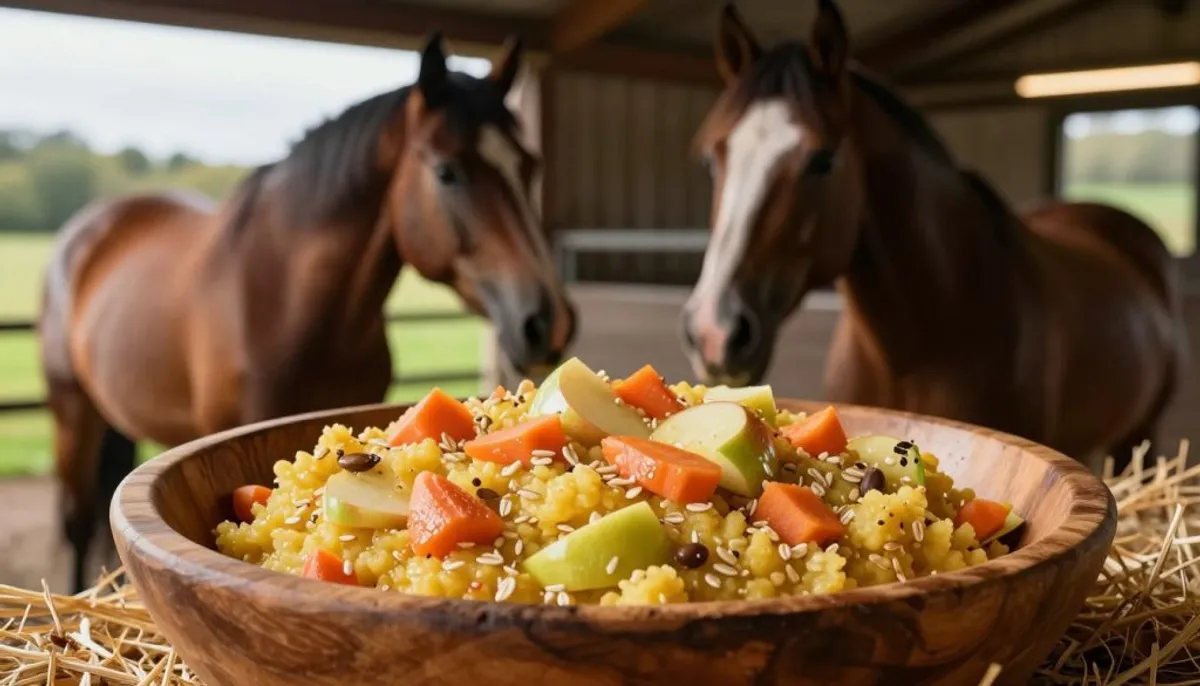
In this guide, we will explain the importance of this wet meal in the diet of horses. We will discuss its composition, use, and adaptation to each type of horse. Whether for a sport horse, a senior, one in recovery, or a sensitive horse, each situation requires a particular approach.
Changing a horse's diet should be done gradually. In case of health issues, frequent digestive troubles, or metabolic sensitivity, consult a veterinarian or an equine nutritionist. They will provide the best advice for moving forward safely.
Key points to remember
- The mash for horses is much more than just a comfort food.
- Warm and wet mash can help maintain good hydration and stimulate appetite.
- It complements the diet to promote recovery and well-being of the horse.
- It is important to ensure its composition is balanced with the rest of the diet.
- The use of mash can vary depending on the horse's age, activity, and specific needs.
- Any dietary changes should be introduced gradually, consulting a professional if necessary.
Understanding mash: a tradition of care and modern equine nutrition
In France, horse mash is well known. It is a warm, wet meal that enriches the daily diet. It promotes digestion and ensures good hydration.
Definition: wet and warm meal for a more digestible equine diet
The mash for horses is made up of dry ingredients that are rehydrated. It contains elements like wheat bran, barley, oats, flaxseeds, and beet pulp.
This meal transforms dry food into a fluffy texture. It is easier for horses to eat. The mash also allows for the addition of electrolytes or probiotics if necessary.
Why warm water changes everything: "softened" fibers and better absorption
The use of warm water makes the mash particularly appetizing. It softens the ration, releasing pleasant aromas. This is perfect for stimulating the horses' appetite.
The warmth of the water also improves digestion. It makes fibers and nutrients easier to absorb. This is particularly useful for tired or stressed horses.
| Aspect | Dry ration | Warm mash |
|---|---|---|
| Texture in the mouth | Harder, sometimes dusty | Soft, moist, easy to swallow |
| Hydration provided | Low, mainly depends on drinking | High, water is integrated into the horse food |
| Smell and palatability | Stable, sometimes unexciting | Aromas enhanced by heat, often more attractive |
| Digestive comfort | Less swollen fibers, drier transit | Rehydrated fibers, softer food bolus |
Mash and well-being: a comforting ritual useful after exertion, transport, or cold
Previously, this meal was given to horses as a care after difficult trials. Now, it better meets the specific needs of horses. For example, during recovery after exertion, a long trip, or a cold snap.
The mash can also vary the usual diet. In situations like competitions or changes in environment, a familiar and warm food can motivate the horse to eat and drink. This supports their daily well-being.
horse mash: what is its purpose in daily horse food?
The mash for horses is important when weather, stress, or exertion affect their digestion. It is moist, which helps increase water and fiber intake easily. It is vital for horse care, just as monitoring their condition through their droppings and appetite.
Active hydration: helping horses that drink little, especially in winter
In winter, some horses drink less because the water is cold. The mash becomes an indirect means of hydration, important in their diet. It is particularly useful for rehydrating after a night in the stable, a change in climate, or a long journey.
It is important to aim for a thick and warm soup, well mixed. This encourages the horse to eat and supports their diet gently. In winter, it greatly helps their overall well-being.
Transit and comfort: supporting peristalsis and limiting the risk of constipation
The mash is moist and rich in fiber, which gently stimulates intestinal transit. This promotes regular digestion, especially with dry or very fibrous rations. It is also gentle on the stomachs of sensitive horses, thanks to slower ingestion.
The key is the quality of the fibers and their preparation rather than the quantity. A stable diet with small adjustments is essential. Signs to monitor include droppings, bloating, and the horse's overall comfort.
Recovery: post-exertion window, reconstitution, and digestive soothing
Offering a mash after exertion, especially if the horse has sweated, is very beneficial. It rehydrates and soothes their digestive system. Some ingredients can aid in muscle recovery.
The same principle applies after transport. It stimulates appetite, rebalances hydration, and ensures easy digestion. This ritual also allows for daily assessment of the horse's well-being.
| Situation | Goal with horse mash | Recommended texture | Practical timing | Feeding vigilance point |
|---|---|---|---|---|
| Winter, horse that drinks little | Increase water intake via horse food | Thick warm soup | End of the day or morning | Do not change the entire ration at once; adjust over several days |
| Dry ration (mostly hay) | Gently support transit and peristalsis | Moist and fibrous, well swollen | 2–3 times/week depending on sensitivity | Respect soaking times for fibers; monitor droppings |
| After exertion with sweating | Rehydration and digestive soothing, recovery support | Warm, more fluid if the horse is in a hurry | Within 30–60 min | Stay consistent with the ration and intensity; do not overload with energy |
| After transport | Stimulate the desire to eat and restore fluid balance | Warm, very appetizing, without lumps | Upon arrival or during a long break | Bucket hygiene and freshness: remove leftovers to limit fermentation |
Ideal composition: key ingredients and their role in equine nutrition
A good mash for horses contains simple and well-chosen ingredients. It should provide water, fiber, and easily digestible energy. This is as important as the quantity given.
For a balanced diet, it is crucial not to change the horse's routine too much. A diet that is too rich can make the horse nervous or cause discomfort.
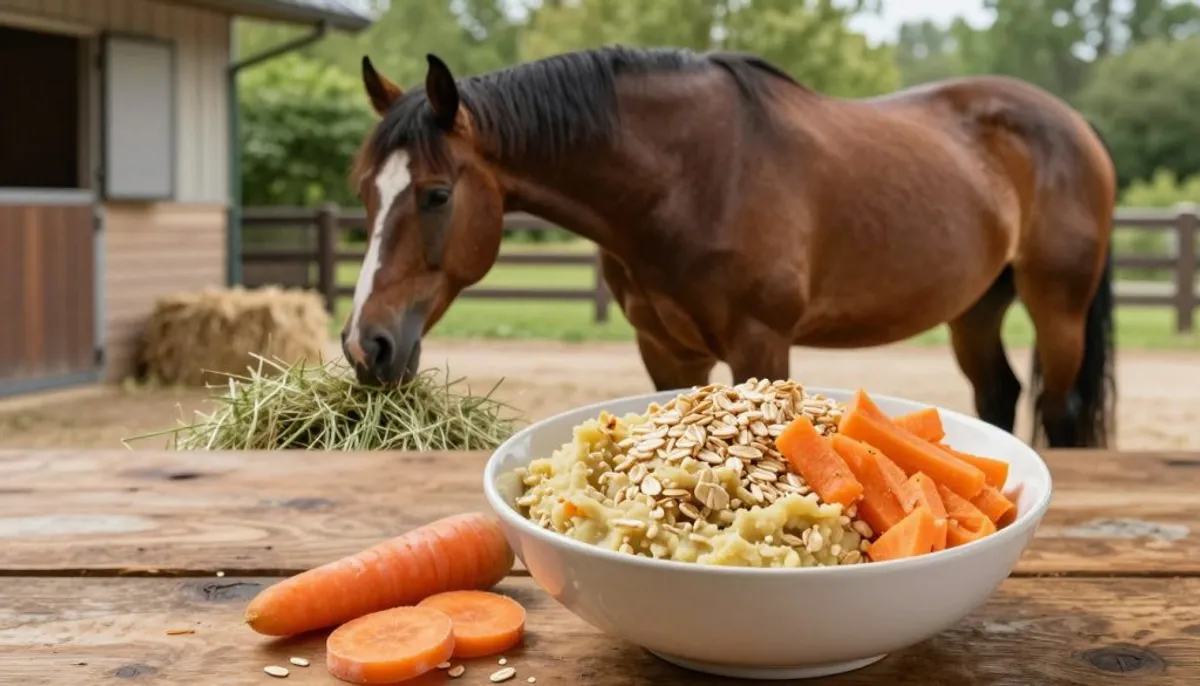
Bran and cereals: fibers, energy, and attention to calcium/phosphorus balance
Wheat bran enriches the mash with fiber and B vitamins. It makes the mash fluffy and pleasant to eat. It also has a mild laxative effect.
Be careful: bran has more phosphorus than calcium. An imbalance can occur with frequent use. To avoid this, it is often mixed with alfalfa, which is rich in calcium.
Cereals like oats and barley provide energy, especially after exertion. Corn, which is higher in starch, should be used with caution. This is especially important for sensitive horses.
Flaxseeds: protective mucilage + omega-3 (cooked/extruded flax rather than raw)
Flaxseeds form a protective gel when they come into contact with hot water. This is beneficial for horses with sensitive stomachs.
Flax is also rich in omega-3, which is good for the skin and recovery. For safety reasons, cooked or extruded flax is preferred over raw flax.
Beet pulp: "super-fiber" very rehydrating, slow-releasing energy
Beet pulp, especially when unsweetened, is an excellent source of fiber. It retains water well and adds volume to the mash without making the horse too excited.
It releases energy slowly due to fiber fermentation. This is an asset for good physical condition while maintaining a regular diet.
It is essential to rehydrate it well before serving. Poorly soaked pulp is not suitable for a mash.
Electrolytes: supporting fluid balance after sweating and heat
Electrolytes are vital after exertion, transport, or in hot weather. They compensate for the loss of sodium, potassium, and chloride due to sweating. They help maintain fluid balance and muscle function.
The mash is an excellent way to provide these electrolytes. It facilitates the horse's acceptance of the taste and improves rehydration due to its water content. The combination of water and minerals is very beneficial in equine nutrition.
| Ingredient | Main role | To monitor | Practical tip |
|---|---|---|---|
| Wheat bran | Fiber, texture, aids in transit | Calcium/phosphorus ratio | Combine with alfalfa to support mineral balance |
| Oats / flaked barley | Useful energy, palatability | Starch quantities according to the horse | Choose flaked/crushed for better digestibility |
| Flaxseeds (cooked/extruded) | Protective mucilage, omega-3 | Avoid whole raw flax | Add to hot water to achieve a "gel" texture |
| Unsweetened beet pulp | Super-fiber, strong rehydration, slow energy | Soaking is essential | Prepare in advance for well-swollen pulp |
| Electrolytes | Hydration, post-sweat support | Dosage according to effort and heat | Mix into the mash for easier intake |
Grain-free alternatives: supporting a sensitive equine diet
Some horses do not tolerate grains well. They may have issues like bloating, loose stools, or too much energy. In these situations, less starch can help. It is not about changing all their food at once. The important thing is to adjust their diet focusing on fiber.
A grain-free mash can help if their metabolism is sensitive. A diet that is too rich can affect their insulin balance. The goal is to offer more balanced nutrition. This should include water, fiber, and energy that releases slowly.
There are several popular ingredients for sensitive horses. Green oats are a forage that aids digestion due to its fiber, vitamins, and minerals. Alfalfa cobs are good for protein, useful for sport or recovering horses, especially if they eat slowly.
Hay cobs are convenient and generally low in dust, which is important for horses with respiratory issues. Sainfoin promotes healthy digestion by prioritizing fiber. These ingredients can make the mash more appetizing without adding starch.
There are products on the market specifically designed for this type of equine diet. Allgäuwiesen Mash offers a prebiotic formula. It contains flaxseed meal, brewer's yeast, and pectin fibers. It can be prepared with hot or cold water. Allgäuwiesen Muesli offers a diet based on alfalfa with oils, such as black cumin, and lower sugar/starch.
ATCOM FIBRE BASIC is a grain-free and alfalfa-free feed. It contains green oats and is rich in protein. A grain-free mineral supplement like LEXA Natur-Mineral-Plus can ensure a balanced diet. This product contains algae limestone and components from flax. These options can be adjusted according to the horse's activity, body condition, and digestion.
| Grain-free option | Benefits in equine nutrition | For which profiles | Points of vigilance |
|---|---|---|---|
| Green oats | Fibers + micronutrients, supports transit, helps limit constipation | Sensitive horses, horses on poor hay, cold periods | Introduce gradually, monitor body condition and quality of droppings |
| Alfalfa cobs | Proteins and fibers, good ration support when effort increases | Sport, recovery, horses needing to rebuild | Adapt to individual sensitivity, balance with a mineral |
| Hay cobs (haycobs) | Compressed forage, often low in dust, practical daily | Respiratory sensitive horses, stables with variable hay | Careful rehydration to avoid blockages, respect water volumes |
| Sainfoin | Structuring fiber, useful in a "fiber first" strategy | Horses with delicate transit, securing rations | Keep it simple on mixes, observe palatability and chewing |
| Allgäuwiesen Mash | Grain-free, pectin fibers + brewer's yeast, prebiotic approach | Sensitive horses, periods of stress, horse mash for comfort | Adjust portion according to total ration, avoid sweet additions |
| Allgäuwiesen Muesli | "Green meadow" base, oils and flax, advertised as molasses-free and reduced sugar/starch | Sensitive horses needing a fiber-rich ration | Monitor total oil quantity if other sources are already given |
| ATCOM FIBRE BASIC | Grain-free and alfalfa-free, green oats, advertised as > 20% protein | Flexible base to supplement, horses with targeted protein needs | Supplement with minerals and adjust according to work and hay |
| LEXA Natur-Mineral-Plus | Mineral/vitamins/trace elements without grains, supports ration balance | Horses on grain-free diets, "fiber + horse mash" rations | Respect the dosage, consider the contributions already present in other feeds |
Digestive benefits and prevention: impaction colic, palatability, and equine care
When transit slows down, some changes can help. The horse mash improves hydration thanks to its soft texture. It is an important part of attentive equine nutrition. It allows for easy monitoring of the animal's general condition.
Hydration + lubrication: the interest of soluble fibers and mucilage
Soluble fibers and pectins, especially from beet pulp, retain water. This helps food pass more easily. Mucilage, found in flax or chia, creates a gel effect that helps with dry rations.
This food is also good for adding supplements, such as electrolytes or probiotics. It helps keep a horse well, without refusals. We observe its condition through its droppings, abdominal comfort, and thirst.
At-risk horses: seasonal changes, dry rations, stress, and decreased water consumption
It is important to be more attentive during winter and summer, and during grass ↔ hay changes. Stress can also decrease their desire to drink. In these cases, giving horse mash 1 to 2 times a week fits well into their diet.
The important thing is to stay consistent and observe carefully. If a horse drinks little or its droppings become dry, adjustments should be made quickly. This is essential for daily horse care, just as monitoring their weight and the temperature of their limbs.
Difficult horses: the palatability of the mash as a lever to eat and drink
The warm horse mash smells good and attracts horses. For those who eat or drink little, its moist texture helps. Adding carrots, apple, or herbs can make the mash more appetizing without upsetting the ration.
This format is practical for giving dietary supplements or treatments recommended by a veterinarian. The goal is simple: to better nourish and hydrate the horse for optimal digestive comfort.
| Frequent situation | What the mash provides | Useful ingredients | Point of vigilance |
|---|---|---|---|
| Dry hay + little water drunk (winter) | Gradual hydration, softer food bolus | Rehydrated beet pulp, small portion of bran | Serve warm, monitor the amount of water ingested in the stable |
| Heat, sweating, recovery | Rehydration and better salt intake | Integrated electrolytes, soluble fibers | Adapt to losses, avoid a "random" dose |
| Transition grass ↔ hay | Support digestive comfort, stable routine | Fibers rich in pectins, cooked/extruded flax | Introduce over several days, observe droppings |
| Difficult or stressed horse | Palatability, support for horse dietary supplements | Mint, chamomile, carrot/apple in small pieces | Do not excessively sweeten, keep a consistent ration |
Practical preparation: texture, soaking time, and safety
A successful horse mash depends on simple yet precise actions. The right texture facilitates swallowing and makes the meal more enjoyable, especially in cold weather. In equine nutrition, consistency is as crucial as the choice of ingredients.

Tip: start with a small amount and gradually increase over several days. It is important to observe the horse's individual reactions.
Temperature: the mash should be warm, never hot. To test it, put your hand in without feeling discomfort. A mash that is too hot can cause irritation and diminish the benefits of a comforting meal.
Essential rehydration: some fibers, like beet pulp, absorb a lot of water. It is vital to fully rehydrate them before feeding. Generally, this requires at least 30 minutes of soaking, or follow the manufacturer's instructions. Then, add water to achieve a soft and uniform consistency.
| Point to check | Goal in equine nutrition | Practical action | Risk if neglected |
|---|---|---|---|
| Temperature | Comfort and safety at ingestion | Serve warm, hand test before giving | Burns, refusal of the ration |
| Soaking fibers | Actual hydration of the food bolus | Fully swell the beet pulp, smooth texture | Digestive discomfort, risk of impaction |
| Water quality | Palatability and sanitary safety | Clean drinking water, sufficient quantity | Less consumed ration, digestive troubles |
| Time in the bucket | Limit fermentation | Prepare just before, remove leftovers | Acid smell, decreased intake |
Hygiene and freshness: consume the mash immediately after preparation. Food that sits too long can ferment and its smell can change. It is essential to clean containers and eliminate leftovers. This way, the diet remains clean and appealing.
Adapting the mash according to the profile: sport, leisure, senior, recovery
The mash can be adjusted for each horse based on its age, work, and digestion. It is essential to customize the water, fibers, and energy of the ration.
For good monitoring, closely observe your horse's body condition. An ideal is around 4 to 6/9. This helps to adjust the diet well.
Sport horse: digestible energy + electrolytes for recovery
Right after exertion, it is best to give the mash within 30 to 60 minutes. It should be rich in easily digestible energy for good hydration. For example, cereals like oats are good if well tolerated.
The minerals lost through sweating should be replaced. Electrolytes can therefore help against fatigue. In this sporty diet, the idea is to assist without overloading the stomach.
Senior horse: easy-to-chew meal, rich in rehydrated fibers
With age, chewing becomes hard and saliva may be lacking. A softer mash (with more water) helps and encourages eating the entire ration. Rehydrated fibers provide comfort, especially if the hay is hard to chew.
You can add some chopped timothy or alfalfa hay. For senior horses, whole grains that are less digestible should be avoided.
Recovery: supporting appetite, gentle meal, and possibility to integrate horse dietary supplements
When a horse is recovering, the important thing is to encourage it to eat and drink. A warm and fragrant mash can really help, especially after stress. Herbs like mint can make the food more appealing.
It is also practical for adding dietary supplements. Probiotics or brewer's yeast can be included. But mix medications only if the veterinarian agrees.
Sensitive horses (EMS/Cushing/PSSM): priority to fibers, limit sugar/starch
For horses with EMS, Cushing, or PSSM, a stable diet is necessary. Choose a grain-free mash, low in sugar and starch, and without molasses. Ingredients like unsweetened beet pulp are preferred.
Cooked flax provides omega-3 and makes the mash more enjoyable. The goal is to provide energy through fibers without causing a spike in blood sugar.
| Profile | Goal of the mash | Often adapted ingredients | Points of vigilance |
|---|---|---|---|
| Sport | Rapid recovery, hydration, mineral recharge | Flaked cereals if tolerated, fibers, warm water, electrolytes | Avoid a ration that is too heavy; monitor digestive tolerance |
| Senior | Facilitate chewing and ingestion, secure transit | Rehydrated fibers, more water, chopped timothy/alfalfa hay | Limit whole grains; control body condition |
| Recovery | Appetite, digestive softness, aid in hydration | Very palatable base, brewer's yeast, probiotics, aromatics | Introduce gradually; medications only on veterinary advice |
| Sensitive (EMS/Cushing/PSSM) | Metabolic stability, slow energy, digestive comfort | Grain-free, unsweetened beet pulp, fibers, extruded flax | Avoid molasses, corn, excess sugar/starch; strict quantities |
Choosing products: horse pellets, supplements, and quality equestrian products
Starting by choosing clean fibers and a balanced ration is crucial. It is also important to navigate between horse pellets, supplements, and equestrian products. The idea is to understand what you are feeding without getting lost in a multitude of options.
Commercial mash vs homemade mash
A homemade mash allows for control over its freshness and composition. This is especially beneficial if the horse has a particular sensitivity. This way, unnecessary sugars are avoided.
The commercial mash, on the other hand, offers simplicity and consistency. Some formulas are designed to specifically meet needs after exertion, including various fibers and useful ingredients.
What to look for on the label
It is important to read the label carefully to choose correctly. Look for low sugar and starch content, specific fibers, and avoid products with molasses if your horse does not tolerate it well.
- Sugar and starch: they should be checked, especially for horses with certain sensitivities.
- Molasses: it increases palatability but can also raise sugar levels.
- Fiber sources: like beet pulp, to be used in good quantity.
- Probiotics/prebiotics: ingredients like brewer's yeast can be beneficial.
Horse pellets help structure the diet when well chosen. For supplements, a product without grains or molasses, such as LEXA Natur-Mineral-Plus, is preferable.
Focus on French craftsmanship
Quality also comes from who manufactures the product. La Sellerie Française values the know-how of French artisans. They guarantee quality from start to finish.
This choice ensures sustainability, both for equipment and for the care provided to horses.
Combining nutrition and equine care
A good diet should be accompanied by other care: it is important to monitor hydration and meal regularity. It is also important to keep an eye on the cleanliness of buckets and not let food get damp.
Observing your horse is essential: its appetite, the state of its droppings, and its overall well-being. With these attentions, pellets and supplements become aids rather than a necessity.
| Choice | Main advantage | Point of vigilance | For which profiles |
|---|---|---|---|
| Homemade mash | Control of ingredients, freshness, customization | Risk of imbalance if used daily (bran, Ca/P), irregular dosage | Difficult horses, seniors, horses sensitive to sugar |
| Commercial mash | Practical, more consistent formulation, sometimes enriched | Check for molasses, sugar/starch, nature of fibers | Active stables, transport, recovery, quickly managed rations |
| Horse pellets | Simple base to frame energy and inputs, easy to distribute | Adjust the quantity to work and forage, control starch | Leisure and sport, horses needing a stable ration |
| Horse dietary supplements | Precise targeting (mineralization, electrolytes, digestion) | Avoid duplicates, respect doses, watch for carrier sugars | Recovery, heavy sweating, dietary transitions |
| Quality equestrian products | Durability, comfort, consistency of routine daily | Choose according to actual use and maintenance, avoid "impulsive" buying | Regular riders, horses sensitive to rubbing, monitored work |
Conclusion
The horse mash links tradition and modern nutrition. It promotes hydration, aids digestion, and provides comfort. It is useful after exertion, transport, or in the cold to help with recovery and soothe.
Some key rules are essential for horse feeding. Serve the mash warm, never hot. Follow soaking instructions, especially for beet pulp. Keep the mash well moist.
Hygiene is essential in equine care. Prepare the mash just before serving. Do not let it ferment. And throw away leftovers. Start with small doses to help the horse get used to it.
Each horse has specific nutritional needs. This depends on whether it is a sport horse, senior, or recovering. Choose fibers wisely, and reduce sugars and starch if necessary. Add electrolytes or prebiotics as needed. The mash is useful but should be part of a balanced diet. Always check the horse's condition and consult a veterinarian if needed.
FAQ
What exactly is horse mash?
The horse mash is a special meal for horses. It is warm and facilitates digestion. It contains wheat bran, cereals like barley or oats, flaxseeds, and beet pulp mixed with hot water. It is not just a simple soup. It is designed for the health and nutrition of the horse, helping with hydration, digestive comfort, and recovery.
What is the purpose of mash in daily horse food?
Mash serves to hydrate and improve transit. It makes food more pleasant to eat. It helps vary the equine diet, especially when horses need to eat and drink more, like during stress or when the water is cold.
Why does warm water "change everything" in a mash?
Warm water breaks down fibers and starches, making nutrients more accessible. It facilitates digestion, especially for tired or stressed horses. The warm meal also provides comfort, acting as a care ritual.
Is mash useful for horses that drink little?
Yes. Mash contributes to active hydration. The horse absorbs water while eating. This works well in winter when some horses drink less. The mash serves as a "water companion," aiding digestion.
Can mash help transit and limit constipation?
The moist and fiber-rich mash stimulates peristalsis. It is useful against constipation. Especially if the food is dry or water consumption decreases, it protects the stomachs of sensitive horses.
When should mash be given after exertion?
Give mash within 30 to 60 minutes after exercise. It helps with rehydration and recovery. Adding electrolytes helps even more, especially if the mash contains flaked barley or oats for energy.
Is mash useful after transport?
Yes. Mash helps restore fluid balance after a journey. It reassures the horse in a new environment and encourages hydration and feeding.
What is the role of wheat bran in a mash?
The wheat bran adds fiber, B vitamins, and phosphorus. It makes the mash easier to absorb, with a mild laxative effect. But be careful, the Ca/P ratio should also be monitored, especially if the ration lacks calcium.
Which cereals to choose (barley, oats, corn) and why?
Choose oats and barley for energy. Barley is better digested if crushed or flaked, good for older horses. Corn, which is very energetic, should be given in moderation and ideally flaked.
Why are flaxseeds so common in a mash?
Flaxseeds produce a protective mucilage for the stomach and intestines. They also provide omega-3, which is good for recovery and skin. Cooked flax is the safest, avoiding risks from raw flax.
Is beet pulp really a "super-fiber"?
Yes, especially if unsweetened. Beet pulp is great for hydration. It can absorb a lot of water. This provides stable energy without excitement, beneficial for some horses sensitive to starch.
Why is soaking beet pulp essential?
The pulp must be well hydrated before being fed. Otherwise, it can cause choking or intestinal discomfort. Normally, it should be left to swell for at least 30 minutes to balance the texture.
Do electrolytes have a place in a mash?
Yes, especially after exertion or in hot weather. Electrolytes help maintain fluid balance and improve muscle function. The mash facilitates the intake of electrolytes, mixing water and minerals for effective rehydration.
Why do some owners choose a grain-free mash?
Some horses react poorly to grains, causing digestive issues. A grain-free mash prioritizes energy from fibers, useful for horses sensitive to blood sugar fluctuations.
What "fiber-first" alternatives can be used in a mash?
Use green oats, alfalfa cobs, or hay, and sainfoin. These options are good for adding fibers, improving digestibility, and reducing dust.
Can you name examples of market products for sensitive horses?
For sensitive horses, there are Allgäuwiesen Mash, Allgäuwiesen Muesli, ATCOM FIBRE BASIC, and LEXA Natur-Mineral-Plus. They are formulated without grains or molasses, with less sugar. The choice depends on the specific needs of the horse.
Can mash help prevent impaction colic?
Yes, it can help, especially with a dry diet or little water. Hydration and lubrication improve transit. Ingredients like mucilage (flax, chia) and soluble fibers also help.
When is mash most relevant?
Use mash in winter for hydration, in summer to avoid dehydration, during seasonal changes, or in case of stress. Some give it 1 to 2 times a week, adapting to individual needs.
How to improve the palatability of a mash for a difficult horse?
The smell and warm texture already attract the horse. Add pieces of carrot or apple, or herbs. The mash helps accept electrolytes, horse dietary supplements, or medications, with the veterinarian's agreement.
What texture to aim for and how much water to use?
Look for an easy-to-eat texture, especially for older horses. Clean water is essential, in sufficient quantity to avoid drying out the mixture.
What is the safest temperature to serve a mash?
Serve it warm, to avoid burns. Test by putting your hand in the mash without burning yourself.
What are the risks if the mash stays in the bucket too long?
It can ferment, becoming harmful to health. Clean well and serve immediately. Hygiene is crucial.
How to introduce mash without disturbing digestion?
Start small and increase gradually. Monitor the horse for any changes. Consult a veterinarian or equine nutritionist if in doubt.
How to adapt the mash for a sport horse?
Choose a mash that aids hydration, with easily digestible energy and electrolytes. This supports recovery without weighing down digestion.
How to adapt the mash for an older horse?
Increase the water and choose easy-to-eat fibers. Avoid whole grains that are difficult to digest. Adding chopped hay can help with chewing.
In recovery, can mash replace a meal?
The mash supports hydration and appetite, but is not always complete. It is useful for adding probiotics or other supplements. Always follow the advice of a veterinarian during recovery.
What mash to choose for a sensitive horse (EMS, Cushing, PSSM)?
Opt for a grain-free, low sugar/starch mash without molasses. Favor energy from fibers: beet pulp, flax. Choose according to diagnosis and ration.
Homemade mash or commercial mash: what to choose?
Homemade mash allows total control over composition. Commercial mash offers convenience and can be well-balanced. Check the Ca/P ratio. Vary to avoid nutritional imbalances.
What to look for on a mash label?
Check the sugar/starch content, the presence of molasses, and the fibers used. Also, see if the mash contains prebiotics/probiotics. Adapt to your horse's profile.
How to integrate mash with horse pellets and a mineral?
The mash complements a balanced ration: hay then horse pellets if necessary, and an adapted mineral. For sensitive horses, choose a grain-free mineral like LEXA Natur-Mineral-Plus.
What guidelines to follow to adjust quantities and frequency?
Observe hydration, energy, droppings quality, and weight. Adjust with the help of a professional if needed.
How is La Sellerie Française linked to a "global quality" approach?
The approach encompasses nutrition, care, and equipment. La Sellerie Française (https://laselleriefrancaise.com) offers high-end products made in France. It advocates for quality and sustainable choices.