
You have surely seen this scene: a horse lifts its head, raises its upper lip, sometimes showing its gums. As if it were smiling for a photo. This gesture can intrigue us and seem joyful.
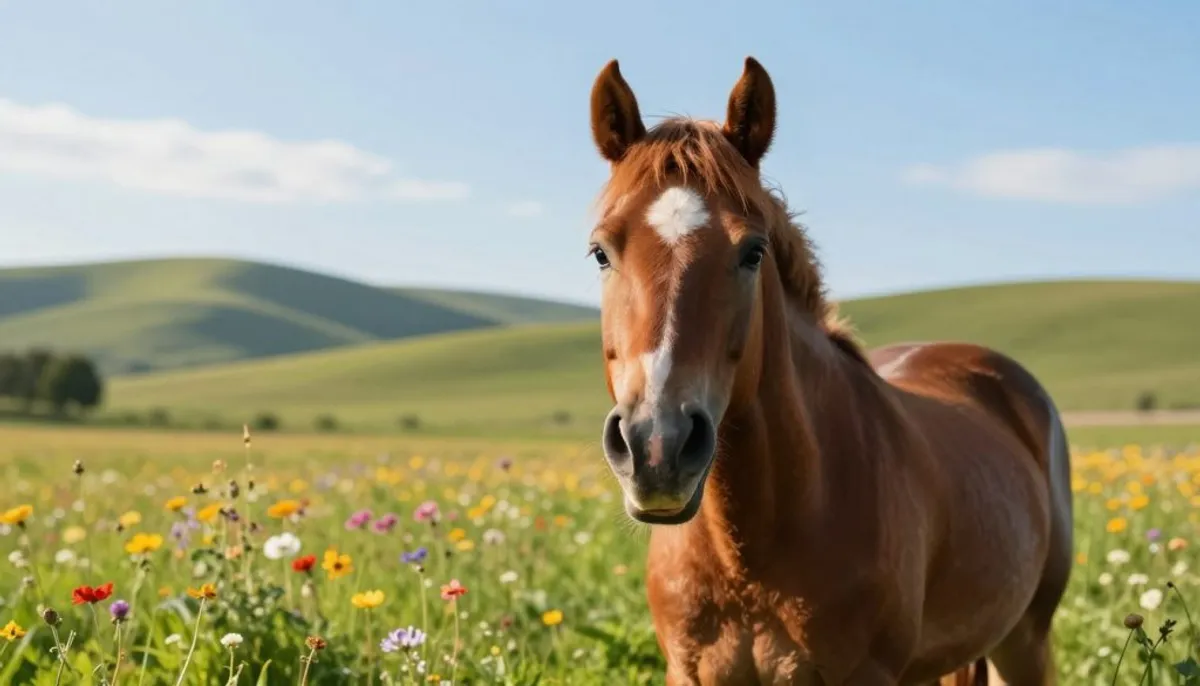
However, appearances can be deceiving. What we think is a smile may be the Flehmen response, related to scents. Or it may indicate stress or discomfort.
This guide helps you truly understand what you see. We will learn to distinguish reactions to scents from real signs of happiness. This helps avoid misunderstandings. Understanding the horse protects its well-being on a daily basis.
The horse's comfort also depends on its equipment. In France, La Sellerie Française (https://laselleriefrancaise.com) offers high-end and made in France gear. The products are unique, custom-made or limited edition by excellent artisans. They promise superior quality, well beyond a simple Made in France label.
To remember
- A smiling horse does not always express joy: context is key.
- This unusual horse behavior often corresponds to an exploration of scents.
- Some “smiles” may signal tension, threat, or discomfort.
- Learning to read posture and ears helps aim for a joyful riding.
- When in doubt (pain, colic), it’s better to observe and act quickly.
- Appropriate equipment supports comfort and well-being at work.
Understanding the "smile" in horses: myth, fascination, and reality
A raised upper lip and visible incisors, sometimes even gums. This creates a strong image. In a photo, it can resemble a human smile. This is how animal facial expressions can deceive our eye.
What attracts us is the contrast. We see an “emotion” that is easy to read, while the horse is reacting to a scent or social situation. The gap between our expectations and reality fuels our fascination.
Why this expression intrigues so much on social media and in stables
On social networks, everything becomes more impressive. A simple stop on an image of a curled lip can provoke numerous comments. In stables, this image often makes us smile in response, as if it were a sign of good humor.
However, context is more important than the image alone. The horse's posture, its ears, and its attention can completely change the meaning of this expression. Without these details, one can misinterpret its expression.
Anthropomorphism: what humans project onto animal facial expressions
Anthropomorphism is when we attribute our own emotions to a horse. We imagine that it feels joy or even humor because its face reminds us of a smile. This happens often and is typically human.
In horses, this expression is actually linked to reflexes and communication. Before concluding a feeling of happiness, one must observe the environment. One must see what attracts its attention or what surprises it.
When the "smile" becomes viral content: funny animals and animal laughter
A video montage, a funny caption, or music can turn an ordinary scene into funny animal content. The public quickly associates this image with animal laughter, as if the horse's “smile” were a response to a joke. Reactions on social media then follow.
These videos are amusing but they reduce reality. It is better to rely on concrete facts. This way, we avoid being misled by relying solely on the comedic effect.
| What we see | What we often imagine | What to look at additionally | How it changes the interpretation |
|---|---|---|---|
| Raised upper lip, visible teeth | “It laughs” (animal laughter) | Fixed neck, nose oriented towards a scent, focused attention | May evoke sensory analysis rather than “humor” |
| Gums visible in a photo | Perfect image for funny animals | Duration of the gesture, repetition, environment (stall, paddock, arena) | An isolated image can mislead; the complete sequence informs better |
| Tight mouth, pulled corners | “Forced” smile or comic grimace | Ears, gaze, breathing, foot mobility | May indicate social tension or discomfort |
| Horse filmed up close, tight angle | Animal facial expression “obvious” | Distance, human interaction, presence of other horses | The angle of the shot can exaggerate the “smile” effect |
Flehmen response: the scientific explanation behind the expression
When a horse “smiles,” one might think of a human feeling. But in fact, this smile is a response to a scent.
This strange reaction in the horse helps it better understand a scent. It is part of how animals show their emotions, where a movement can be useful.
Definition and origin of the term Flehmen
The Flehmen response is when a horse raises its upper lip, like a grimace. The term Flehmen comes from German, meaning “to raise the upper lip.”
So, it’s not really an affectionate smile. It’s more of a natural reaction to a scent that attracts the horse.
The role of the vomeronasal organ (Jacobson's organ)
The vomeronasal organ, or Jacobson's organ, plays a big role here. It is located in the palate, connected to the mouth and nose.
By raising its lip, the horse sometimes closes its nose to better inhale the scent. This allows it to better analyze these special odors.
What the horse is really analyzing: scents, pheromones, and social information
The goal is to detect pheromones and new odors. In a group, this helps horses know who is around, their status, and what they have left behind.
From a distance, a horse making this grimace may make us laugh. But in reality, this funny face is a way to read the chemical signals around.
| What we observe | What happens in the body | What the horse seeks to capture | Common context |
|---|---|---|---|
| Raised upper lip, slightly tense neck | Inhalation directed towards the vomeronasal organ (Jacobson's organ) | Complex odor molecules, especially pheromones | Inspection of urine or droppings |
| Nostrils partially “closed” for a few seconds | Channeling air and particles towards the palate | Individual signature and clues of recent presence | Arriving in a new place |
| Still attitude, focused gaze | Sensory processing and sorting of information | Social status, sexual availability, identity | Meeting or proximity to other horses |
smiling horse: how to recognize Flehmen in practice
When we see a smiling horse for the first time, it can be surprising. This strange gesture is often their way of “smelling” a scent rather than expressing an emotion. The so-called smile of horses is actually just a way of communicating.
Visible signs: raised upper lip, sometimes visible gums
The most obvious sign is the horse's head raised, with the upper lip curled. Depending on the angle of view, one may see the gums or even the incisors. The nose appears still, as if the horse is holding its breath to smell better.
- Head raised, slightly tense neck, focused gaze
- Raised upper lip, mouth rather closed
- Gums sometimes visible, incisors possible depending on intensity
Duration and frequency: a brief and contextual behavior
This Flehmen gesture lasts little, a few seconds to less than a minute. After that, the horse resumes normal activities like eating or walking around. It is mostly noticed after it has smelled a strong scent.
If the horse repeats the gesture, it means the scent is intense or changing. Then, this strange behavior is seen in small sequences, interspersed with pauses. The so-called smile appears and disappears.
Typical situations: urine, droppings, new areas, strong odors
This behavior often shows up in the presence of social markings. For example, it happens near a puddle of urine, fresh droppings, or on a territorial marking. Places recently frequented by other horses also trigger this gesture.
- Sniffing urine, especially during interactions in the paddock
- Inspecting droppings, particularly in a shared location
- Arriving in a new space: arena, trailer, unknown pasture
- Strong or unusual odors: new bedding, spray, aromatic plant
| What you observe | What it suggests | What you can do |
|---|---|---|
| Head raised + upper lip curled | Targeted olfactory analysis, often Flehmen | Give space, avoid interrupting the sniffing |
| Visible gums or incisors, stable posture | More pronounced expression, but not necessarily agitation | Stay calm, note the context (place, scent, moment) |
| Brief Flehmen, then return to calm | Contextual behavior, linked to a specific scent | Observe the source (droppings, urine, passage area) |
| Repeats in several small sequences | Persistent scent or complex social information | Monitor without dramatizing, check for irritants |
From a distance, some think they see a horse laughing because it seems to be smiling. But in reality, it is trying to understand its environment, like a detective. That’s why this behavior fascinates, especially when we stumble upon a smiling horse by chance.
Frequent triggers of the "equine laughter": scents, flavors, and curiosity
What we often take for laughter in horses is actually a reflex of analysis. They use their nose to understand the world. Then, they adjust their lip to better capture the information. These moments, captured on video, show their curiosity more than joy.
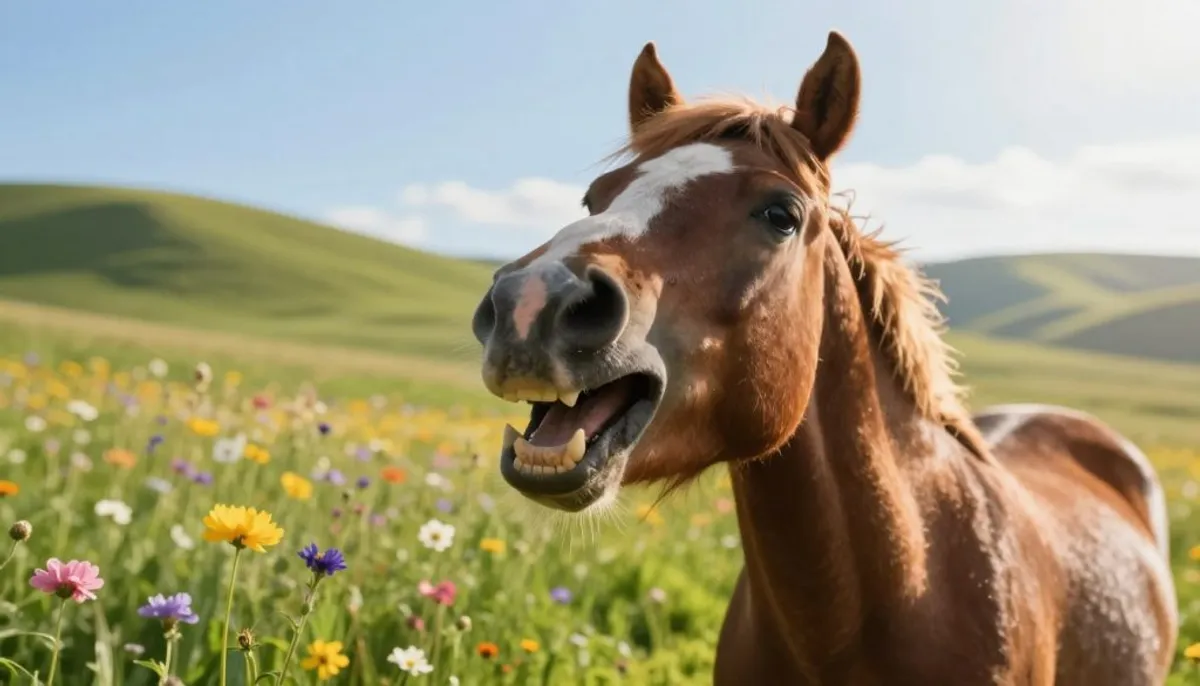
This gesture can be seen in moments of happiness in riding, after a walk, or facing a new object. It is quick and fleeting, as if they are scanning what they smell. This happens even if the horse is not in an excited state.
Daily olfactory exploration
In the enclosure or stall, the horse explores with its nose. It seeks chemical information about the environment. This tells it who has passed by, when, and in what state of mind. In a group, this helps them position themselves and avoid tensions.
For example, a stallion may react by smelling a mare's urine to know if she is ready to breed. Mares and geldings also show this “smile” when smelling urine or droppings, to identify someone else. Some mares even recognize their newborn by scent.
New flavors
A new treat or medication can surprise them. The horse tastes, licks, and sometimes “smiles” to sort through the information: is it good or bad, salty or bitter? These scenes may seem funny, but it’s rather their way of analyzing.
Change of environment
A new place always smells different. The horse navigates by smelling scents, noting the marks left by others. It is important for them to orient themselves and feel secure, especially in riding.
| Trigger | Where it is often observed | What the horse seeks | Practical reaction to adopt |
|---|---|---|---|
| Mare's urine | Stable aisle, paddock, edge of the arena | Social clues, possible heat in a mare | Let sniff without rushing, maintain a calm distance |
| Droppings from a companion | Trail paths, entrance to pasture, grooming area | Identity, recent presence, herd dynamics | Observe ears and neck, avoid pulling on the lead |
| Strange taste (supplement, treat, medication) | In the bucket, syringe, halter after care | Taste sorting, associated scent, novelty | Offer in small doses, remain patient, reward calmness |
| New place | Competition, boarding, trail riding, new arena | Olfactory landmarks, traces of other horses, safety | Allow exploration time, proceed in steps |
The equine happiness: the true signals of a happy horse
A smiling horse may seem happy, but this is not always true. To truly understand what they feel, one must observe their face and body in a calm moment. Riding should aim for serenity, not just a “look.”
In a positive interaction, signs of happiness are subtle. According to Léa Lansade (IFCE, behavior specialist), a relaxed horse during grooming has half-closed eyes. Its upper lip may also slightly stretch. These details, though discreet, create a serene atmosphere that is easy to detect with a bit of practice.
Relaxed ears, soft and half-closed eyes: signs of well-being
- Relaxed ears, often to the sides or oriented backward without being pinned.
- Soft gaze, half-closed eyelids, without staring intensely.
- Soft expressions around the nostrils and lips, signs of relaxation rather than a smile.
Relaxed posture: a resting hind leg, absence of overall tension
The posture of a happy horse confirms its facial expressions. Often, one of its hind legs is at rest and its neck is relaxed. Its back appears supple, its jaw is not clenched, and it breathes regularly.
Calm micro-behaviors: sighs, gentle chewing, relaxed lower lip
Small gestures are as important as big ones. A deep sigh, gentle chewing, or a relaxed lower lip indicate relaxation. These small signs help adjust training to make it more joyful and effective.
| What we observe | What it may indicate | To check at the moment |
|---|---|---|
| Soft and half-closed eyes | Relaxation, comfort, calm attention | Soft neck, regular breathing, absence of stiffness |
| Relaxed ears to the sides | Neutral or positive state, quiet listening | No pinned ears, no swishing tail, no agitation |
| A resting hind leg | Relaxed posture, energy conservation | Stable footing, supple back, no tension in the abdomen |
| Deep and slow sighs | Release of light stress, calming | Calm context, no signs of pain, stable breathing rate |
| Relaxed lower lip | Mandibular relaxation, overall relaxation | Unclenched jaw, accepted contact, fluid movements |
Anatomy and physiology of facial expression in horses
When we see a horse that “smiles,” we immediately think of a human smile. But the facial expressions of horses follow different rules. It is important to understand the muscles involved, the context, and body language.
Why this “smile” does not use the same muscles as in humans
The smile in humans moves the corners of the lips and involves emotions. For horses, the upper lip often lifts reflexively, usually due to a scent. It does not mimic our smile.
This difference makes us find a natural reaction in the horse funny. Their “smile” speaks more of sensations than emotions.
Visible incisors and tension around the eyes: what we can observe
When the lip curls and shows the incisors, it is visible. Sometimes, there is slight tension around the eyes, giving a pleasant look in photos. But this is not enough to understand intentions.
To avoid misinterpretation, let’s keep three points in mind:
- Ears: can be turned forward, to the side, or pinned back.
- Neck and jaw: relaxed or tense.
- Posture: either the horse is calm and curious, or it is rigid and ready to react.
Depending on this, a “smile” can mean exploration, interaction, or tension. The face must be viewed with its environment.
Differences in intensity depending on individuals, temperament, and context
The reactions of horses vary greatly. Some are expressive, others more reserved. Temperament, habits, and location influence this.
A “smile” in a horse can change from day to day. It depends on scents, companions, or curiosity. In their expressions, context and repetition are key.
| Observed clue | What it may indicate | To check around | Example of common context |
|---|---|---|---|
| Raised upper lip, visible incisors | Analysis of scents, instinctive response | Head oriented towards a source, sniffing, pauses | Freshly marked ground, new object, unknown area |
| Slightly squinted eyes, fixed gaze | Concentration, sometimes slight tension | Breathing, stiffness of the neck, tail movement | Approaching a companion, waiting during grooming |
| Mobile and independent ears | Curiosity, active listening | Soft footing, slow steps, absence of stiffness | Trail riding, arena, arriving in a new aisle |
| Pinned ears, pulled lips, clenched jaw | Tougher social signal, possible discomfort | Distance from others, food protection, back tension | Presence of a bucket, tight space, competition for a resource |
| Brief expression then return to calm | Pointed reaction, low emotional charge | Resuming a neutral attitude, relaxed ears | Passing scent, treat, particular blade of grass |
Communication between horses: hierarchy, calming, and social behaviors
In a herd, every movement matters. A simple change in expression can relax the atmosphere or test boundaries. What we think is laughter in a horse is actually a specific message to the context.
Dominance and submission
Showing teeth is not just for laughter. For a dominant horse, it can be a challenge to push another away, especially near hay or at the entrance of a shelter. On the other hand, for a more submissive horse, it is a sign of calming, to avoid conflict.
One must observe the entire body to understand. A rigid neck and pinned ears do not mean the same thing as a relaxed posture. Funny situations between horses sometimes arise from a limited perspective that hides these details.
Positive interactions
Social relationships are not based solely on conflicts. During mutual grooming, we note half-closed eyes and relaxed lips. These expressions show real acceptance between two horses scratching each other.
This may look like laughter between horses, but it is mostly a sign of comfort. Pauses where they adjust their position without bothering each other show their connection. These are moments of complicity, above all.
Young horses
Young horses, under three years old, often clack their teeth. This happens in new places or near unfamiliar horses. It is a sign of some social immaturity, and a way to seek calming.
From a distance, this may seem like laughter. But the intention is rather one of caution. Observing their behavior, distance, and the reaction of adults helps us better interpret these scenes without misunderstanding.
| Observed signal | Common context | Most frequent social message | Useful details to note |
|---|---|---|---|
| Teeth shown, head oriented towards the other | Access to hay, narrow passage, arrival of a newcomer | Intimidation, distancing | Tense body, straight-line movement, defended space |
| More relaxed lips, calm gaze | Mutual grooming, resting side by side | Affiliation, trust | Regular breathing, relaxed posture, gentle adjustments |
| Teeth clacking (young) | Meeting, unknown horse, new place | Calming, signal of immaturity | Maintained distance, hesitant approach, seeking safety |
When the expression is not funny: stress, threat, and aggression
A horse smiling in a video may seem like a funny moment. However, showing teeth can mean it wants to keep its distance, not that it is laughing. Knowing how to interpret these signs in a stable helps avoid confusion and incidents.
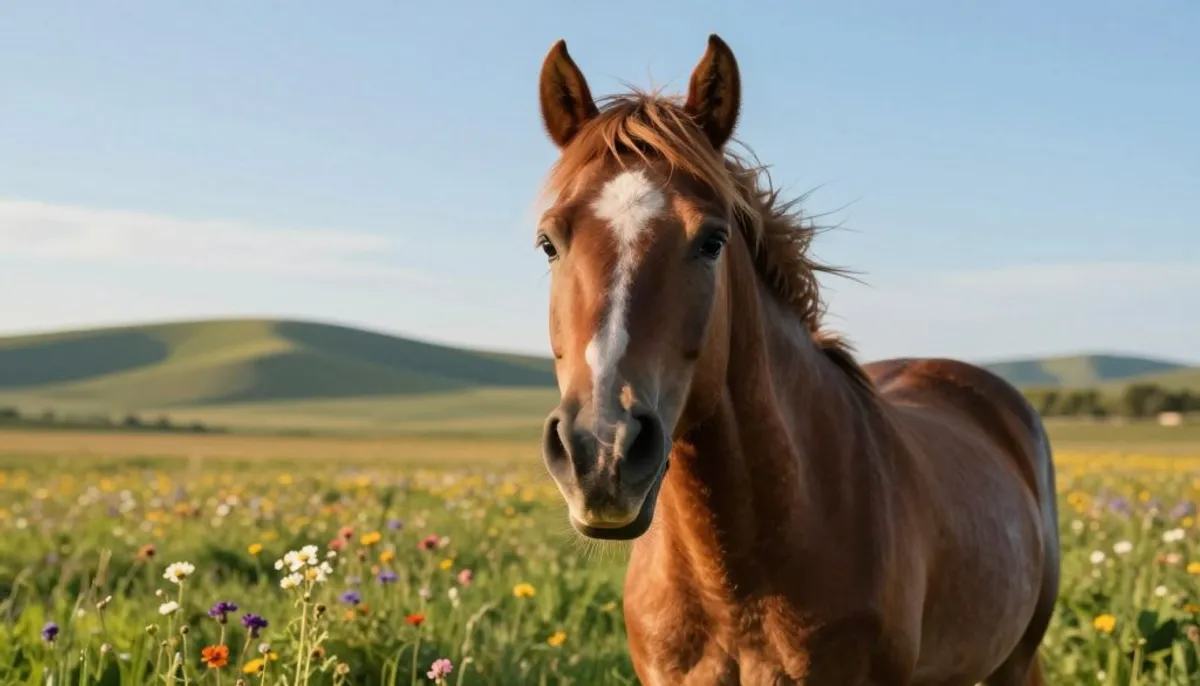
“Tense smile”
The “tense smile” is when a horse pulls its lips back and shows its incisors. Its jaw stiffens and its eyes harden. This gesture often reveals tension rather than a true smile.
There are other signs of discomfort to spot: ears pinned back, rapid breathing, and tense body. The horse may also violently swish its tail or stomp its foot. Even if this may seem funny, it is not a sign of joy.
Threat around resources
Showing teeth near hay or a gate is often to defend something. The horse signals that it does not wish to be approached and warns before attacking. If the other animal insists, this can lead to biting or kicking.
The need for space can also lead a horse to show its teeth. The goal is to maintain distance, not to smile out of amusement.
Associated signals to monitor
To understand the true meaning of gestures, one must observe the entire body. Pinned ears, a tense neck, agitation, and rapid breathing are all signs to note. A lack of interest in scents can also indicate that it is not a sign of joy.
| What you see | What it may mean | Common context | Cautious reaction |
|---|---|---|---|
| Lips pulled back, incisors exposed | Threat, discomfort, warning | Surprised horse, too direct approach, pressure | Return to calm, increase distance, speak softly |
| Pinned ears, stiff neck | High tension, possible aggression | Stall, narrow corridor, quick handling | Stop the action, place yourself safely, resume later |
| Rapid breathing, agitation, tail swishing | Stress, irritation, emotional rise | Waiting in the paddock, separation from the herd | Reduce stimuli, allow movement, observe without crowding |
| Teeth shown near the bucket or hay | Resource protection, anticipated threat | Feeding distribution, competition among companions | Create space, multiply feeding points |
| “Funny” expression in photo, but body stiff | Deceptive image, not a moment of funny animals | Flash, crowd, hands approaching the nose | Re-read body signals, avoid insisting on a pose |
Differentiating Flehmen, yawning, relaxation, and pain: avoiding misinterpretation
When a horse “smiles,” it can be funny. But one must always see the context to understand what it feels. To be sure, observe its ears, eyes, posture, and whether it is tense. A strange reaction does not necessarily mean it is happy.
Flehmen vs yawning
Flehmen is when the horse raises its upper lip. But its mouth is rather closed. It is “tasting” the air after smelling something interesting.
For yawning, the mouth is wide open. The tongue may appear and the horse stretches. This happens when it is resting or after exertion.
Relaxation
When relaxed, its face appears softer. The lower lip hanging shows that it is comfortable. Its eyes are calm and its jaw is relaxed.
Pain (e.g., colic)
Pain can make it grind its teeth. It looks like it is smiling, but it is a grimace of suffering. Its face seems frozen.
In case of colic, it looks at its flanks and does not want to eat. It may sweat and get up, then lie down repeatedly. We must pay attention to its appetite and energy. If it seems unwell, quickly call a veterinarian.
| Expression | Mouth and lips | Body clues | Common context | What we do |
|---|---|---|---|---|
| Flehmen | Raised upper lip, mouth rather closed | Active nose, sniffing, attention directed towards a scent | Strong odors, urine, droppings, novelty | Observe the situation, allow exploration if safe |
| Yawning | Wide open mouth, pulled lips, tongue sometimes visible | Stretching neck, general relaxation, slow rhythm | Rest, return to calm, relaxation | Note frequency, check that the horse remains relaxed |
| Relaxation | Lower lip hanging, relaxed jaw | Stable posture, soft eyes, supple muscles | In the paddock, in the stall, after light session | Respect calmness, avoid unnecessary stimulation |
| Pain / colic | Grimace, curled lips, exposed teeth, possible repetition | Agitation, looking at flanks, scratching, sweating, getting up/lying down, loss of appetite | Digestive discomfort, stress, medical issue | Check vital signs, call the veterinarian without delay |
Can we “teach a horse to smile”? Positive reinforcement and limits
A horse that smiles, especially in a video, can be amusing. But this equine smile often hides an action like Flehmen. In joyful riding, the idea is to understand and not to create an emotion in the horse.
Principle: reproduce an action, not create an emotion
Rewarding a natural action of the horse is possible. This can be, for example, when it curls its lip. However, we cannot ask it to feel a certain way. A horse that smiles when asked is reacting to training, not feelings.
It is also important to observe the rest of the horse's body. A relaxed neck, calm breathing, and mobile ears are good indicators. They help us better understand what the horse is really feeling.
Triggering naturally then associating a keyword and a reward
Using a trigger that the horse already knows is best. A particular scent accepted by the horse can trigger Flehmen. When this happens, we say a keyword and reward the horse immediately.
- Timing: say the keyword and give a treat right after the gesture.
- Repetitions: a few attempts then a break to maintain interest.
- Goal: create an association between the word, the action, and the reward.
This activity should remain short and fun in joyful riding. It makes the horse's smile “on command,” like other exercises. But the true equine laughter mainly depends on the situation and our own interpretations.
Precautions: short sessions, respect for the horse, avoid irritating odors
It is important to avoid strong odors so as not to irritate the horse. Even a small amount of an essential oil can be bothersome. If the horse shows signs of discomfort, it is necessary to stop and simplify.
| Point to check | Good reference | Sign of stop | Gentle alternative |
|---|---|---|---|
| Duration | 1 to 3 minutes, then a break | Agitation, loss of attention | Walking hand in hand, scratching at the withers |
| Trigger | Familiar and light scent | Sneezing, head suddenly lifting | Clicker training on a simple “touch” |
| Reward | Small treat, given quickly | Nibbling, pushing | Reward in a closed hand, calm and stable |
| Reading the horse | Soft posture, calm gaze | Pinned ears, swishing tail | Return to an easy known exercise |
Respecting these rules helps protect our relationship with the horse. Thus, joyful riding remains a moment of sharing. Even if the horse's smile does not always mean it laughs like a human.
Funny horse images, viral animal videos, and joyful riding: sharing without distorting
Funny horse images always make us laugh. Especially when they spread quickly on the internet. But it is important to respect their true meaning, without attributing human emotions to them. By providing a bit of context, we can make the videos both funny and informative.
Choosing the right context: avoiding illustrating stress or pain
Look closely at the entire body of the horse before sharing an image. If its ears are down, its neck stiff, or its tail agitated, this may indicate that it is tense. In these situations, avoiding presenting the situation as joyful is crucial for the animal's well-being and prevents confusing viewers.
- OK: curiosity in a new place, intriguing scent, soft attitude.
- To avoid: defending a ration, conflict in the paddock, repeated grimace or unusual agitation.
Correctly captioning: explaining Flehmen and body language
A good caption can make all the difference. For example, saying “Flehmen response” instead of “it laughs.” Mention what triggered the reaction, such as a scent, and highlight signs like calm breathing. This will make the videos and images clearer without losing their humorous aspect.
Valuing hilarious horse moments while remaining educational
It is possible to seek joy while being precise. We can explain what the horse is exploring, then let the image speak for itself. This approach avoids attributing human traits to horses and guides the public in understanding signals. Thus, funny images become an opportunity to learn without giving lessons.
| Filmed situation | Signals to check | Recommended short caption | Impact on the public |
|---|---|---|---|
| Flehmen after a scent on the ground (trail, meadow) | Soft neck, mobile ears, calm steps | “Flehmen response: it analyzes a scent.” | Understands behavior and shares without distorting |
| “Smile” near the feeder | Pinned ears, tense neck, sudden movement | “Warning: possible resource defense.” | Reduces risky shares and encourages caution |
| Yawning at rest after work | Relaxed lower lip, soft eyes, settled posture | “Moment of relaxation, return to calm.” | Associates humor and well-being without confusion |
| Repeated expression with visible discomfort | Agitation, rapid breathing, fixed gaze, grinding | “To monitor: possible signs of discomfort.” | Reminds that health comes before viral animal videos |
Conclusion
When a horse “smiles,” it is often not because it is happy. It is a reaction called Flehmen. It raises its lip to better smell odors and pheromones.
This gesture does not show happiness like in humans. To truly understand, one must look at the complete context. This means observing its posture, ears, gaze, and how its body is tense.
We learn to distinguish the Flehmen response, yawning, moments of relaxation, signs of threat, or grimaces of pain. The signs that the horse feels good are often more subtle. It has half-closed eyes, relaxed ears, and holds itself in a relaxed manner.
We also see it sighing softly, its jaw relaxing, and chewing calmly. In France, for riding to bring joy, one must observe carefully and adjust everything concerning the horse. Care, its environment, suitable work, and choosing the right equipment improve its life.
Using high-quality, handmade equipment from France, like those from La Sellerie Française, shows this attention to detail.
FAQ
Why do we talk about a "smiling horse" when it curls its lip?
It’s because it resembles a human smile. The horse lifts its head, curls its upper lip, and sometimes shows its teeth. This image gives the impression that it is smiling. This expression often comes from a sensory mechanism, not an emotion.
Is a horse that “smiles” necessarily happy?
No, not necessarily. This “smile” can be a reaction to a scent or a sign of stress or pain. To understand, one must observe the entire body language of the horse.
What exactly is the Flehmen response?
The Flehmen response is a natural behavior. The horse breathes deeply and analyzes scents with a special organ. It is not a smile, even if it looks like one.
Where does the word “Flehmen” come from?
The word “Flehmen” is German and means “to curl the upper lip.” It accurately describes this gesture in the horse.
What organ does the horse use during Flehmen?
It uses the vomeronasal organ, or Jacobson's organ. Located in the palate, this organ analyzes scents and molecules.
Why does the horse sometimes block its nostrils when it does Flehmen?
By curling its lip, the horse blocks its nostrils. This channels the scents towards the analyzing organ for better examination.
What does the horse “analyze” with Flehmen?
It mainly analyzes new scents and pheromones. This information tells it who has passed by and other social details.
How to recognize Flehmen in practice?
Flehmen is recognized by the head raised and the upper lip curled. The scene is brief and the horse quickly returns to its normal behavior.
In what situations do we most often see this “smile”?
Flehmen is often seen near scents like urine or droppings. It also explores scents in new environments.
Does a stallion do Flehmen to know if a mare is in heat?
Yes, a stallion uses Flehmen to smell a mare's urine in heat. But, mares and geldings also do it to recognize other horses.
Can mares do Flehmen after giving birth?
Yes, they do it to smell their foal. It looks like a smile but is to gather olfactory information.
Can flavors trigger a “smiling horse”?
Yes, a new or strange flavor can trigger this expression. The horse evaluates what it tastes and smells.
What are the true signs of a happy horse, rather than this “smile”?
A happy horse has relaxed ears and soft eyes. Its expression is serene and its body is relaxed.
What do research studies say about well-being expressions in horses?
Studies show subtle signs of happiness like stretched upper lips. This research comes from Léa Lansade and other experts.
Why does this “smile” not have the same meaning as in humans?
Because it is linked to instinctive responses and communication, not human emotions. The context determines its meaning.
Can showing teeth be a social signal among horses?
Yes, it is sometimes a signal in a group. The importance depends on the situation and the reaction of other horses.
What is the teeth clacking in young horses?
In young horses, this often signals social immaturity. It is a way to appear peaceful in a new environment.
What does a “tense smile” look like and when should we worry?
A “tense smile” shows tension or a threat. Watch out if the horse has pinned ears or seems agitated.
What is the difference between threat and aggression when a horse shows its teeth?
The threat is a warning, aggression is a more direct reaction. The context and the response of the other horse are important.
How to differentiate Flehmen and yawning?
Flehmen is the raised upper lip. Yawning is the wide-open mouth and sometimes a stretch.
What does facial relaxation look like in a horse?
A relaxed face, hanging lower lip, and general calmness are reliable signs of well-being in the horse.
Can a horse “smile” due to pain, like during colic?
Yes, a grimace can indicate colic. Watch for other signs like excessive sweating or refusal to eat. Contact a veterinarian if in doubt.
What simple method to avoid misinterpretation on a photo or video?
Do not rely solely on the face. Also check the ears and posture to avoid misinterpreting the images.