
Dear rider, you are expecting a happy event and you are wondering about continuing your passion. This period is unique and deserves special attention.
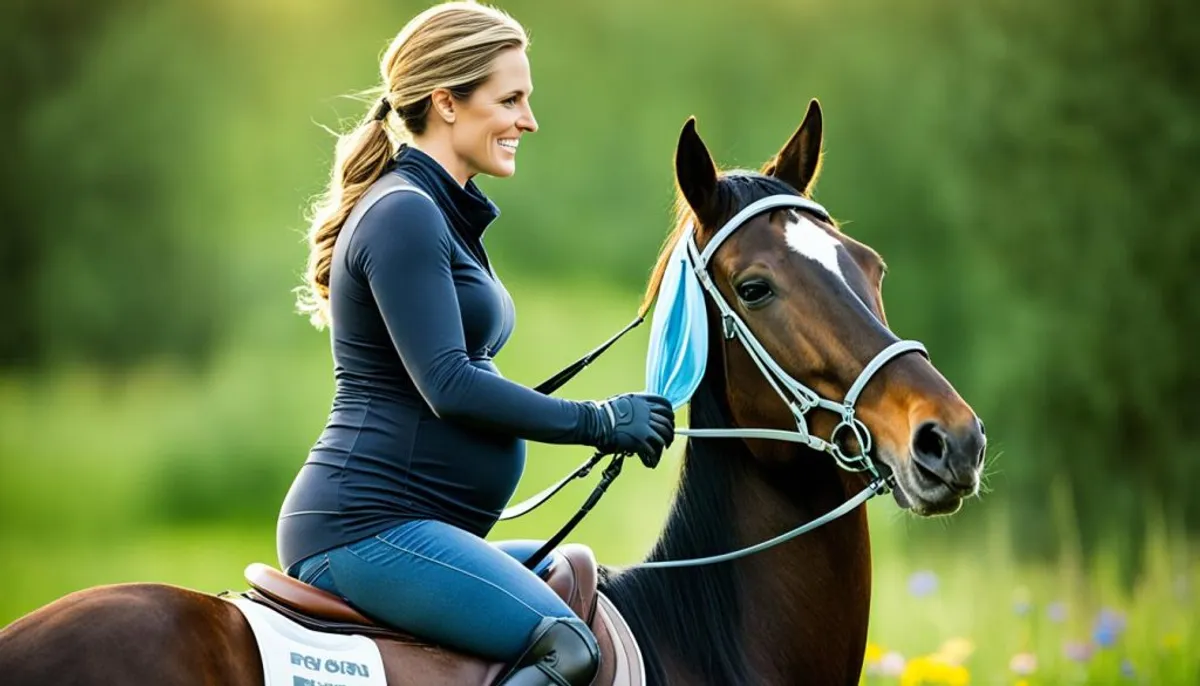
Dr. Priscille Le Grelle, federal doctor, emphasizes the need for increased caution for every expectant mother. Her body is changing and her needs are evolving.
Our guide aims to support you. It offers valuable advice for a serene equestrian activity. The goal is to preserve your well-being and that of your baby.
Riding can remain a pleasure with some adaptations. A medical consultation is the first essential step. It validates the possibility of this sporting practice.
Listening to your sensations and respecting your limits becomes paramount. Safety guides every decision to continue enjoying your horse with complete confidence.
Key points to remember
- Always consult your doctor or gynecologist before continuing.
- Learn to listen to your body's signals and adapt.
- Caution and safety should guide every session.
- Adaptations in your practice are often necessary.
- It is possible to maintain contact with your horse.
- Your health and that of your child are the top priority.
Understanding horseback riding during pregnancy
Before getting in the saddle, it is crucial to understand how the body evolves. This knowledge guides safer choices for you and your child.
Why practice horseback riding while pregnant?
For many, this activity is a source of pleasure and mental well-being. It can be continued with caution.
However, Dr. Priscille Le Grelle emphasizes that this period is not ideal for beginners if you were not a rider before. Your baby is well protected in its amniotic fluid, which cushions movements.
Body changes and impacts on balance
Anh-Chi Ton, midwife, explains that after the second trimester, the center of gravity shifts. This change increases the risk of imbalance and falls.
From the first weeks, hormonal variations can cause tension in the chest. A suitable sports bra is essential. The belly also exerts downward pressure, which can weaken the perineum during impacts on the saddle.
| Change | Period | Impact on practice | Recommended precaution |
|---|---|---|---|
| Shift in center of gravity | After the 2nd trimester | Increased risk of loss of balance | Avoid fast gaits and unstable terrains |
| Pressure on the perineum | Throughout pregnancy | Possible weakening during shocks | Prefer walking, choose a suitable saddle |
| Breast tension | From the first weeks | Discomfort during movement | Wear a sports bra providing good support |
The benefits and precautions to take
The benefits of a relationship with a horse during pregnancy are both physical and psychological. To fully enjoy them, certain precautions are essential.

The physical and mental contributions
A session in the arena, at a walk or trot, allows for gentle mobilization of the body. This activity offers a precious moment of relaxation.
Unlike running, it does not deplete energy reserves. The bond with the animal brings real pleasure and mental well-being.
The importance of consulting your doctor
Every expectant mother is unique. A personalized medical opinion is the foundation of any safe practice.
Your doctor or obstetrician will assess your case. They can validate an appropriate frequency, such as one hour, one to three times a week.
Recommendations by trimester help avoid unnecessary risks. They ensure the safety of both mother and baby.
| Trimester | Recommended activity | Main benefit | Specific precautions |
|---|---|---|---|
| 1st trimester | Light riding at a walk | Maintaining muscle tone gently | Avoid excessive fatigue, stay well hydrated |
| 2nd trimester | Sitting trot in a straight line in the arena | Improvement of balance and morale | Adjust the saddle for comfort, monitor your center of gravity |
| 3rd trimester | Care and groundwork with the horse | Preserving the bond and moderate physical activity | Stop riding, prefer ground activities without fall risk |
Tips for safe horseback riding during pregnancy
To enjoy your equestrian passion peacefully during this period, some key adjustments are to be known.
Dr. Priscille Le Grelle emphasizes the importance of a personalized approach. Your health and that of your child guide every decision.
Adapting practice according to the stage of pregnancy
It is generally reasonable to ride until four or five months. After this period, the risks of imbalance increase.
Prefer calm walks at a walk. Avoid trotting and galloping to limit impacts on your body.
Groundwork or ethological riding are excellent alternatives. They maintain the bond with your horse without the possibility of falling.
Wear a suitable sports bra. It ensures good support for the chest, as recommended by Dr. Le Grelle.
In case of doubt or discomfort, stop immediately. Safety is paramount.
| Period | Recommended activity | Precautions to take | Alternative choice |
|---|---|---|---|
| Up to 4-5 months | Walk in a straight line | Avoid fast gaits, unstable terrains | Groundwork on a lunge |
| After 5 months | Stop riding | Monitor any signs of fatigue | Ground ethological riding |
| Throughout | Care for the horse | Wear a sports bra | Participation in daily care |
Contraindications and potential risks
It is essential to recognize warning signals. They should interrupt any equestrian practice. Your health and that of your child are at stake.
Warning signs and situations to avoid
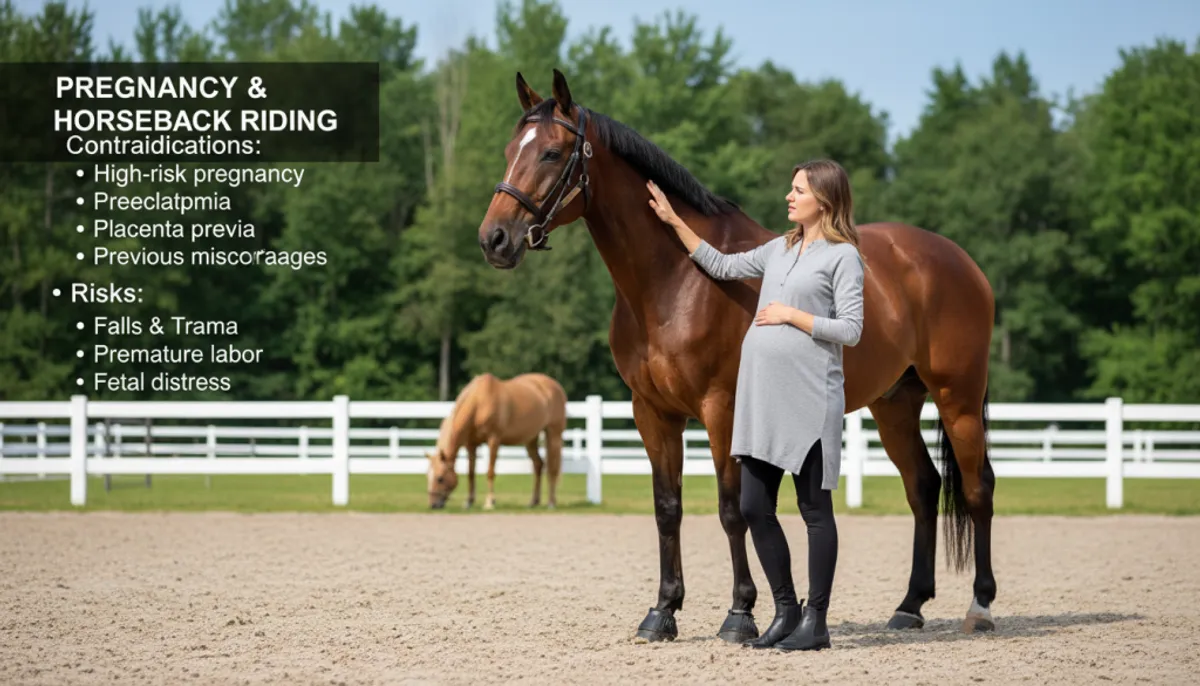
Dr. Priscille Le Grelle is clear. Certain symptoms require immediate cessation. Bleeding, pelvic pain, or contractions are among them.
Anh-Chi Ton, midwife, adds other major contraindications. Cervical incompetence or preeclampsia are examples. In these cases, riding should be avoided.
The risks of falling and fatigue
The third trimester brings more fatigue. The center of gravity shifts again. These two factors increase the risk of falling.
Every jolt on the saddle can weaken the perineum. For the pregnant woman, this can lead to urinary leakage. A very gentle ride is therefore crucial.
Dr. Le Grelle provides a useful clarification. A maternity belt is not mandatory. She advises doing without it if the rider feels well.
| Type of risk | Concerned period | Potential impact | Recommended action |
|---|---|---|---|
| Bleeding / pelvic pain | Any trimester | Complications for mother and baby | Immediate cessation and medical consultation |
| Cervical incompetence / preeclampsia | Any trimester | Absolute contraindication | Avoid any horseback riding |
| Fatigue and increased imbalance | 3rd trimester | Very high risk of falling | Reduce activity, prefer groundwork |
| Shocks on the perineum | Throughout | Weakening, urinary leakage | Prefer walking, use a suitable saddle |
Resuming horseback riding after childbirth
After the birth of your baby, the desire to reunite with your horse can be strong. This resumption requires a measured and safe approach.
Your body needs time to recover. A well-managed recovery is the key to a successful return to the arena.
Perineal and abdominal rehabilitation
The first essential step is perineal rehabilitation. It should be completed, about six weeks after childbirth, before getting back on the horse.
This abdominal rehabilitation is equally recommended. It limits the risks of prolapse and urinary leakage.
In the case of a cesarean, Dr. Priscille Le Grelle advises waiting at least three months. This personalized medical advice is essential.
Gradual resumption
Start with a very short session, like half an hour at a walk. Carefully observe your body's reaction.
Gradually increase the duration and intensity. Listen to your sensations at every moment.
Midwife Anh-Chi Ton suggests waiting until five months for a full resumption. This patience preserves your safety and long-term well-being.
Conclusion
This unique adventure requires a thoughtful approach to preserve the well-being of the expectant mother and her child. Success relies on attentive listening to one's body and the scrupulous respect of a personalized medical opinion.
Adapting one's equestrian practice according to the trimester of pregnancy is essential. This allows for continuing to live one's passion with serenity, while minimizing risks.
After childbirth, a gradual resumption, validated by your doctor, is indispensable. It protects your perineum and abdomen.
Each rider assesses her own limits. Prioritizing gentle activities on the ground maintains a precious bond with her horse, safely.
FAQ
Can you ride a horse when expecting a baby?
Yes, it is often possible, especially if you have good experience. It depends on your health and your doctor's opinion. You need to adapt your practice and be very attentive to your body's signals to protect your future baby.
What are the benefits of this activity for the expectant mother?
This sporting practice maintains your physical fitness and muscle tone. Mentally, it preserves a precious bond with your animal and reduces stress, which is excellent for your overall well-being during this period.
At what stage should one stop practicing?
There is no absolute rule, but caution increases with the months. Many women choose to stop in the second trimester. The important thing is to listen to your doctor and stop immediately in case of discomfort, intense fatigue, or risk of falling.
What are the main dangers to be aware of?
The major risk is falling, which could cause complications for both mother and baby. Jarring movements and fatigue should also be monitored. That’s why appropriate safety equipment and a very calm horse are essential choices.
When can one resume sports after childbirth?
The resumption should be gradual and await the agreement of your health professional. It generally occurs after the rehabilitation of the perineum and abdomen. Start with short, gentle sessions to regain confidence in the saddle.