
Do you want to progress in your equestrian practice and are wondering about the steps to take? The system of gallops is the common thread of your learning.
These diplomas, issued by the French Equestrian Federation (FFE), are the official benchmarks that mark the journey of every rider. They allow you to validate your technical and theoretical knowledge in a structured manner.
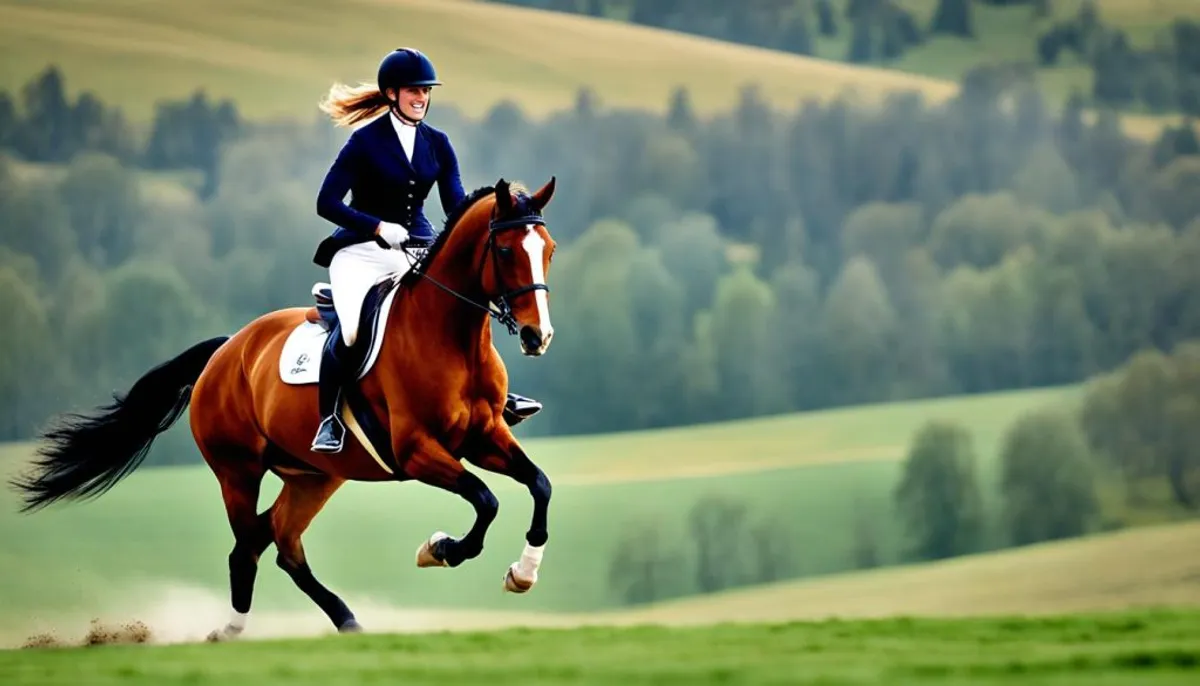
The current system, recently restructured, offers a coherent progression suitable for all ages. Each validated level marks a significant step in your mastery.
Beyond mere technique, this adventure strengthens the unique bond with your horse. Access to competition becomes a tangible prospect once the first gallops are obtained.
Key Points
- The Gallops are official federal diplomas issued by the FFE.
- They attest to the riding level and structure the rider's learning.
- The current system offers a coherent progression suitable for everyone.
- Each Gallop validates a specific set of technical skills.
- Obtaining them is often necessary to access official competitions.
- They serve as milestones to measure the evolution of the bond with the horse.
Introduction to the Equestrian Gallops
The system of gallops, the cornerstone of equestrian learning, underwent a major evolution in the early 2010s.
Context and History of the Gallops
The French Equestrian Federation modernized this system in 2012. This reform integrated essential cognitive and relational dimensions.
It also officially recognized the Pony Gallops for children aged 3 to 10. This first step at the club lays the foundations for a safe and responsible practice.
The Importance of Gallops in Equestrian Practice
These diplomas clearly structure the progression of the rider. They validate a comprehensive set of skills.
Equestrian practice is not limited to riding. It includes care, groundwork, and a deep understanding of the horse.
| Aspect | Pony Gallops | Rider Gallops |
|---|---|---|
| Target Audience | Children aged 3 to 10 | Teen and adult riders |
| Starting Age | From 3 years | From 10 years |
| Key Skills | Discovery, safe handling, relationship with the pony | Advanced riding technique, theory, comprehensive care |
| Main Objective | Awakening and confidence in the equestrian environment | Independence and preparation for competition |
This structure guarantees a holistic training. Each level reinforces the unique bond with the animal.
Understanding How Many Gallops in Equestrianism
The architecture of the gallops is based on a logical progression in seven distinct steps. Each level validates specific abilities.
Levels, Modules, and Federal Diplomas
The federal program revolves around the rider gallops from 1 to 7. These exams assess both practice and theory.
Your usual equestrian center is the ideal place to prepare for these tests. The gallop exams are organized there regularly.
| Gallop | Main Focus | Validated Skills |
|---|---|---|
| 1 to 2 | Discovery and Basics | Posture, gaits, basic care |
| 3 to 4 | Increasing Independence | Balance at all three gaits, basic jumping |
| 5 to 6 | Assertive Technique | Dressage, jumping, in-depth knowledge |
| 7 | Complete Mastery | Teaching, horse management, competitive preparation |
The Reforms of the French Equestrian Federation (FFE)
The French federation reformed the system on September 1, 2012. This update established the current seven levels.
Athletes like Zazie Gardeau have followed this path. Their success demonstrates the value of these diplomas.
Once gallop 7 is obtained, the rider possesses a recognized level. This opens doors in the professional equestrian world.
Types of Gallops and Their Specificities
Beyond the classic path, the French Equestrian Federation offers distinct avenues to validate skills. Each type of gallop corresponds to a different approach to the discipline.
Rider and Specialty Gallops
The rider gallops form the common core. They cover classical riding, including dressage and show jumping.
The program is designed to develop a complete practice. For enthusiasts of other disciplines, specialty gallops exist.
They adapt the exams to activities such as Western riding or vaulting. Outdoor riding is also included.
Competition Gallops and Their Evaluation Modalities
Since 2014, competition gallops offer another pathway. They allow validation of one's level through results in official competitions.
The federal evaluation remains demanding. It assesses the quality of practice and theoretical knowledge.
The safety of the horse is paramount. The adjustment of equipment and the lightness of the hand are scrutinized during the courses.
Skills and Knowledge Evaluated
The evaluation of skills during the gallops revolves around three fundamental pillars. These modules cover everything a rider must master to progress.
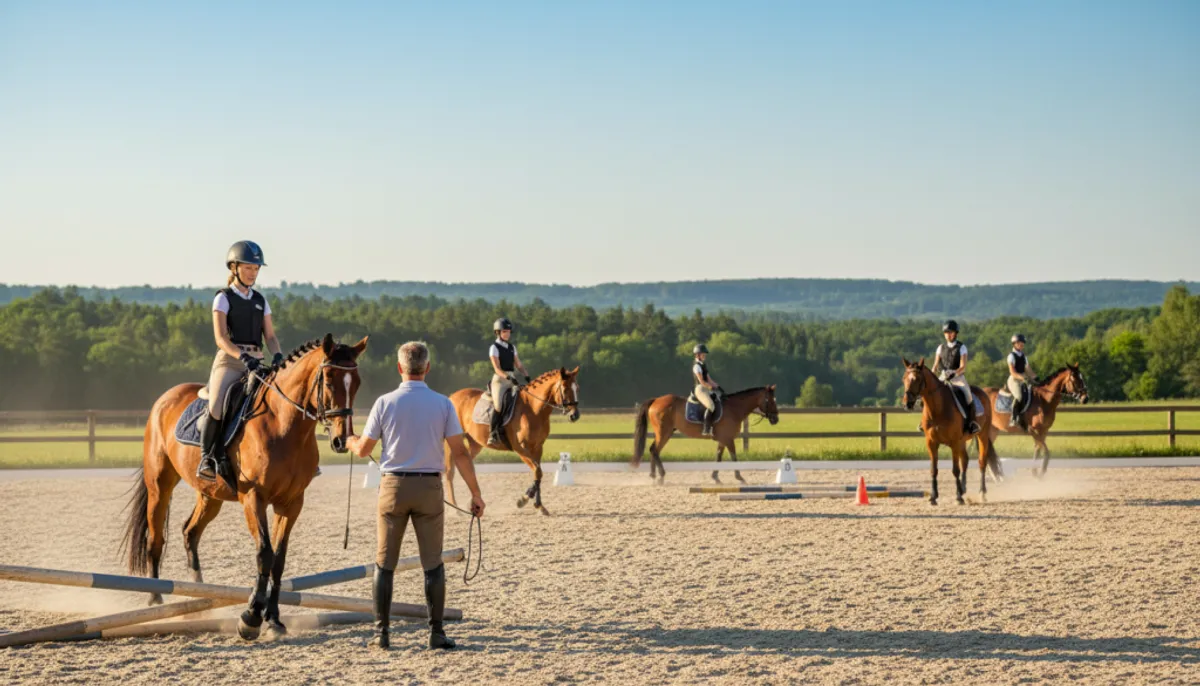
Mounted equestrian practice is, of course, central. The program of the rider gallops requires, for example, a good mastery of the rising trot and a solid position in the saddle during jumping.
The care given to the horse is scrutinized at each step. Grooming and maintenance of equipment are part of the learning.
Equestrian Practice, Care, and Groundwork
Groundwork allows for a better understanding of the behavior of the pony or horse. This skill strengthens the relationship and safety.
The smooth sequence of dressage or jumping courses is also validated. The practice in nature tests the rider's adaptability.
| Evaluation Domain | Key Skills | Example of Evaluation |
|---|---|---|
| Mounted Practice | Balance at all three gaits, position, sequence | Completion of a jumping or dressage course |
| Care & Groundwork | Grooming, handling, safety, lunging | Preparing the horse before riding |
| Theoretical Knowledge | Anatomy, breeds, regulations, safety | Oral or written questionnaire |
Essential Theoretical Knowledge
Theoretical knowledge is indispensable. It covers anatomy, breeds, and safety rules.
The federation has established the Federal Charter for Riders. It emphasizes the absolute respect for the horse and calmness in all situations.
Each success in the exams validates an overall level. It marks progress in skills and the trust relationship.
Effectively Preparing for Your Gallop Exam
The FFE provides concrete tools to help riders in their preparation for the gallops. A methodical organization is key to approaching these exams calmly and validating your level.
FFE Programs, Workshops, and Training at Equestrian Centers
The official program of the federation is your roadmap. It details all the knowledge and skills to master for each gallop.
Your equestrian center often organizes intensive workshops. These immersions allow for thorough revision and practice of groundwork and care.
| Preparation Method | Main Advantages | Strengthened Skills |
|---|---|---|
| Intensive Workshops at the Center | Total immersion, complete revision | Groundwork, care, mounted practice |
| Official FFE Program | Clear structure, reliable resources | Theoretical knowledge, techniques |
| Regular Work in the Arena | Progressive improvement, automation | Rising trot, jumping, position |
Tips and Educational Resources for Progressing
Use apps or books to test your knowledge about the horse and its equipment. Mental preparation is also crucial to manage stress during a dressage course.
Outdoor practice complements learning in the arena. It offers a varied experience that tests your adaptability.
Each session is an opportunity to correct your position in the saddle and refine your communication with the pony. A light hand and good balance in the rising trot make all the difference.
Equivalences and Evolution of Diplomas
To situate your current level, it is useful to consult the equivalence tables established by the federation. These references connect the old diplomas (1979, 1990, 1996) to the current gallops.
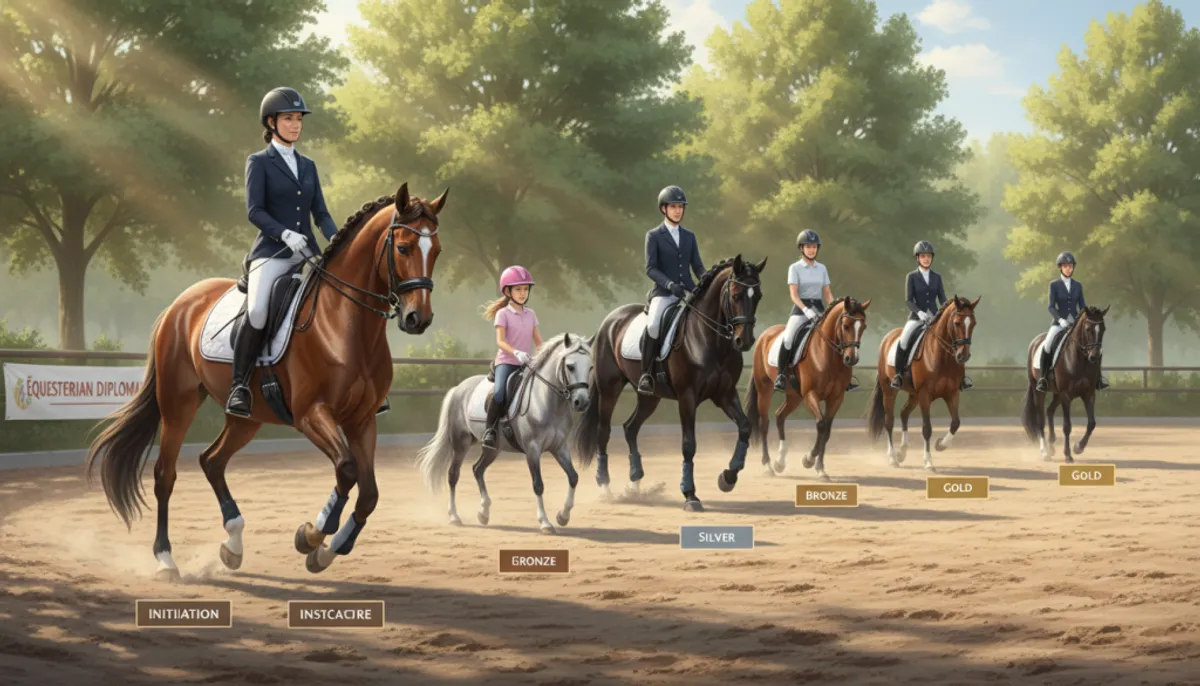
This perspective helps riders understand their journey. It shows how the French equestrian federation has simplified progression.
Equivalence Tables Between Old and New Diplomas
The official tables allow for a clear transition. They ensure that the skills acquired, whether in dressage or show jumping, remain recognized.
A rider who has validated an old level knows which gallop to aim for next. This logic avoids starting over from the beginning.
The Importance of Continuity in Equestrian Learning
Continuity is essential to master each step. The FFE values this smooth progression, from pony clubs to competitions.
The federal program ensures the coherence of knowledge. The workshops at equestrian centers help riders adapt.
Taking gallops is part of a long-term effort. The respect for the horse and rigor remain constants, regardless of the diploma.
Conclusion
Validating your gallops means committing to a complete and structured equestrian adventure. The federal program guides you in developing solid skills, ranging from dressage to essential care for the horse.
Each level is a rewarding step that strengthens your bond. The workshops at the club are perfect for deepening your groundwork and your technique in the saddle.
Mastery of the trot and precision of the foot testify to your seriousness. By reaching a level, you join a community of enthusiasts, sharing respect and pleasure in practice.
Continue regularly to enjoy every progress.
FAQ
How many gallops are there in total today?
The French Equestrian Federation (FFE) offers two main pathways. The Rider pathway has 7 levels, from Gallop 1 to Gallop 7. The Competition pathway has 9, from the Bronze Gallop to the Gold Gallop. These federal diplomas structure the progression of riders and ponies across all disciplines.
Why is it important to pass your gallops?
These exams are a key step in your learning. They ensure the acquisition of solid skills in equestrian practice, horse care, and safety. They provide a recognized framework for progression in any equestrian center and are often required to participate in official competitions such as show jumping.
What are the differences between Rider Gallops and Competition Gallops?
The Rider Gallops form the common core for all practitioners, from beginners to advanced. The Competition Gallops specialize in a discipline (show jumping, dressage, etc.) and specifically prepare for competition courses. They assess in-depth technical knowledge and mastery in competitive situations.
What skills are tested during an exam?
The evaluation is comprehensive. It covers mounted practice (gaits, balance), groundwork, daily care, and theoretical knowledge. You will be judged on your autonomy at all three gaits (walk, trot, canter), your management of equipment, and your understanding of equine behavior.
How to prepare well for your gallop exam?
The best way is to diligently attend classes at the equestrian center and participate in intensive workshops. Use the FFE official program as a guide. Regularly practice the rising trot, saddle positioning, and review educational materials. Don't hesitate to ask for specific exercises from your instructor.
Are my old gallops still valid with the new reform?
Yes, absolutely. The French Federation has established a clear equivalence table. Your old diplomas retain their full value. For example, an old Gallop 7 directly grants you access to the new Gallop 7 for Riders. This continuity allows each rider to continue their work and evolution smoothly.