
The purebred Arabian horse was born in the Arabian Peninsula. It is known for its elegant appearance and wisdom. The Bedouin people have patiently selected it. Thus, it represents nobility, elegance, and a perfect balance between strength and endurance.
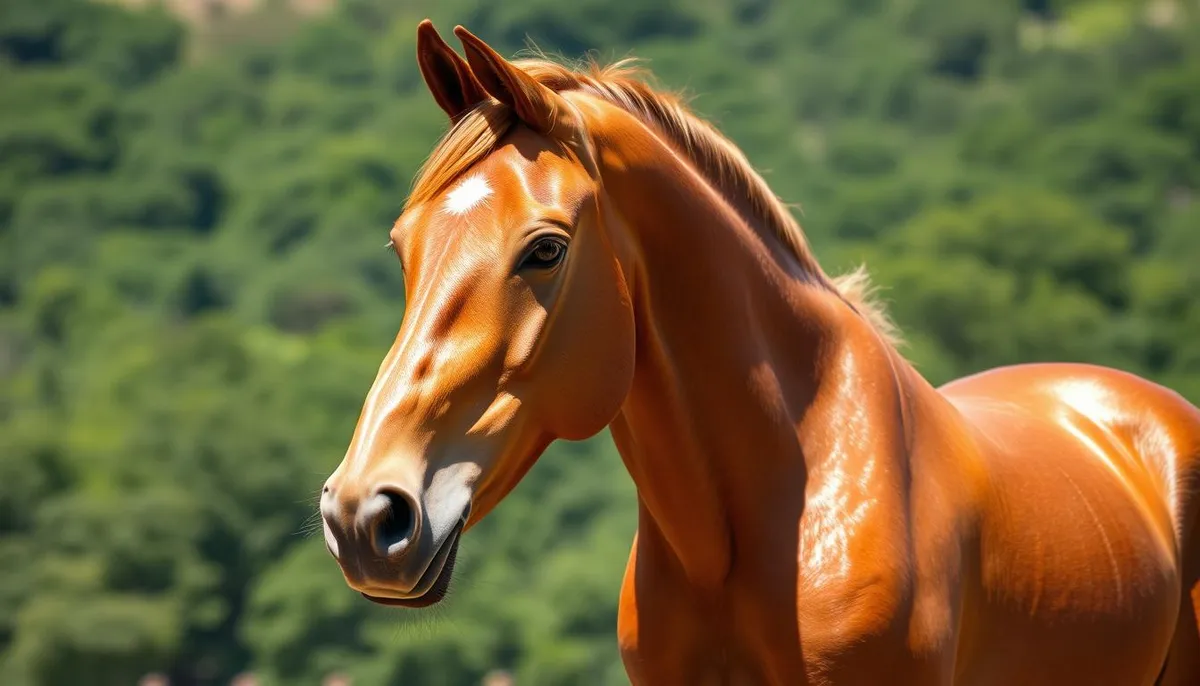
Its head is fine with a concave profile. It has large eyes and an arched neck. Its skin is sensitive, and its coat is silky. Its body is compact and shows natural athleticism. Riders from around the world admire this balance.
Adapted to the desert, the Arabian horse has powerful muscles and hard hooves. It can cover up to 160 km per day. Its character is also generous.
The Arabian thoroughbred has influenced other breeds such as the Thoroughbred. It brings speed and endurance. Its prestige is visible in competitions and equestrian shows. It is a symbol of elegance and strength.
Key Points
- Desert origins and Bedouin selection, guarantees of endurance and sobriety.
- Distinctive traits: fine head, concave profile, large eyes, arched neck.
- Fine skin, silky coat, hard hooves: adapted to arid terrains.
- Endurance performances up to 160 km, efficient breathing.
- Cultural and sporting radiance, from Title Shows to Tbourida.
- Global genetic influence on racing and sport breeds.
- Rare alliance between equestrian elegance, nobility of the Arabian horse, strength and endurance.
Portrait of an Equestrian Icon: Elegance, Power, and Living Legend
The Arabian Thoroughbred is a symbol of harmony, blending beauty and strength. Its physical traits show a perfect adaptation to the desert. Riders, whether for endurance or presentations, greatly appreciate it.
Distinctive Physical Traits and Functional Utility
It has fine skin, a silky coat, and hard hooves. These characteristics prepare it well for the hot climate and challenging terrains. Its ability to dissipate heat quickly is impressive.
Its body is compact and agile. Its short back helps maintain balance. Its mane and tail give it a beautiful appearance without being an obstacle.
Expressive Beauty: Fine Head, Concave Profile, Large Eyes
The beauty of an Arabian horse is seen in its delicate head, its concave profile. Its large eyes show its sensitivity and intelligence. This beauty is not just for appearance, but also aids in work.
Its responsiveness and sensitivity to commands make it valuable. It excels in both presentations and daily work.
High Head Carriage and Arched Neck, Symbol of Nobility in Motion
Its high head carriage is supported by an arched neck. This enhances not only balance but also the quality of movements. This aspect gives it a noble and effective presence.
In every movement, the elegance and functional utility of the Arabian horse shine. Its energy efficiency and ease of movement are admirable.
| Characteristic | Biomechanical Role | Practical Benefit | Visual Signature |
|---|---|---|---|
| Fine head and concave profile | Clear airways and easy flexion | Efficient breathing, comfort in prolonged effort | Marker of expressive horse beauty |
| Arched neck and high head carriage | Front/back balance, back stability | Elevated gaits, precision in light dressage | Noble and dynamic silhouette |
| Fine skin, silky coat | Rapid heat dissipation | Comfort in hot climates, gentle maintenance | Natural shine on track and outdoors |
| Hard and compact hooves | Absorption and traction on rocks | Less protection needed on natural terrain | Surefooted on trails and endurance |
| Compact body and fine musculature | Agility and energy efficiency | Sustained power without excessive mass | Bright and precise gait |
Endurance and Performance: The Secrets of Legendary Resilience
The endurance of the Arabian horse amazes with its sober yet powerful efficiency. It comes from Bedouin selection methods. These horses shine in equestrian performance in the desert or on endurance tracks. Their consistency in competitions, during sports rides, and in 160 km raids is admired.

Fine and Powerful Musculature for Long Distances
Their muscles are dry, lively, and supple. This helps them endure without unnecessary fatigue. Training focused on pace control and uphill efforts refines their movements.
This preparation optimizes their energy consumption and recovery. It enhances the endurance of the Arabian horse and boosts their equestrian performance on varied terrains.
Hard and Resilient Hooves, Adapted to Arid and Rocky Terrains
Their resilient hooves have hard horn, ideal for dry and stony terrains. Proper maintenance, with cleaning and trimming, as well as the use of strengthening oils, is crucial.
This robustness allows sustained gaits over long distances. It is vital during 160 km raids, where every step counts.
Effective Respiratory Passages and High Lung Capacity
Their wide nostrils and large rib cage promote significant lung capacity. Their breathing remains regular after exertion, a sign of excellent oxygenation.
Training combining trot and gallop improves oxygen intake and recovery. This strengthens the endurance of the Arabian horse and levels their equestrian performance.
Endurance Competitions and 160 km Raids, Records and Inspiring Cases
At the Tevis Cup in California, Purebred Arabians often shine at the top. Their effort management, lung capacity, and resilient hooves distinguish them on demanding courses.
In Europe and the Middle East, 160 km raid competitions demonstrate the superiority of this breed. They rely on proven bloodlines, rigorous preparation, and strict veterinary checks.
| Physiological Asset | Effect in Race | Recommended Training | Benefit on 160 km |
|---|---|---|---|
| Fine and powerful musculature | Economical stride, controlled heat | Controlled gallops, uphill training | Less fatigue, speed consistency |
| Resilient hooves | Stability on stones and dry ground | Regular trimming, strengthening oils | Less wear, reliable footing |
| High lung capacity | Stable breathing rate | Trot/gallop intervals, aerobic work | Quick recovery at vet-gates |
| Effective thermoregulation | Less dehydration | Planned hydration, electrolytes | Consistent pace on long loops |
Purebred Arabian Horse
The purebred Arabian horse comes from the Arabian Peninsula. It is a symbol of nobility, purity, and courage. It is appreciated for its elegance and resilience. Sport riders and show fans adore it.
It has a distinctive look with a well-formed head, large expressive eyes, and a muscular neck. Its body is compact and supple. The colors of its coat vary, including white, chestnut, bay, and gray.
It adapts well to deserts, has resilient hooves, and great endurance. It excels in endurance and racing. It can be found competing in Florac, Fontainebleau, and at the Salon du Cheval in Paris.
Its pedigree has been preserved for centuries. It has influenced the Thoroughbred and other breeds. It brings speed, endurance, and a good temperament.
The breeding of purebred Arabians follows strict standards to maintain its style and performance. The global demand for these horses is high.
Some studs in France, Poland, and the United Arab Emirates offer award-winning bloodlines. High society and royal families keep this horse for its prestige.
Al Khamsa, Genetic and Cultural Heritage: From Legend to Competition
The history of Al Khamsa blends Bedouin traditions and breeding knowledge. Tribes have shared living knowledge, guiding the Arabian horse pedigree and modern selection. This expertise guides breeders' decisions today, from the deserts to competitions.
Mythical Origins of the Five Sacred Mares and Their Prestigious Bloodlines
Legends tell the story of five mother lines: Saqlawi, Kuhaylan, Hamdani, Hadban, and Abeyan. Chosen by the Bedouins for their endurance, sobriety, and courage, they have created prestigious horse bloodlines. These lines are valued for the delicacy of their heads and their harmony.
Manuscripts, tribal family trees, and travels transmit this heritage. Al Khamsa has become a symbol of purity and identity, revered in camps as well as in stud books.
The Impact on the Arabian Horse Pedigree and Current Selection
In studs, Al Khamsa's influence is crucial for the Arabian horse pedigree: rigorous selection, tested stallions, and a focus on temperament. The modern selection combines traditions, genetics, assisted reproduction, and tailored training.
The goal is clear: to preserve elegance while maintaining the horse's robustness. The objective includes an extended stride, a strong back, and quick recovery. These aspects are essential to excel in all disciplines.
Arab Champions in Beauty and Gait Competitions, from the Desert to Global Stages
From endurance to presentations, the heirs of Al Khamsa shine from Morocco to the Emirates. The International Competition in Rabat has become a leading event, confirming the status of Arabian horse champions from these lines.
From the FEI to the most prestigious competitions, the Al Khamsa brand stands out. Its striking appearance, resilience, and quality of movement are prized by judges.
| Al Khamsa Lineage | Historical Assets | Modern Selection Criteria | Current Competitive Scene |
|---|---|---|---|
| Saqlawi | Expressive beauty, fine head | Models & gaits, balance, expression | Title Show, ECAHO shows, Arabian horse champions |
| Kuhaylan | Power, solid structure | Strong back, work aptitude, endurance | FEI endurance 120–160 km, desert podiums |
| Hamdani | Resilience, sobriety | Heart recovery, metabolism | Long-distance raids and performance classes |
| Hadban | Reliable temperament | Stable mind, ease of training | Young horses, international circuits |
| Abeyan | Head carriage, elegance | Trot quality, top line | Models & Gaits Finals, Middle East shows |
- Traceability of origins: cornerstone of the authentic Arabian horse pedigree.
- Specialized training programs: for endurance, movement, and recovery.
- Harmonized objective: to maintain the spirit of Al Khamsa in modern selection.
Breeding and Bloodlines in France and Internationally
In France, purebred Arabians come from renowned studs. They include a solid breeding technique. Judges look for certain qualities such as purity, a proud neck, and a concave profile. They also consider endurance and mental strength. This creates a flexible breeding approach, open to the world and innovations.
The breeding of Arabian horses is experiencing a global movement. In Morocco, SOREC helps organize this sector. The United Arab Emirates invest in competitions and endurance. In Hungary, the National Stud collaborates with associations to improve horse welfare and evaluation.
Selection criteria have become international: precise genes, quality bloodlines, and good locomotion. The purebred Arabian must be sensitive, intelligent, and have strong hooves. These strengths make their pedigrees highly sought after in the global market, supported by royalty and experienced collectors.
Genetic crossings are essential. They enhance speed, endurance, and character. The programs aim to preserve the original lines while boosting performance. They closely monitor the best stallions and promote international exchanges.
The reputation of European breeders is improving thanks to certain competitions. Morocco, for example, uses the Title Show to increase their visibility. For France, this means more appreciated breeders and well-thought-out crossings. And above all, being more present on podiums and in competitions.
| Country/Institution | Selection Strengths | Cooperation Axes | Market Impact |
|---|---|---|---|
| France | Harmonious morphology, reliable temperament, following prestigious horse bloodlines | Exchanges of breeders, harmonization of judging grids | Stable demand in presentation and endurance, increased value for pedigrees |
| Morocco (SOREC) | Model quality, pedigree readability, promotion of purebred Arabian horse | Title Show, judge training, national circuits | Strong attractiveness, price increase for elite subjects |
| United Arab Emirates | Endurance performance, racehorse breeding, sports preparation | Sharing veterinary and training expertise | High investments, premium market for winners |
| Hungary (Szilvásvárad) | Conservation of strains, genetic traceability | Programs with AHA and ASC, equine welfare | European reference for purebred Arabian breeding |
The breeding of Arabian horses blends tradition and novelty. It uses genetics and well-defined criteria. This method ensures success, both in presentation and competition. And it preserves the link between heritage and competitiveness.
To succeed, breeders must align their sporting ambitions with the quality of their horses. A good selection of mares, a stallion that complements the group well. And a developed international network ensure constant progress, from presentation to endurance races.
Care, Training, and Daily Well-being
An Arabian horse loves simple and regular routines. For its health, one seeks to have healthy skin, a beautiful coat, and strong hooves. It is important to manage its exercise, diet, and rest well for its condition and relationship with humans.
Maintenance of Silky Coat and Protection of Fine and Sensitive Skin
To aid thermoregulation, the fine skin of the horse should be treated gently. Use soft brushes and a sheep glove to avoid irritating the skin. A good detangler helps care for the coat without breaking it.
Choose special shampoos and conditioners, and rinse with warm water. Dry well to avoid irritations. A daily care schedule keeps the horse healthy and beautiful.
- Hooves: clean them after each outing, perform regular care, and apply oils to strengthen them.
- Prevention: be attentive to cracks and infections, especially on wet or stony terrains.
Nutrition, Hydration, and Supplements for Vitality
Good quality hay is essential and should be given in small amounts for slow eating. Add grains according to activity and season. Water should be accessible at all times, with salt.
Specific supplements help maintain balance: vitamins, magnesium for stress, zinc for the skin, and biotin for hooves and coat. A fiber-rich diet with electrolytes is good after exertion.
| Goal | Key Intake | Benefit |
|---|---|---|
| Stable Energy | Fiber-rich hay, measured concentrates | Less glycemic spikes, sustained endurance |
| Skin and Coat | Zinc, fatty acids, biotin | Shine, reduced irritations, strong horn |
| Hydration | Fresh water, electrolytes | Quick recovery and thermoregulation |
Diverse Training Programs, Recovery, and Mental Health
For training, vary between walking, trotting, and galloping. Add hills to strengthen the hindquarters. Interval exercises improve lung capacity and recovery.
Ensure to give rest days, perform gentle massages and stretches. Social interactions and light exercises stimulate the horse's mind. This maintains its well-being and motivation.
- Before the outing: check the hooves, ensure the horse is well-hydrated, and start with a gentle warm-up.
- After the session: gradually calm the horse, offer warm water slowly, then give its ration and supplements.
Culture, Competitions, and Luxury: Contemporary Radiance
The purebred Arabian horse is at the heart of art, sport, and exceptional craftsmanship. It shines around the world, blending elegance, precision, and a rich heritage. Whether in competitions or fantasias, it embodies beauty and tradition.
International Models & Gaits Competitions – Title Show
The Models & Gaits competition at the Salon du Cheval d’El Jadida is recognized as a Title Show. It represents the excellence of purebred Arabians with participants from the United Arab Emirates and Europe.
Judges look for beauty, perfection of movements, and remarkable presence. It is a competition that showcases exceptional horses.
Tbourida and Living Heritage in Morocco, Excellence and Prestige
The Tbourida is a major event in Morocco, marked by the Grand Prix of His Majesty King Mohammed VI. Riders align perfectly, executing synchronized shots.
Marrakech-Safi shone in 2024 with 82.17 points, followed by Casablanca-Settat with 76.70 points. The show highlights the skill of the riders and the majesty of the horses.
Competition Horses, Racing Breeds, and Racehorse Breeding
The Arabian horse shines in endurance and influences other breeds. It brings energy, sobriety, and quick recovery.
Its endurance performances are recognized worldwide. Racehorse breeding aims for this resilience and mental strength.
Symbol of Prestige, Artistic Influences, and High-End Market
The purebred Arabian, a symbol of nobility, inspires artists. It is often depicted in painting, sculpture, and cinema.
Exceptional pedigrees are highly sought after by collectors and royal families. They animate a selective luxury market.
La Sellerie Française: High-End Equipment 100% Made in France
La Sellerie Française manufactures custom equipment in France. Quality materials and ergonomics contribute to performance on the track.
These luxury items are perfectly suited for competition horses. They ensure comfort, stability, and lasting elegance.
| Scene | Key Criteria | Assets of the Purebred Arabian | Role of Equipment |
|---|---|---|---|
| Models & Gaits Competition – Title Show | Type, symmetry, expressiveness, locomotion | Fluid gaits, expressive head, taut back | Fine bridlework, lightweight saddles, high-end finishes |
| Tbourida | Synchronization, stability, presence | Responsiveness, courage, balance at full gallop | Secure harnessing, optimal support, reinforced leather |
| Endurance and Dedicated Races | Recovery, economy of movement, resilience | Lung capacity, energy sobriety | Endurance saddles, ergonomic girths, protection |
| High-End Market | Pedigree, results, presentation | Charisma, sought-after genetic signatures | La Sellerie Française for a premium look |
Conclusion
The purebred Arabian horse is a blend of elegance and utility. Its fine skin helps keep it cool. Its head, with a concave profile, is beautiful.
The arched neck and noble head carriage define its unique appearance. Its hard hooves support long distances. Its endurance and prestige are visible with every step.
Descended from Al Khamsa, the Arabian horse connects tradition and modernity. It excels in competitions and long raids of 160 km. It symbolizes nobility in action, valuing sober effort and consistency.
Breeding in France and internationally maintains the quality of bloodlines. Partnerships, such as between Morocco and Hungary, enrich its genetic diversity. Careful attention and good nutrition ensure their well-being.
Between art, sport, and luxury, the Arabian horse continues to inspire. La Sellerie Française offers high-quality equipment. They demonstrate that beauty and functionality must go hand in hand and be preserved.
FAQ
What distinguishes a purebred Arabian horse from other breeds?
The purebred Arabian is distinguished by its elegant head and distinguished profile. It has large expressive eyes and a graceful neck, a sign of its nobility.
Its fine skin and shiny coat, combined with solid hooves, give it remarkable endurance. These traits come from careful selections in the Arabian desert.
Why is the purebred Arabian called the "King of the Desert"?
This nickname comes from its perfect adaptation to deserts.
Its unique characteristics allow it to excel over long distances. It is a true endurance champion, capable of covering up to 160 km.
What are the essential care practices for fine skin and silky coat?
To care for their coat, use soft brushes made of natural fibers.
Choose specific shampoos and detanglers. A regular care routine is crucial to protect their delicate skin and maintain their beauty.
How to maintain naturally resilient hooves?
Regular hoof maintenance is essential.
Daily cleaning and the use of strengthening oils are recommended. Although their hooves are robust, it is crucial to prevent cracks and infections.
What training programs promote endurance?
A varied training regimen is the secret.
Combine walking, trotting, and galloping, and add specific exercises to improve endurance. Controlled gallops and hill exercises are particularly beneficial.
What are the Al Khamsa lines and why are they important?
Al Khamsa refers to the five founding lines, revered by the Bedouins.
These lines are at the heart of purebred Arabian breeding. They guarantee purity, endurance, robustness, and beauty.
How to verify the pedigree of a purebred Arabian horse?
Consult official records and lineage documents.
A detailed pedigree increases the value of breeding and ensures the selection of the best specimens.
Does the Arabian horse influence other racing breeds?
Absolutely. It has enriched the Thoroughbred, the Arab-Berber, and the Quarter Horse.
Its qualities of endurance, speed, and temperament are valuable in improving racing breeds.
In which disciplines does an Arabian horse excel?
It shines in endurance, in Models & Gaits, and in traditions like Tbourida.
Its natural elegance also allows it to excel in light dressage and shows.
What is the benefit of wide respiratory passages in Arabians?
Wide nostrils and a spacious rib cage enhance breathing.
This facilitates performance over long distances and quick recovery after exertion.
How to feed an Arabian horse for performance and health?
A balanced diet is crucial.
Include fibers, concentrates according to activity, and fresh water. Mineral and vitamin supplements, including biotin, are essential.
What are the markers of well-being in an Arabian horse?
Good health is recognized by its appetite, shiny coat, and relaxation after exertion.
It is sensitive and intelligent, so pay attention to its physical and mental well-being.
Why are high head carriage and arched neck sought after?
They symbolize nobility and a perfect balance.
These traits allow for fluid movements and enhance their expressiveness, especially in Models & Gaits and in dressage.
What does the Title Show status bring to Models & Gaits competitions in Morocco?
This status raises the level of competitions and attracts international attention.
It highlights Arabian horses and stimulates breeding in several regions.
What does Tbourida represent for the Arabian horse?
Tbourida is an equestrian art where grace and courage are honored.
It underscores the deep connection between culture and equestrian performance in these horses.
How is the high-end market for Arabian horses positioned?
The high-end Arabian horse market is dynamic.
Horses from prestigious bloodlines are highly sought after by connoisseurs and collectors.
Which countries and institutions support purebred Arabian breeding?
Several countries, including France and the Emirates, are engaged in breeding.
They collaborate with organizations dedicated to quality of life and excellence in breeding.
How is La Sellerie Française relevant for elite Arabian horses?
It offers custom or limited edition equipment designed in France.
This ensures perfect quality and aesthetics for competitions and training.
What is the difference between a purebred Arabian horse and an Arabian competition horse?
The purebred Arabian refers to the breed itself.
A competition horse indicates an individual specifically prepared for sports events.
How to reconcile tradition and modern selection in breeding?
It is about balancing traditional methods with modern advancements.
This involves careful monitoring and management focused on well-being and performance.
What criteria to observe when choosing a young purebred Arabian?
Consider morphology, gaits, temperament, hoof quality, and an impeccable pedigree.
Ensure these criteria align with your goals.
Are Arabian horses suitable for amateur riders?
Yes, if the horses are properly trained.
Their intelligence and sensitivity require a patient approach and adequate education.
What precautions in hot or dry climates?
Water and electrolytes are essential, as are proper care.
Adapt exercise to milder temperatures and closely monitor their health.
How has the Arabian horse shaped modern racing breeds?
Its genetic legacy has improved the performance of current breeds.
Its qualities of endurance, speed, and good temperament have been crucial.
What are the priorities of a high-performing Arabian horse breeding?
The focus is on purity, well-being, selection for morphology and endurance.
The goal is to produce internationally competitive horses.