
The Breton horse is solid, reliable, and proud. It is a strong symbol of the equestrian heritage of Brittany. Since forever, it has shown its quiet strength, great endurance, and love for work.
Descended from the horses of Celtic warriors, it became famous from the early 20th century, starting in Landivisiau. Today, there are two main types of Breton horses. The Breton Draft, which is compact and strong. And the Breton Post Horse, which is faster and more elegant.
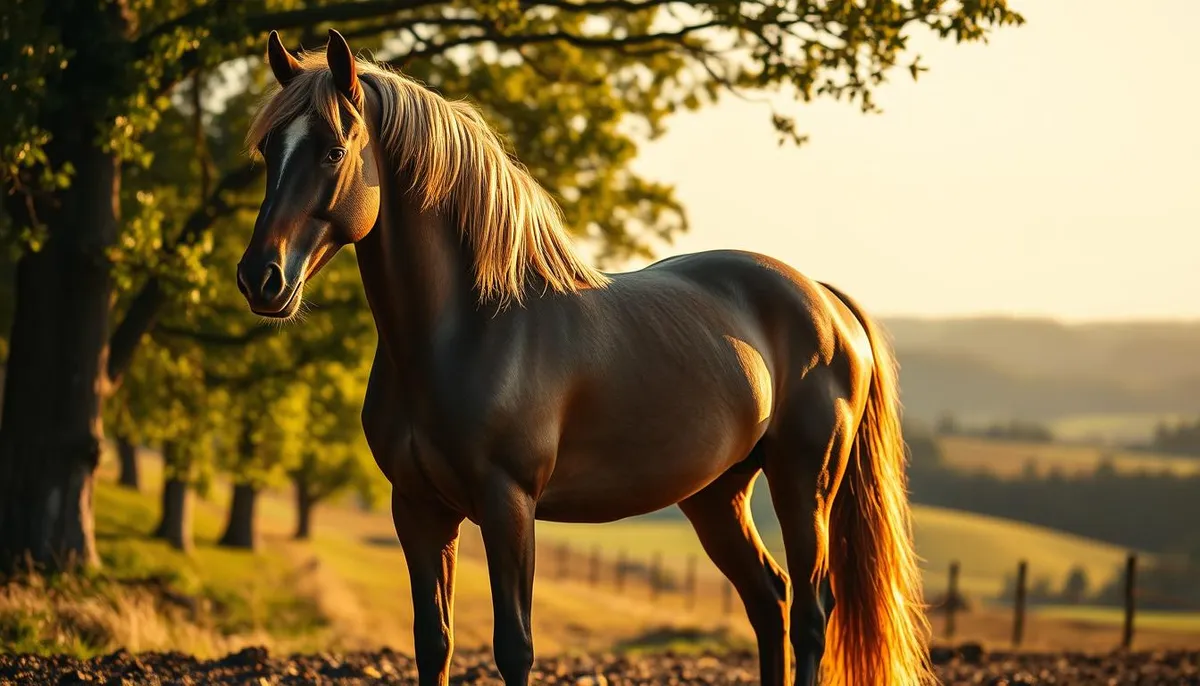
The Breton horse has distinct features: an expressive head, a powerful neck, and a short but muscular back. Its physique is also marked by sloping shoulders and a wide croup. Since 2009, the accepted colors are chestnut, bay, black, and roan, with small white markings.
Despite its classification as a threatened breed, the Breton horse enjoys good conservation. It is cherished by a network of passionate breeders in Brittany and beyond. Employed on farms, in forests, or for harnessing, it remains a loyal partner and dear to the Breton heart.
Key Points
- A breed rooted in the Breton equestrian heritage since the Celtic era.
- Two complementary types: the Breton Draft powerful and the Breton Post Horse lighter.
- Precise morphological standards and coats framed by the stud-book.
- Historical export from Landivisiau and strong national presence.
- Diverse uses: agriculture, logging, sports harnessing, and tourism.
- Active preservation of a threatened draft breed in France.
Origins and History of the Breton Horse in Breton Equestrian Heritage
Brittany has a long history with horses, dating back well before our era. Evidence of their presence has been found between -750 and -1000. Culture, trade, and wars have helped develop this rich history.
Writers of antiquity mentioned the role of the horse among the Celts. Caesar even spoke of their taboo against eating horse. The first Breton horses were robust, capable of navigating difficult terrains.
From Celtic Roots to Armorica: Introduction of the Horse and Early Evidence
Armorica began riding horses between -750 and -500. These animals aided warriors and had great symbolic value. The coins of the time show horses, a sign of well-established breeding.
The Romans also described these horses. They spoke of lively mounts, perfect for rugged terrains. This knowledge has been passed down through generations.
From the Middle Ages to Stud Farms: Renowned Horses, Lordly Studs, and Semi-Wild Breeding
The Middle Ages saw the organization of breeding around castles and abbeys. For example, Redon had its own stud farm around the year 1000. The Rohan family even imported stallions from Egypt in 1213.
Breton horses grew up in freedom, which made them strong. Their reputation grew, as did exports. Great figures like Du Guesclin contributed to their legend.
From the Pony to the Draft: Roads, Coaches, and the Shift to Harnessing in the 18th Century
After turbulent centuries, breeders sought to improve the local breed with foreign horses. Modernized roads and coaches changed the needs.
The workhorse took two forms: the robust “Leon horse” and the lighter “Conquet horse.” Breeding became more controlled, and exports soared.
Revolution, Requisitions, and the Restoration of National Stud Farms
The Revolution initially harmed breeding with its requisitions. Over 900 horses were seized in 1800. But the industry found its second wind under Napoleon.
The national stud farms revived, supplying artillery and cavalry. By the early 20th century, Landivisiau became a major export center. Despite mechanization, interest in the Breton horse persists, enriching the regional heritage.
Characteristics of the Breton Horse and Breed Standards
At first glance, this horse captures attention with its strength and tranquility. Its features include imposing musculature and robust bone structure, all tempered by a peaceful nature. The breed criteria aim to ensure a certain stature, capacity for physical work, and regular movements essential for pulling loads.
Docile yet energetic, it shines with its sociability, resilience, and surprising agility considering its size. Ideal for agriculture, transporting wood, and for the pleasure of driving teams, while remaining lively and responsive.
Height, Weight, and Morphological Types: Breton Draft and Breton Post Horse
Breton horses generally stand at 1.58 m at the withers. Their weight ranges from 700 to 1000 kg, depending on their structure and role. There are primarily two types: the Breton Draft, solid and low, and the Breton Post Horse, taller, benefiting from Norfolk influences and English blood.
Each type is suited for specific tasks. The Breton Draft is built for intense physical work, while the Breton Post Horse is faster and more versatile.
Expressive Head, Powerful Neck, Short Back, and Imposing Croup
- Medium volume head, expressive and square, well-set low ears, bright eye.
- Powerful neck, long and wide; long, sloping shoulders favoring amplitude.
- Short, very muscular back; dropped chest; long and imposing croup.
- Short, strong limbs, full thighs, wide knees, dry and short cannons.
- Thick mane, often slightly wavy.
The physique of the Breton horse is designed for stability, pushing power, and endurance. This allows them to work tirelessly on diverse terrains.
Accepted Colors by the Stud-Book, Washed Manes, and Limited Markings
The stud-book accepts several colors: chestnut, often with washed manes, bay, black, and roan. Bay and roan colors are rarer. White markings are accepted in moderation since 2009, to maintain breed uniformity.
This range of colors facilitates identification during competitions and contributes to the uniformity of breed standards.
| Criteria | Breton Draft | Breton Post Horse |
|---|---|---|
| Average Height | 1.56–1.60 m | 1.55–1.58 m |
| Indicative Weight | 850–1,000 kg | 700–850 kg |
| Gaits | Short, powerful, regular | Extended, lively, elastic |
| Main Use | Heavy pulling, agriculture, logging | Work and leisure harnessing, mobility |
| Morphological Profile | Compact, close to the ground, dense muscle mass | Lighter, more open line, good amplitude |
| Coats of the stud-book | Chestnut (frequent washed manes), bay, black, roan | Same; limited markings since 2009 |
Breton Horse
The Breton horse has been recognized since the 19th century by the national stud farms. It is one of the oldest breeds in France. With its small to medium size, it impresses with its strength and endurance.
It is used to pull loads on roads, in fields, and forests. Its strong neck and short legs are ideal for difficult terrains, as mentioned in the Breton breed profile.
The Breton stud-book, established in 1909, recognizes the Postier and Draft variants. Chestnut coats with washed manes are most common, but there are also bay, roan, and black. The burnt ermine marking on the neck echoes Brittany, where this breed originated.
The population of these horses declined after 1950, then rebounded thanks to leisure activities and harnessing. Now, they are primarily bred in Brittany and Loire-Atlantique, but also in other regions like the Massif Central.
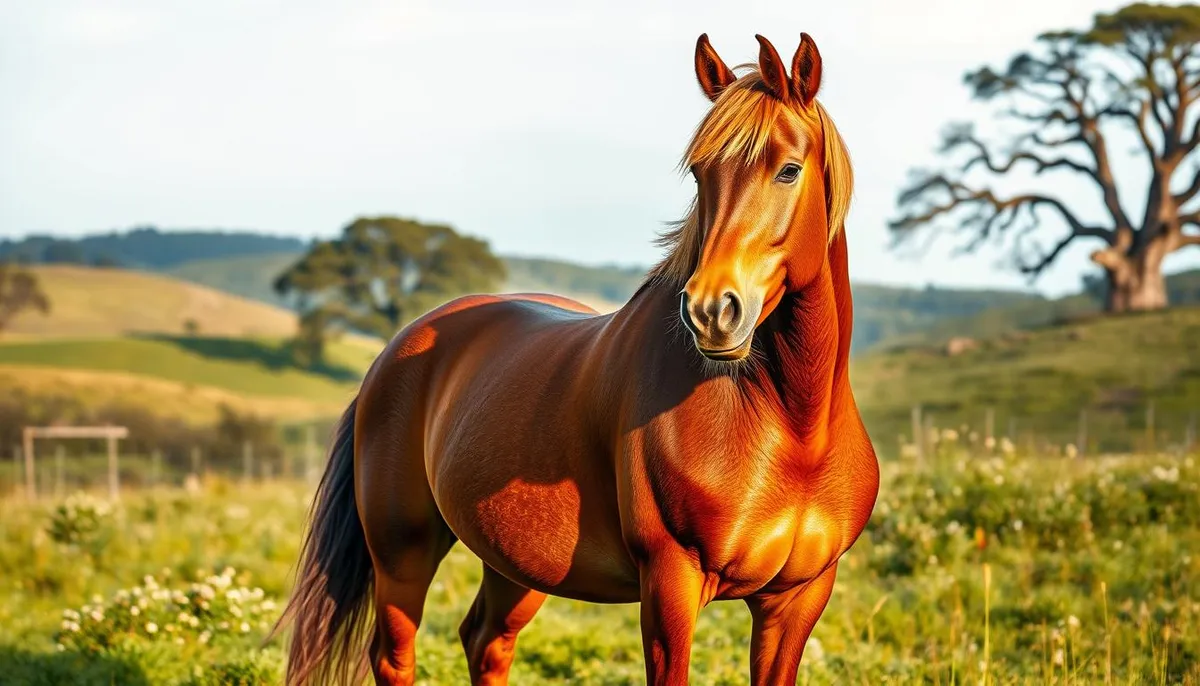
The Breton horse is very versatile. It can be used in logging, in vineyards, or in urban settings. Its docility and strength and endurance are appreciated by municipalities and artisans. Its maintenance is easy, it is resilient and works long hours, as highlighted in the Breton breed profile.
| Criteria | Key Data | Practical Interest |
|---|---|---|
| Status | Threatened draft breed | Priority conservation and genetic diversity |
| Population (2017) | ~12,000 individuals | Sufficient base for the resumption of uses |
| Mares / Stallions | 3,775 / 501 | Structured breeding resources |
| Registered Products | 2,234 per year | Reliable tracking via the Breton stud-book |
| Distribution | Brittany, Loire-Atlantique, Massif Central, Pyrenees | Adapted to varied terrains and climates |
| Types | Postier and Breton draft horse | Choice based on harnessing, agriculture, or urban use |
| Accepted Coats | Washed chestnut, bay, roan, black | Compliance with the Breton breed profile |
| Main Advantages | Docility, strength and endurance, hardiness | Difficult tasks and leisure harnessing |
The Breton stud-book helps breeders and drivers choose the best horses. These horses are perfect for working in fields or in urban settings. They have a good rhythm and great mental stability, well representing the hardworking character of Brittany.
Breton Horse Breeds and Internal Distinctions
There are two main types of Breton horses in modern breeding. They are adapted to specific functions but remain rustic, resilient, and easy to handle. The stud-book, created in 1909, helps understand these differences for breeders and users.
Breton Draft: Compact, Powerful, Close to the Ground
The Breton Draft is recognized for its robustness. Compact and muscular, it has a strong chest and short, strong legs. It weighs between 700 and 1,000 kg, ideal for pulling.
This horse is perfect for agriculture, forest logging, and work harnessing. It is valued for its calmness, immediate power, and reliable endurance.
Breton Post Horse: Extended Gaits, Norfolk Influence, and Thoroughbred
The Breton Post Horse has a finer and more elegant gait. Influenced by the Norfolk Trotter and the Thoroughbred, it retains Breton robustness.
It is ideal for sports and leisure harnessing, excelling in tourist driving and as a pleasure trotter. It combines power and agility.
From the Sommier to the Roussin: Medieval Legacies and Evolution of Uses
The Sommier, from northern Brittany, was meant for carrying heavy loads. The Roussin, lighter and more agile, was favored for riding, standing about 1.40 m tall.
Their evolution was influenced by external contributions during the Crusades, diversifying their functions. In the 19th century, crossbreeding increased their size, and the 1909 stud-book distinguished Breton Drafts from Breton Post Horses.
- Sommier: pack, culture, heavy load, basis of the heavy type.
- Roussin: riding, quick movement, utilitarian elegance.
- Breton Draft: agricultural and forestry pulling, stability.
- Breton Post Horse: sports harnessing, tourism, open gaits.
Breeding Breton Horses in Brittany and France
The breeding of Breton horses took shape in Lower Brittany. It extends from Trégor to Léon and up to Finistère. Roads and coaches, since the 18th century, made this specialization in draft and harnessing possible.
The national stud farms, since Colbert's edict in 1666, have directed selection. They introduced stallions from England and Germany to improve the breeds. However, this constraint caused local resistance. The Revolution abolished the stud farms, but the First Empire restored them, as in Langonnet in 1804.
In the 18th century, horse exports to the Iberian Peninsula and the North Sea exploded. In the 20th century, Landivisiau became an important center for horse shipping. This movement reinforced the breed's reputation for its strength, endurance, and docility.
Today, breeding Breton horses extends throughout Brittany and Loire-Atlantique. Breeding also occurs in the Massif Central, western Maine-et-Loire, and the Pyrenees. The Breton stud-book ensures that the breed remains versatile and modern: for work, leisure, harnessing, and tourism. The preservation of the breed is crucial thanks to small breeders and collaboration with the national stud farms.
In 2017, there were about 1,820 breeders in France, over 40% of whom were in Brittany. There were nearly 3,775 mares and 501 stallions reported. Breeders focus on local sales, approval competitions, and selective horse exports. The quality of breeding, traceability, and the image of Landivisiau as a historical center play a key role.
On the ground, selection focuses on the conformation, locomotion, and temperament of the horses. Breeders use planned matings, harness testing, and appropriate feeding. Thanks to the national stud farms and the Breton stud-book, the promotion of lines adapted to modern needs is ensured. This strengthens the Breton identity of the horses.
Contemporary Uses and Equestrian Tourism in Brittany
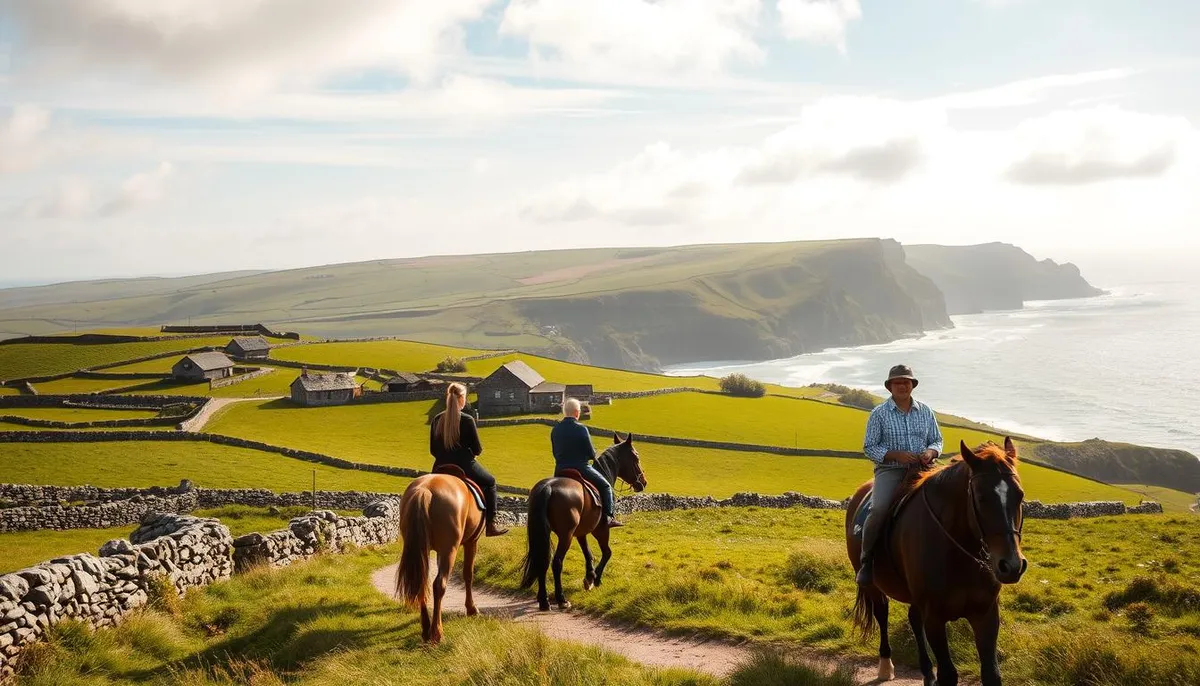
The Breton draft horse is vital again today. It helps professionals and communities in Brittany. This enhances equestrian tourism, showcasing skills and landscapes.
Agricultural Work, Forest Logging, and Light Pulling
On the farm, it plows and transports harvests efficiently. In forests, it logs without damaging the soil. In urban areas, it pulls vehicles, demonstrating modern utility.
Sports and Leisure Harnessing, Tourist Driving Horse
Breton harnessing is appreciated for its stability. The Postier, lively and agile, is ideal for competition and leisure. It is perfect for exploring historical sites and participating in local events.
Equestrian Sports, Equestrian Centers, and National Stud Farms (Lamballe, Hennebont)
Equestrian events mark the year. The centers in Lamballe and Hennebont share knowledge, culture, and innovations. They unite clubs and breeders, promoting the Breton draft horse and responsible equestrian tourism in Brittany.
Well-Being, Maintenance, and Feeding of the Breton Horse
A healthy Breton horse performs better. For its well-being, we focus on three aspects: careful care, appropriate feeding, and regular health checks. Each horse has specific needs based on its size, living environment, and work.
Daily Maintenance: Grooming, Thick Mane, Hooves, and Tail Docking Prohibited
Brushing the horse helps activate its circulation and detect skin problems early. Its mane, often curly, requires daily care. It is also advisable to braid for special occasions. The hooves, not too large, require easy cleaning; applying grease or wax according to the season helps prevent cracks.
Since 1996, France has prohibited tail docking for horses, thanks to the national stud farms. This improves the horse's comfort, both at work and at rest.
Rations and Forages: Increased Needs Based on Work and Size
Draft horses need more energy than riding horses. For example, an 800 kg draft horse eats a third more than a 500 kg horse. When doing heavy work, forage alone is not enough.
Concentrates need to be added, given in several small portions. Having a budget for food prevents shortages and keeps the horse fit. Free access to clean water and salt is essential.
Hardiness and Health Vigilance: PSSM/EPSM, Shivering, Lethal EBJ
The Breton horse is sturdy with good management. However, it can suffer from PSSM EPSM, a problem related to sugar and starch. We reduce starch and sugar-rich foods. Instead, we use quality forage and fats for energy. Gradual training is also beneficial.
Shivering causes tremors in the hind legs. Massages, stretching, and regular outings help. The lethal EBJ disease is rare but serious. Genetic screening and careful selection reduce the risk. These precautions enhance the daily well-being of the horse.
Heritage, Promotion Associations for the Breton Horse, and Excellence Equipment
The Breton horse is a living treasure. It relies on attentive breeders, support from associations promoting the Breton horse, and quality equestrian equipment. This ensures its visibility and the continuation of its unique heritage.
Conservation of a Threatened Breed and the Role of Stud-Books
The Breton horse is among the endangered draft breeds. To save it, there is a clear plan with the Breton stud-book, created in 1909. This book guides the selection of horses and preserves their authenticity since 2009.
Breeders, often with few horses, benefit from the help of the Breton stud-book. This ensures diversity and quality for pulling. This system protects their origin and ensures their performance internationally.
Associations and Events Highlighting Breton Equestrian Heritage
The associations promoting the Breton horse organize various activities. They hold competitions and participate in festivals. They help connect breeders with enthusiasts and raise awareness for breed preservation.
The sites in Lamballe and Hennebont showcase the Breton horse. They encourage breeding, boost sales, and demonstrate the richness of this heritage.
High-End Equipment Made in France: La Sellerie Française (custom-made, limited series, 100% French manufacturing)
The equipment contributes to the performance and comfort of the Breton horse. La Sellerie Française offers quality products, customized or in limited editions, made in France. This guarantees excellence and durability.
Harnesses, collars, and bridles specially designed for Breton horses enhance their performance and safety. By using La Sellerie Française, we combine style, efficiency, and the horse's well-being. This values the work of the Breton horse and its image.
Conclusion
The Breton horse has a rich history, from its beginnings in Armorica to the national stud farms. Over time, it has evolved, from pulling to sports use. However, it has always maintained its place thanks to its dual identity, Draft and Postier.
What makes the Breton horse special is its physique and temperament. It has a short back, a solid neck, and a large croup. With the help of the stud-book, it retains its characteristics and colors. Today, it is used in harnessing, agroforestry, mediation, and for equestrian tourism in Brittany.
To ensure the breeding of the Breton horse remains of high quality, rigorous standards must be maintained. Nutrition, disease prevention, and good veterinary follow-up are key. Breeders, stud farms, communities, and associations work together. The quality of the equipment, provided by companies like La Sellerie Française, is also essential.
The Breton horse is a symbol of living heritage. It represents the strength of the regions of Brittany and France. With a network of dedicated breeders, the breed continues to thrive. It navigates between its rich history, mastery of its characteristics, and equestrian tourism, writing a useful and beautiful future.
FAQ
What is the Breton horse and why is it emblematic of Breton equestrian heritage?
The Breton horse comes from the West of France. It is one of the oldest breeds. It descends from Celtic horses and is known for its strength, endurance, and gentle character. This horse is an integral part of Brittany's heritage. It represents nobility and power in work and equestrian tourism.
What are the major milestones in the history of the Breton horse, from the Celts to the national stud farms?
The Breton horse was mentioned in Armorica around -750/-1000 and even more around -500 with migrations. During the Middle Ages, breeding and lordly stud farms boosted its reputation. The 17th and 18th centuries saw changes in its use due to roads and coaches.
After the Revolution, the national stud farms were revived by Napoleon I. In the 19th century, the breed was officially recognized. The early 20th century was its golden age, particularly for exports to Landivisiau.
What are the characteristics of the Breton horse according to the breed standard?
The Breton horse is of medium size, weighing between 700 and 1,000 kg. It has a distinct head, a robust neck, sloping shoulders, a muscular back, and short legs. It is a friendly, energetic, and very solid horse, perfect for draft work.
What coats are accepted by the Breton horse stud-book?
The accepted colors are chestnut, bay, black, and roan. White markings are allowed but limited since 2009. Bay and roan coats are rare. A special sign, the ermine marking, could be seen on the neck.
What is the difference between the Breton Draft and the Breton Post Horse?
The Breton Draft is robust and ideal for farm and forestry work. The Breton Post Horse, lighter and faster, is perfect for sports harnessing and leisure.
Where can we find the breeding of Breton horses today?
Mainly in Brittany and Loire-Atlantique, with groups in the Massif Central, western Maine-et-Loire, and the Pyrenees. In 2017, there were about 12,000 horses, 3,775 mares, 501 stallions, and 1,820 breeders. Over 40% are in Brittany.
What are the main contemporary uses of the Breton horse?
It serves in agriculture, logging, conservation of natural spaces, urban transport, leisure, and harnessing competitions. The Postier excels in competitions, while the Draft is used for heavier tasks.
How to maintain a Breton horse on a daily basis?
Regular brushing and hoof care are necessary. Tail docking has been prohibited since 1996. Exercise and regular outings keep the horse fit.
What diet is suitable for a working Breton horse?
A draft horse needs more forage than a light horse. For intensive work, add concentrates. Serve in small amounts, with plenty of water and salt. Adjust according to size and work.
What conditions is the Breton horse predisposed to and how to prevent them?
It is sensitive to certain diseases like PSSM/EPSM and shivering. Monitoring and care are essential. Genetic screening and veterinary follow-up help prevent problems.
Is the Breton breed threatened and who is acting for its preservation?
Yes, it is an endangered breed. The 1909 stud-book helps protect the breed. Associations, stud farms, and Breton breeders organize events to promote this precious breed.
Where to find information to discover equestrian tourism in Brittany with Breton horses?
Visit tourist offices, equestrian centers, and harnessing centers. Explore during local events. This values the heritage and equestrian traditions of Brittany.
What equipment do you recommend for harnessing and pulling a Breton horse?
Use sturdy equipment: pulling collars, harnesses, bridles. La Sellerie Française offers quality equipment, tailored for Breton horses and professional harnessing.