
Equestrianism is an exciting sport but can be dangerous. Therefore, it is essential to use appropriate protective equipment. The riding helmet, or cap, is crucial for the safety of riders, regardless of their level.
This protective headgear has evolved to better prevent serious injuries, especially to the head. Its use is strongly advised, even mandatory in certain places. This is because equestrianism is one of the riskiest sports, even more dangerous than car racing or motorcycling.
Choosing the right riding helmet is therefore essential for safe and comfortable practice.

Main ideas to remember
- The riding helmet is an essential element for the safety of riders
- It plays a crucial role in preventing serious head injuries
- Its use is highly recommended, even mandatory in many facilities
- Choosing the appropriate riding helmet is vital for comfort and safety in the saddle
- Equestrianism is one of the most dangerous sports, even surpassing car racing and motorcycling
The importance of the riding helmet for rider safety
Equestrianism is an exciting but risky sport. Accidents can occur. Among the 25,000 accidents, 23% affect the head, with a quarter of cases being severe.
Prevention of serious head injuries
The riding helmet is essential to avoid cranial trauma. Its use is crucial for the safety of riders. The equestrian helmet reduces severe injuries.
Equestrianism, a sport with a high risk of accidents
Equestrianism is a highly accident-prone sport. Hospitalizations are numerous. Safety equipment, such as the riding helmet, is vital for safety.
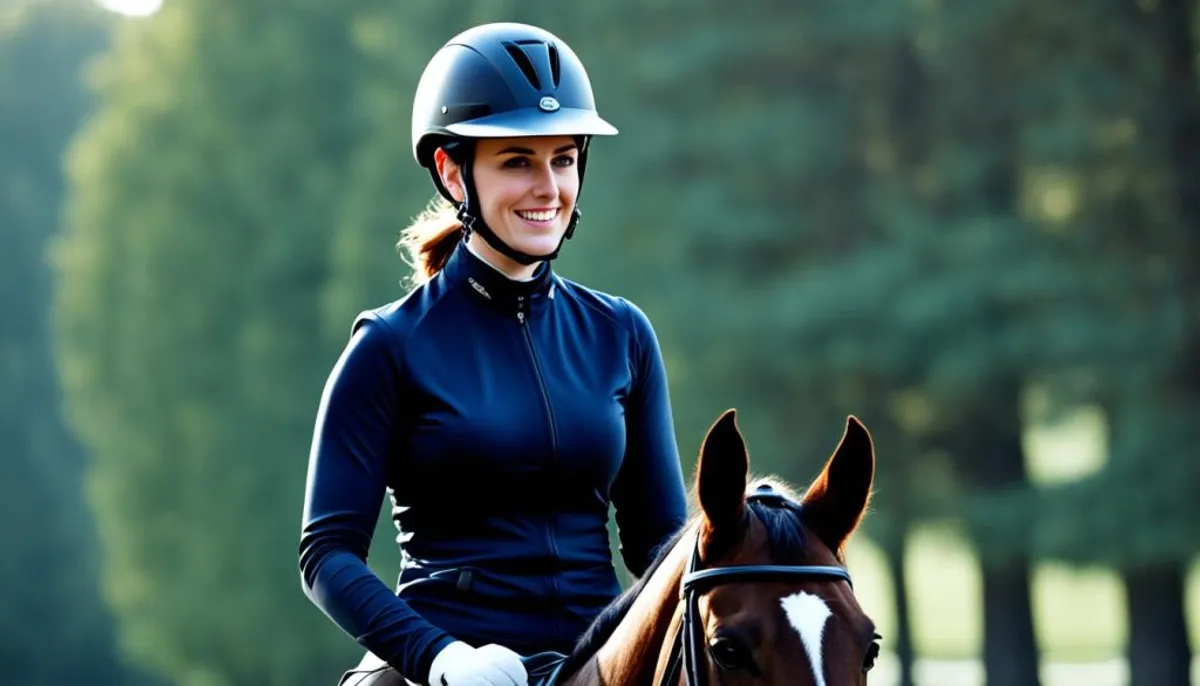
In conclusion, the riding helmet is crucial for the safety of riders. It prevents cranial trauma. Wearing the helmet is essential for equestrianism.
1 riding helmet: its history and evolution
The riding helmet has a long history that dates back to the Middle Ages. It was called “bonoin” at the time. This head protection was inspired by war projectiles.
Since then, the helmet has changed to meet the needs of equestrians.
The origins of the riding helmet in the Middle Ages
Medieval riders wore a form of primitive helmet. It was often made of leather or metal. The purpose was to protect the head from lance and sword blows.
The development of the helmet in the 18th century for horse racing
The 18th century saw the evolution of the helmet for thoroughbred jockeys. The first versions were heavy and offered little protection. But they were improved for more comfort and safety.
The 20th century made wearing the helmet mandatory in equestrian centers for safety. Today, the riding helmet is essential for the protection of riders.
The different types of riding helmets
The market for equestrian helmets offers a wide variety of models. They are designed to meet the needs of various equestrian disciplines. Show jumping riders often choose lightweight and aerodynamic helmets. These helmets provide extended protection to the back of the head while allowing optimal peripheral vision.
Western riding enthusiasts prefer models with a traditional design. They have wide brims for protection against the sun. Dressage riders look for elegant and well-fitted helmets. They must harmonize with the dress code of their discipline.
There are also versatile models that adapt to multiple disciplines. The choice of helmet should be made based on the needs and specifics of each equestrian activity.
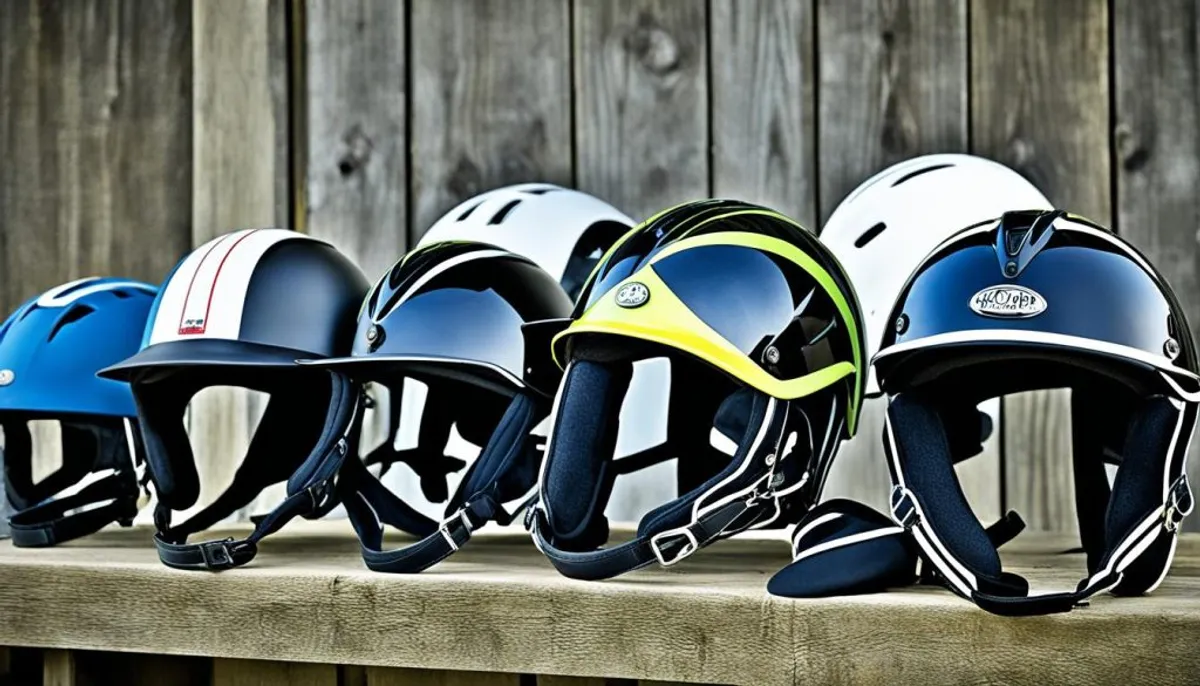
| Type of helmet | Discipline | Features |
|---|---|---|
| Jumping helmet | Show jumping | Lightweight, aerodynamic, extended protection to the back of the head, optimal peripheral vision |
| Western riding helmet | Western riding | Traditional design, wide brims for sun protection |
| Dressage helmet | Dressage | Elegant, well-fitted, in harmony with dress code standards |
| Versatile helmet | Multiple disciplines | Adapts to different equestrian activities |
Safety standards and certifications for riding helmets
Riding helmets are closely monitored for the safety of riders. They must meet strict standards and have recognized certifications. The ASTM/SEI certification, well-known in the United States, proves that the helmet has passed tests to see if it can absorb impacts. This helps protect the head in case of a fall.
In Europe, riding helmets must comply with CE safety standards. These standards define what is necessary for adequate protection. They ensure that the helmet is safe for equestrianism.
Equestrian federations, both national and international, also have their own certifications. They verify that the helmet is suitable for competition. Some helmets even have advanced protection systems like MIPS. This offers even greater safety.
FAQ
Why is the riding helmet so important for rider safety?
The riding helmet, or cap, is crucial to avoid serious injuries, especially to the head. It is often recommended or mandatory in many places. Equestrianism is considered one of the most dangerous sports, even more so than car racing or motorcycling.
What are the statistics on equestrian-related accidents?
A study revealed that 23% of equestrian accidents affect the head. A quarter of the injured have severe neurological damage. Wearing a riding helmet could reduce the severity of injuries.
What is the history of the riding helmet?
Originally, the helmet was called “bonoin” and was inspired by combat projectiles. It has evolved to meet the needs of equestrians. In the 18th century, it was adopted to protect thoroughbred jockeys. In the 20th century, its use became widespread for safety reasons.
What are the different types of riding helmets?
Show jumping riders prefer lightweight and aerodynamic helmets. They provide extended protection to the back of the head. Western riding enthusiasts choose traditional models with wide brims to protect against the sun.
Dressage riders look for elegant and well-fitted helmets. Some models are versatile and adapt to multiple disciplines.
What are the certifications and safety standards for riding helmets?
The ASTM/SEI certification in the United States proves that the helmet has passed rigorous testing. In Europe, helmets must comply with CE safety standards. Some equestrian federations also have their own approvals.
Advanced protection systems, such as MIPS, can be added for even greater safety.