In Normandy, horses are everywhere. They follow the hedges, cross the stud farms, and line the beaches. This presence ranges from work in the fields to carriages in the towns.
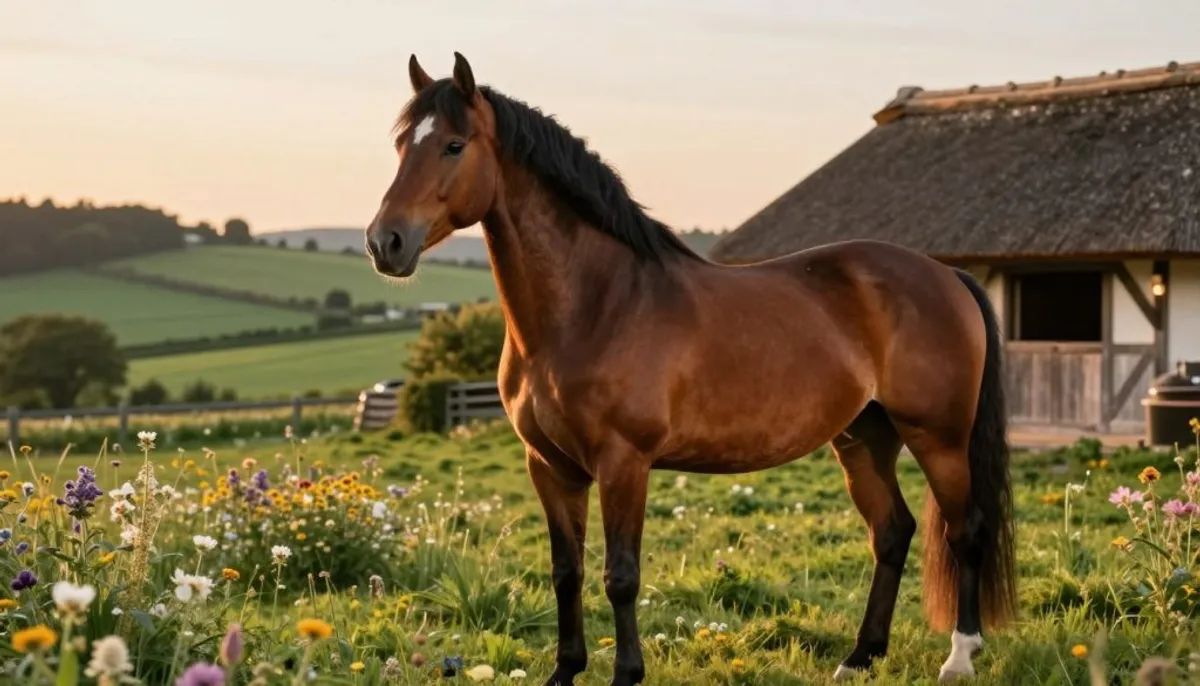
“The noblest conquest,” said Buffon. He was absolutely right. The Norman equestrian tradition goes beyond typical images. It is experienced daily, blending know-how and a unique relationship with these animals.
This written adventure immerses you in the world of horses in Normandy. Between breeding, competitions, and leisure activities, you will discover essential data, different breeds, and key areas like Calvados. Not to forget, the passion for horses that is also shared in riding centers, equestrian tourism on the beaches, and in quality equipment.
Key Points
- The Normandy horse shapes the landscapes, from meadows to seaside resorts.
- The Norman equestrian tradition is passed down through professions, stud farms, and practices.
- The equestrian heritage blends history, local culture, and sporting life.
- The passion for horses in Normandy is experienced in rides, competitions, and training.
- The article explores the industry, statistics, breeds, locations, and rider equipment.
- From beaches to racetracks, the region offers varied equestrian experiences.
Normandy, a Land of Choice for Horses
Normandy is known for its vast spaces: hedgerows, coasts, and stud farms. These places are dedicated to the equine world. The horse is essential here, part of the scenery and the lives of the people. It is recognized both in France and abroad.
The transition between fields, stables, and racetracks is seamless. This shows how horse breeding in Normandy is connected to major events. A culture and skills are shared, passed down from generation to generation.
An Industry of Excellence in France: Breeding, Sport, Leisure, and Heritage
The equine sector in Normandy has a comprehensive network for its development. It includes breeders, veterinarians, craftsmen, and more. This facilitates the journey of a foal becoming a fully-fledged horse, thereby securing projects within the industry.
Three sites, the International Horse Center in Deauville, the National Stud of Pin, and the Saint-Lô Equestrian Center, perfectly illustrate this integration. They offer training, events, and public reception. Their role in equestrian sport in Normandy is crucial.
Key Figures: 30% of National Production and 115,000 Identified Horses
Normandy is often seen as the main breeding region in France, with 30% of national production. It also houses 115,000 identified horses, proving the importance of this sector.
This vitality makes it a land of champions, home to icons like Ourasi and Ready Cash. The commitment to selection, care, training, and quality breeding conditions underpins this excellence.
A Major Economic Weight: Nearly 18,000 Jobs in the Equine Sector
Outside of racing, the Normandy equine sector creates nearly 18,000 jobs. This figure reflects the diversity of associated professions, from stable management to sales and events.
The sector draws its strength from the regularity of activities and the diversity of equestrian practices. This helps stabilize the regional economy in the long term.
Riding and Infrastructure: 46,747 Licensed Riders and 670 Equestrian Establishments
The region also excels in riding, with 46,747 licensed individuals and 670 equestrian establishments. This strong presence facilitates access to riding for everyone, promoting the development of equestrian sports in the region.
To understand the impact, here are key figures and their significance on the ground.
| Indicator | Value in Normandy | What It Changes Daily |
|---|---|---|
| Share of National Production | 30% | A major basin for horse breeding in Normandy, with a volume that attracts buyers and professionals. |
| Identified Horses | 115,000 | A broad base for leisure, commerce, selection, and sports preparation. |
| Jobs Related to the Sector | Nearly 18,000 | A Normandy equine sector structured with available skills and local services. |
| Licensed Riders | 46,747 | Active clubs, instructors, and regular practice that supports equestrian sports in Normandy. |
| Equestrian Establishments | 670 | A dense network for learning, progressing, competing, or simply riding close to home. |
Normandy Horse: Identity, Traditions, and Regional Passion
In Normandy, horses are everywhere: in villages, stud farms, and races. They represent a link between the rural past and current passions. In the countryside or on the beaches, the equestrian tradition is alive.
From Utility Horse to Sport Horse: A Story Evolving Since the 20th Century
At the beginning of the 20th century, horses worked on farms and in cities. With the arrival of machines, their role changed but not their importance. They turned towards sport and quality breeding.
The shift to competition and breeding was marked by the importance of locomotion and temperament. Equestrian competitions in Normandy have become a major event.
Leisure and Culture: Rides, Competitions, Cinema, and Pet Status
Equestrian activities attract everyone, from amateurs to hiking enthusiasts. Unique moments are created, especially on the beaches of Deauville, Cabourg, or Trouville. Clubs and festivals are essential for sharing this passion.
Horses hold a significant place in our hearts and stories. The film The Horse Whisperer showcased the beauty of this relationship. For some, the horse has even become a full-fledged family member.
A Region Engaged in All Disciplines: Gallop, Trot, Show Jumping, Dressage, Endurance
Normandy shines in all types of riding: from gallop to dressage. Sports like horseball add to the diversity. These events are crucial for breeders and riders in the region.
| Discipline | What Is Sought | Where It Is Often Found in Normandy |
|---|---|---|
| Gallop | Speed, race strategy, selection | Racetracks, training centers, racing stables |
| Trot | Regularity, gait technique, controlled endurance | Trot tracks, morning training, sporting events |
| Show Jumping | Precision, impulsion, confidence over jumps | Riding arenas, competitions, amateur and professional circuits |
| Dressage | Balance, lightness, finesse of aids | Riding schools, workshops, competition routines |
| Endurance | Effort management, cardio, mental | Paths, loops in nature, long rides |
Diversity enriches the equestrian world and keeps the passion alive. One can choose between a peaceful ride or a competition. Normandy speaks the language of horses from end to end.
Horses and Numbers: Reference Points to Understand the Industry
Before discussing Norman horse breeds, we must understand the context. The numbers on horses provide a simple idea of the whole. They show what we see of Normandy's horses, from leisure to sports.
Overview of Breeds: About 400 Breeds Worldwide
Worldwide, there are about 400 horse breeds. This number shows the variety of their uses: work, racing, sport, leisure. This is why standards vary greatly between countries.
In France: 53 Recognized and Managed Equine Breeds, Representing 50–55% of the National Population
In France, 53 equine breeds are officially recognized. According to a 2011 study by the French Institute of Horses and Riding, they make up 50 to 55% of all horses. This information helps understand the registries, stud books, and breeding choices.
| Scale | Reference on Breeds | What It Helps to Understand |
|---|---|---|
| World | About 400 horse breeds recorded | The variety of types, models, and uses according to regions |
| France | 53 recognized and managed equine breeds | The role of organizations, selection rules, and identification |
| France | 50–55% of the national population concerned (2011 study, IFCE) | The place of breeds in the equine population and the structure of the industry |
International Context: France Among the Major Countries of the Species (with Germany and the United States)
France, Germany, and the United States dominate in the field of horses. This status influences exchanges, genetic quality, and the reputation of breeding farms. It highlights the importance of local choices, especially for horses in Normandy.
This information helps understand the uniqueness of a region. They are useful for exploring Norman horse breeds, for racing, sport, and leisure, keeping the French context in mind.
Norman Horse Breeds and Major Breeding Influences
Horse breeds in Normandy are used for various activities: racing, sport, and selective breeding. Each choice of breed is important, whether for breeding or competition.
The Thoroughbred is highly valued for speed racing. It also helps improve other breeds by bringing speed and balance.
The French trotter is preferred for trotting, either harnessed or ridden. A horse that maintains a steady rhythm and has a good temperament is sought.
In competition, the French saddle horse is often seen as the best for equestrian sports in France. It is strong, obedient, and easy to direct thanks to its diverse ancestry.
The Anglo-Arab, a mix between the Arabian and the Thoroughbred, is known for its energy and robustness. It excels in eventing competitions and can also participate in specific races.
The Arabian is a very ancient breed, dating back 4,500 years in Mesopotamia. It is a horse with great endurance that has influenced many other breeds.
On a daily basis, a Normandy horse benefits from a conducive environment: it is raised near races, with access to fields. This creates a close link between racing competitions and sports.
| Breed | Main Use in Normandy | Desired Qualities in Breeding | Influence in Crossbreeding |
|---|---|---|---|
| Thoroughbred | Gallop (flat and jumps) | Speed, balance, responsiveness | Improves many breeds through blood and locomotion |
| French trotter | Trotting harnessed and ridden | Regularity, stamina, work mentality | Targeted selection for trotting ability and sturdiness |
| French saddle horse | Sport (show jumping, dressage, eventing) | Power, respect, ease of use | From indigenous mares with blood contributions, including Thoroughbreds |
| Anglo-Arab | Eventing, reserved races | Endurance, blood, versatility | Arab x Thoroughbred cross, highly sought after for eventing |
Horse Breeding in Normandy: Terroirs, Professions, and Know-How
In Normandy, horse breeding is everywhere: in hedges, fields, and sunken roads. It is more than a beautiful image; it is precise know-how and hard work. In an equestrian farm, discussions revolve around food, care, hoofs, and horse health.
Calvados in the Lead: 2,261 Registered Breeders (2012 Data)
Calvados leads the way with its 2,261 breeders in 2012. They form a dense network: stud farms, horse boarding facilities, veterinarians, farriers, and transporters. Thanks to them, over 4,400 jobs are created in the sector.
The region is well-equipped: 8 racetracks and 17 equestrian tourism centers. There is even a place for horse sales in Deauville. All this helps promote horses, from young ones to the most experienced.
Specialization in Racing: Over 60% Focused on Thoroughbreds and Trotters
In Calvados, horse racing is significant. Over 60% of breeding focuses on Thoroughbreds and trotters. They think a lot about which horse to cross with which to achieve the best results. The goal is to have athletic, strong, and consistent horses.
Every day, they focus on prevention: regular outings, monitoring weight and hooves, and gradual training. This approach is common in both large farms and smaller family-run ones.
Research and Expertise: IPC and Departmental Laboratory Specializing in Equine Pathologies
The health of horses relies on recognized experts. The Pathological Institute of the Horse (IPC) works with two research teams. This is essential for better understanding diseases. At the same time, the departmental laboratory assists with infectious diseases in horses.
This expertise means that problems are resolved more quickly. For breeders, this saves time and helps keep horses healthy during breeding and the first weeks of a foal's life.
Equine Density: The Caen Region Among the Highest with 8.3 Equids/km² (2011 Data)
Near Caen, there are 8.3 horses per km², one of the highest rates in 2011. Horse owners and stables play a significant role here. They create demand for food, care, and infrastructure.
This concentration also energizes the community: with competitions, training, and many activities. Thoroughbreds and trotters live alongside leisure horses, sharing their knowledge and skills.
| Reference Points in Calvados | Figures | What It Changes on the Ground |
|---|---|---|
| Registered Professionals | 2,261 breeders (2012) | More service offerings, outlets, and specialties by area |
| Racing Orientation | Over 60% towards Thoroughbreds and trotters | Selection focused on performance, precocity, and endurance |
| Infrastructure | 8 racetracks (including 2 in Deauville), 17 equestrian tourism centers | Short circuits for training, valuing, and discovering horses |
| Direct Employment | Over 4,400 jobs | A stable fabric of professions: care, maintenance, breeding, transport |
| Density Around Caen | 8.3 equids/km² (2011) | More needs for pastures, boarding, veterinary follow-up, and saddlery |
Equestrian Centers in Normandy and Daily Practice
In Normandy, horseback riding is a local habit. One can practice riding year-round. There are simple activities for everyone.
People come here to improve but also to breathe fresh air and feel better.
Equestrian centers in Normandy offer classes for all, from toddlers to adults. Riding sessions are designed for all levels. They focus on safety, harmony with the horse, and good posture.
A Solid Network: 92 Equestrian Centers in Calvados
There are 92 equestrian centers in Calvados. This makes riding accessible everywhere, whether near Caen or in the countryside.
Equestrian farms further enhance this offer with a rural touch.
Establishments and Supervision: A Leading Region in Riding and Facilities
Normandy is first in the field of riding, with 46,747 licensed riders and 670 equestrian establishments. This success is based on good instructors and quality infrastructure.
Places like the International Horse Center (Deauville) and the Saint-Lô Equestrian Center are important. They offer high-level events and training.
| Practice Reference | What It Changes for Riders | Examples in Normandy |
|---|---|---|
| Local Network in Calvados | More schedule choices, proximity, follow-up throughout the year | 92 equestrian centers, with Calvados riding lessons from leisure to advanced |
| Regional Weight of the Sector | Available supervision, varied disciplines, numerous infrastructures | 46,747 licensed riders and 670 establishments, a strong base for a Normandy equestrian center |
| Reference Poles | Workshops, competitions, skill advancement, practice exchanges | International Horse Center (Deauville) and Saint-Lô Equestrian Center |
Training and Horse Professions: 37 Training Centers and 5 Recognized Equine Research Centers
Normandy also stands out for its skills. It has 37 training centers for horse professions and 5 equine research centers.
This excellence benefits clubs, stables, and equestrian farms. It improves horse care and education.
Equestrian Tourism in Normandy: Beaches, Stud Farms, and Experiences to Live
In Normandy, we explore at the pace of horses. There are beaches, countryside, and great equestrian spots. Equestrian tourism here attracts everyone: novices and regulars. This is thanks to beautiful views and good supervision. The sea air invites us, but discovering the local horse culture is also captivating.
Iconic Rides: Deauville, Cabourg, Trouville Beaches
A horseback ride at dawn in Deauville is magical. The calm, firm sand, and sunlight on the sea enchant us. In Cabourg, the beach expanses offer a perfect place for families. Trouville, with its beaches and lively streets, provides a lovely mix of atmospheres.
- Tides: aim for low tide to walk on more stable ground.
- Weather: a light windbreaker is often enough, even in summer.
- Level: some outings are accessible from the first experience.
Discovering a Stud Farm: Immersion in Breeding, Care, and Behind-the-Scenes
Visiting a stud farm reveals the secrets of horses: feeding, care, veterinary follow-up, and more. The National Stud of Pin is a jewel of French equestrian heritage. There, one learns everything about horses, from their birth to their training.
This visit enriches any equestrian journey in Normandy, linking rides and breeding expertise. It appeals to families, fostering observation and respect for horses.
Original Activities: Sulky Baptism, Polo Introduction, Carriage Tour
For a different experience, try the sulky. It’s fast and requires finesse. In Deauville, learning polo is fun. At the Haras du Pin, a carriage ride allows us to rediscover heritage peacefully.
| Experience | What You Learn | Dominant Sensation | Ideal For |
|---|---|---|---|
| Sulky Baptism | Holding the reins, trajectories, rhythm of the trotter | Momentum and precision | Soft adrenaline seekers |
| Polo Introduction in Deauville | Coordination, game reading, mallet handling | Play and team spirit | Groups of friends, curious athletes |
| Carriage Tour at the Haras du Pin | Driving codes, heritage, observing horses | Comfort and contemplation | Families, intergenerational outings |
Seminar Idea: Horse Coaching/Equicoaching and Team-Building with the Horse as a Relational Revealer
Equicoaching team-building in Normandy is ideal for companies. Horses react directly to our behavior. They show whether we are consistent, attentive, and clear. The workshops are conducted safely and highlight communication, stress management, and authority.
Between rides in Deauville, Cabourg, or Trouville, this activity offers a new perspective. It easily complements an equestrian trip in Normandy. It provides immediate benefits: leaving with better cooperation strategies.
Equestrian Competitions in Normandy: Racetracks, Shows, and Must-Attend Events
Equestrian competitions in Normandy during summer are special. They blend the excitement of races and the ambiance of breeding. Passionate people are encountered everywhere: racetracks, fairs, among owners and spectators.
The summer meeting at the Deauville racetrack attracts 70,000 fans. We see 2,000 horses, 300 trainers, and 150 jockeys. It is a friendly place for all.
The yearling sale is a highlight. Buyers seek the stars of tomorrow. In 2017, a horse was sold for 1.55 million euros at Perelle.
In Cabourg, there are trotting races at night. In summer, events occur twice a week, often ending around 11 PM.
The site is close to the sea and hosts “the Little Vincennes.” The view from the restaurant is superb. The Estivales offer games and concerts.
| Event | Location | Period | What to Seek There |
|---|---|---|---|
| Normandy Horse Show | Saint-Lô Equestrian Center | August | Sport, breeding, demonstrations, and a grand show atmosphere |
| Galop Expo | Deauville | October | Fair presented as 100% gallop in Europe, meetings and expertise |
| Equi Seine | Rouen Expo Park | November | International show jumping competition, level and spectacle |
These events help enhance the reputation of professionals through PMU. This creates a link between sport, business, and passion. One easily navigates from the atmosphere of the stands to the paddocks.
Saddlery in Normandy: Equipping with the Excellence of La Sellerie Française
In Normandy, riding is practiced year-round. Between the arena, cross-country tracks, the beach, and paths, the equipment is put to the test. Choosing your saddlery in Normandy carefully means gaining comfort, precision, and safety, every day and in competition.
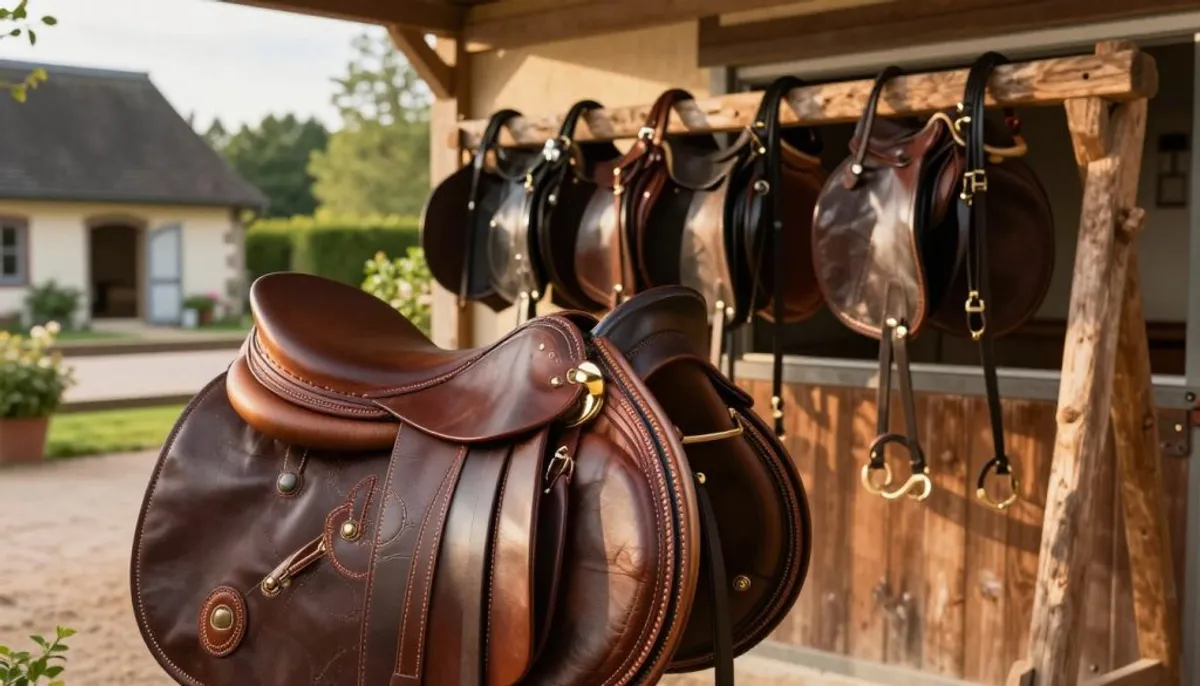
For purchases that last, we return to the essentials: leather that ages well, strong stitching, durable hardware, and simplified maintenance. The fit is just as crucial as the material used. A good balance improves position and movement efficiency. This is where traditional equipment often makes a difference, especially during long rides.
High-End Products, Made in France: Manufacturing from A to Z in France
La Sellerie Française values entirely French production. This is reassuring for those seeking clear origins, reliable methods, and a high level of finish. It also encourages responsible consumption: fewer impulse purchases, more durable products.
Unique Pieces, Custom-Made or Limited Series: Craftsmanship at the Service of the Rider
The choice varies depending on the use. For equestrian centers, durability is paramount. In competition, better contact and greater stability are sought. For hiking, reducing pressure points is essential. French craftsmanship in riding meets these needs with unique pieces, custom-made items, or limited series tailored to each situation.
- Leather Priority: flexibility in bending areas, sturdiness on the sides, fine and even grain.
- Adjustment Priority: adjustments for girthing, length of stirrup leathers, position of blocks to avoid compensation.
- Longevity Priority: possibility to repair, replace worn parts, ease of maintenance.
Why It’s a Reference: Better than the Made in France Label, Better than the Origin France Certification
The quality of La Sellerie Française exceeds usual standards. It offers a higher requirement than the Made in France label and the Origin France certification. For the rider, this means more transparent choices: knowledge of provenance, control of production processes, and justified quality-price ratio without compromising the finish of high-end equipment.
| Use | What to Check Before Buying | What You Expect from a Demanding Normandy Saddlery |
|---|---|---|
| Equestrian Center | Stitching durability, ease of cleaning, non-oxidizing buckles | Stable material, easy to adjust, that withstands intensive use |
| Competition | Balance, position of blocks, precision of adjustments and support | Clear contact, finer aids, clean and even finishes |
| Equestrian Tourism | Long-lasting comfort, pressure distribution, useful accessories | Durability, constant comfort, controlled maintenance |
To Discover: https://laselleriefrancaise.com
La Sellerie Française is ideal for those who wish to compare before buying. It offers a selection of superior quality, created by recognized artisans. This allows connecting the act of purchase to craftsmanship, thus choosing an approach in line with French equestrian craftsmanship.
Conclusion
In Normandy, the horse is everywhere: fields, tracks, and beaches. This region is key with 30% of national production. With 115,000 identified horses, it supports nearly 18,000 jobs.
Behind these large numbers, horse breeding is diverse. It ranges from Calvados to racing farms. The equestrian centers offer safety and equipment for all. With 46,747 licensed riders and 670 establishments, they form a unique network.
For a special weekend, equestrian tourism offers unique experiences. First, visit the National Stud of Pin. Then, take a ride on the famous beaches of the region. Finish with an evening in Cabourg or an event at Deauville-La Touques.
Don’t miss the equestrian competitions in Normandy. They range from racetracks to high-level competitions. The equipment is as important as the skill. La Sellerie Française, which creates saddles from A to Z in France, knows this. Everything is connected here: nature, sport, leisure, and excellence.
FAQ
Why is Normandy often described as a “land of choice for horses”?
Normandy has everything for horses. It has renowned breeding farms, dynamic racetracks, and quality sports sites. Prestigious places like the National Stud of Pin and the International Horse Center of Deauville can also be found here. These advantages give the region a global stature in the equestrian world.
What is meant by an excellent equine sector in Normandy?
It is a comprehensive network, from the birth of the horse to the rider. This network includes breeding, sport, leisure, and research. There are also events and infrastructures specific to this sector. Places like the Saint-Lô Equestrian Center and the National Stud of Pin are key examples.
Does Normandy really have a major place in breeding in France?
Yes, absolutely. Normandy contributes significantly to French breeding and hosts many horses. The region also offers many jobs in this sector, in breeding, racing, sport, and tourism.
Has the horse been present in Normandy for a long time?
Yes, the horse has been part of Normandy for a very long time. It was used in agriculture, but also to pull carriages. Today, its role has changed. It is now used in racing, competitions, and for rides on the region's beaches.
Why is the horse referred to as “the noblest conquest”?
This phrase, often said by Buffon, highlights the special bond between horses and humans. In Normandy, this relationship is still very present. It can be seen in breeding farms, riding centers, and during a ride near the water.
How has the role of the horse evolved since the early 20th century?
The horse has transitioned from a working animal to a companion for leisure and sport. Hiking, horse racing, and international competitions have become significant. The way we interact with it has become gentler, bringing it closer to being a family member.
Which equestrian disciplines are most represented in Normandy?
In Normandy, equestrian sports such as gallop, trot, dressage, and endurance are popular. There are also competitions in eventing and para-dressage. This variety explains why clubs and competitions are so active here.
How many horse breeds exist, and why do these references matter in Normandy?
There are about four hundred horse breeds in the world. In France, several of these breeds are officially recognized. Understanding these different breeds helps to know the specifics of breeding in Normandy, whether they are dedicated to racing, sport, or leisure.
Which breeds are most linked to the Normandy reality (racing and sport)?
The Thoroughbred is famous in racing. The French trotter is known for trotting. For sport, the French saddle horse is renowned for jumping. The Anglo-Arab excels in eventing. As for the Arabian, it is highly valued for endurance.
Why is breeding so associated with racing in Normandy?
The local economy relies heavily on racing and horse sales. Thoroughbreds and trotters form the basis of breeding. Sport breeds contribute to competitions. This reinforces Normandy's image as a region of champions.
Why is Calvados a key department for breeding in Normandy?
Calvados is important for breeding due to its concentration of breeders and infrastructures. It is a prime location for Thoroughbreds and trotters. There are also racetracks and equestrian events.
Where is research and health expertise around horses located in Normandy?
The region benefits from centers specializing in equine health. This aids in the prevention and health monitoring of horses. These structures attract breeders and athletes with their high level of competence.
Are equestrian centers in Normandy easy to find for year-round practice?
Yes. There are many equestrian centers in Normandy. From pony clubs to sports stables, there is something for everyone. This makes access to riding easy for all.
Can one train for horse professions in Normandy?
Yes, Normandy offers many training opportunities in the equine sector. It has high-level training and research centers. This supports jobs related to horses and promotes employment in the region.
What are the best ideas for equestrian tourism in Normandy for a first time?
Taking a horseback ride on the beaches of Deauville or Cabourg is magical. For a different experience, visiting an equestrian farm is ideal. It’s perfect for a closer approach to nature.
Why visit a stud farm in Normandy?
Visiting a stud farm allows you to see behind the scenes of breeding. You discover the know-how and passion of the teams. The National Stud of Pin is a remarkable example of this heritage.
What original experiences can one try around horses in Normandy?
You can try polo in Deauville or take a sulky baptism. A carriage ride at the Haras du Pin is also a nice choice. These activities offer a new perspective on the region.
Is horse coaching (equicoaching) offered in Normandy for companies?
Yes, it is popular for seminars. The horse reveals a lot about our way of communicating and leading. The sessions take place on the ground, in a safe space. They leverage the potential of leadership and stress management.
Where to see equestrian competitions in Normandy, races, or major events?
Deauville-La Touques is famous for its summer races. Cabourg is known for its nighttime trotting races. For sport, the Normandy Horse Show and Equi Seine are highlights.
Why is the Cabourg racetrack nicknamed “the Little Vincennes of Normandy”?
It is a must-visit place for trotting, with evening races in summer. Its proximity to the sea offers a unique experience. On race nights, the view from the restaurant is exceptional.
Is Normandy saddlery just a matter of style?
No, it is mainly about safety and comfort. A good saddle and quality equipment make all the difference. This impacts the rider's posture and enjoyment of riding.
How to choose quality saddlery for practice, competition, or equestrian tourism?
Pay attention to the quality of leather and the strength of stitches. The fit for each horse-rider duo is crucial. For each activity, the choice of equipment must be adapted to ensure comfort and durability.
What distinguishes La Sellerie Française for high-end equipment?
La Sellerie Française offers luxury products, made in France. Each item is unique, custom-made, or in limited edition. The finish is of high quality, exceeding the simple standards of “Made in France.”
Where to discover La Sellerie Française online?
On their official website: https://laselleriefrancaise.com. You will find everything about this prestigious brand.
RelatedRelated articles
- 30 Mar 2026·19 min readFreejump Stirrups – Equestrian Comfort & PerformanceGeneral
 In riding, even the smallest detail can change everything. That’s why Freejump stirrups have become a popular choice in competition. They guarantee the comfort of the rider while ensuring optimal performance. This guide explores everything from the f...