
The Andalusian horse, also known as the Pure Spanish Breed, captures attention with its beauty and peaceful strength. It is one of the oldest breeds in Europe. Its reputation is linked to great equestrian prestige.
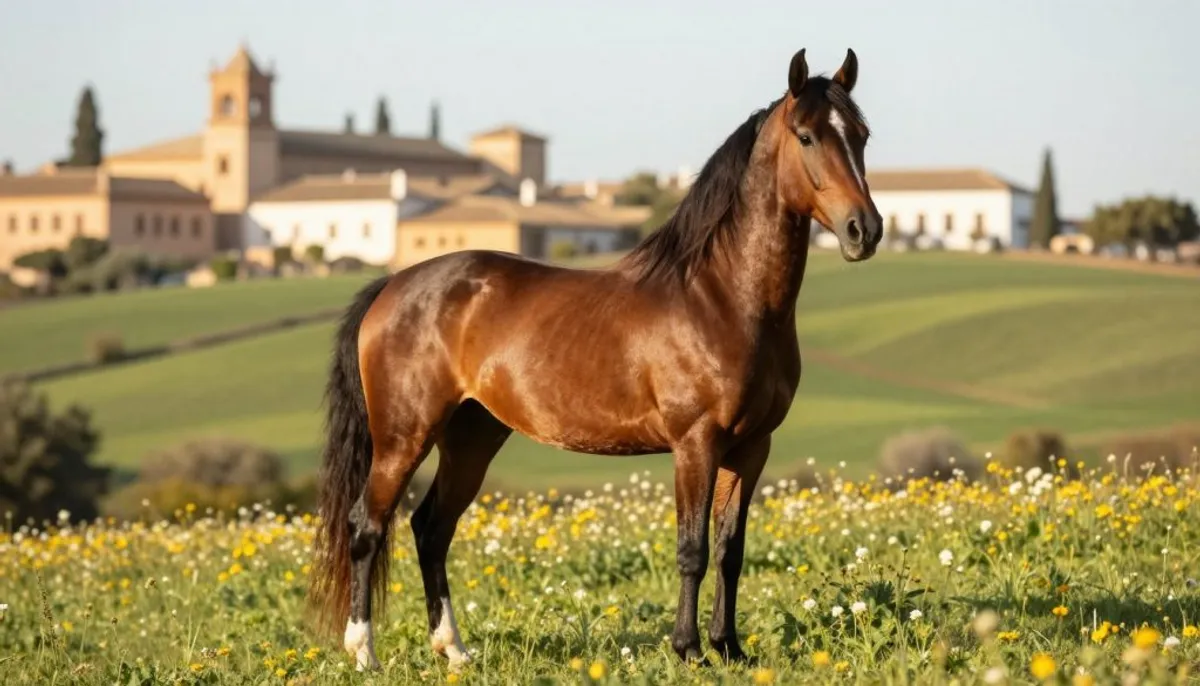
As soon as you see it, what strikes you are its movements. A PRE moves as if it is dancing, with well-measured and light steps. These characteristics are admired in France, both for pleasure and for competitions and shows.
We will discuss its origins, character, how to train it, and advice before purchasing. The idea is to help you know everything about this horse. Thus, you can make good decisions, whether for leisure or competition.
Regarding equipment, choosing quality is essential with a PRE. It affects the horse's relaxation and precision. French saddlery is known for its excellence. They offer unique, custom-made, or limited edition equipment created by the best artisans.
Key points to remember
- The Andalusian horse, or Pure Spanish Breed, embodies a recognized equestrian nobility.
- This iberian horse stands out for its fluid and rhythmic gaits, often described as a “dance”.
- The PRE is appreciated in equestrianism in France, from leisure to dressage, to shows and competitions.
- Understanding its history, mentality, and model helps in working with it better and choosing wisely.
- Good equipment enhances comfort and consistency in working with an Andalusian horse.
- French saddlery offers high-end products made from A to Z in France, designed for demand and precision.
Origins and history of the Andalusian horse: a legendary Iberian breed
The history of the Andalusian horse unfolds between land, war, and equestrian art. In Andalusia, very ancient traces show a strong bond between man and horse. From Seville to Cordoba, the local culture values well-cared-for and proud horses.
Between Seville, Jerez de la Frontera, and Cordoba, there are festivals, fairs, and breeding farms. These events showcase the importance of this breed. They explain the public's attachment and why this breed is called the “horse of kings”.
From the Neolithic to domestication: over 20,000 years of presence
The Andalusian breed is among the oldest. It has existed for over 20,000 years on the Iberian Peninsula. Images and prehistoric remains show horses already appreciated and used. By the end of the Neolithic, horses were domesticated for travel and combat.
This long history has allowed for the selection of horses adapted to the terrain and climate. Nomads sought responsive yet easy-to-direct horses. This enriches the history of the Andalusian horse, which is more than just a passing trend.
The Pure Spanish Breed (PRE) and the absence of crossbreeding since the 12th century
The Andalusian horse is now known as the Pure Spanish Breed (PRE). Since the 12th century, no crossbreeding has been allowed. For enthusiasts, this guarantees the purity of the breed for centuries.
As a result, the model of the Andalusian horse is well-defined: compact, expressive, and easy to train. This rigor has stabilized its qualities and reinforced its status as the “horse of kings”.
Horse of kings and historical figures: from Charles V to Napoleon
The prestige of the PRE has been enhanced by historical figures. Emperors and kings like Charles V and Napoleon preferred these horses. They were valued for their appearance and maneuverability.
During the Renaissance, equestrian masters, such as Antoine de Pluvinel, contributed to this fame. Their methods valued respect and balance. This corresponded to the image of the horse of kings, both majestic and high-performing.
The Royal Stables of Córdoba were founded in 1570 by decree of Felipe II. Located near the Guadalquivir, their purpose was to gather the best horses to create a royal herd. This site is a historical heritage, classified in 1929. Federico García Lorca even described it as a “cathedral of horses”. The whole includes various buildings and gardens, as well as fifteen carriages from the 19th century.
A major influence on European breeds (Lipizzan, Friesian, Oldenburg…)
The PRE has had a significant impact far beyond Andalusia. It has influenced breeds like the Lipizzan, Friesian, and Oldenburg. Its baroque appearance, ease of training, and character set a standard.
This influence comes not only from its genetics but also from a rich equestrian culture. Between Seville, Jerez de la Frontera, and Cordoba, the tradition has persisted despite the wars and epidemics of the 19th century. Breeders have worked to protect this breed and its lines.
| Historical milestone | Location | Impact on PRE origin | Cultural trace |
|---|---|---|---|
| End of the Neolithic and beginnings of domestication | Iberian Peninsula | Selection linked to terrain, movement, and combat | Stories, warrior and pastoral uses, local memory |
| 12th century: prohibition of crossbreeding | Iberian kingdoms | Stabilization of the Pure Spanish Breed (PRE) model | Reinforcement of prestige and breeding standards |
| 1570: creation of the Royal Stables by Felipe II | Cordoba, near the Guadalquivir | Gathering of the best breeders, structural base of PRE origin | Architectural heritage and presentation tradition |
| Renaissance: rise of academies and horsemen | France and Europe | Spread of PRE qualities in breeding and classical equestrianism | Antoine de Pluvinel, art of classical dressage |
| 19th century: wars and epidemics | Spain | Reduction of the herd, then preservation by breeders | Gradual revival, continuity of lines |
Characteristics of the Andalusian horse: morphology, size, and gaits
An Andalusian horse is identified by its majestic stature. They combine strength and elegance without appearing heavy. Their morphology aims for balance, with a body designed for carrying, agility, and flexibility.
A harmonious silhouette: short and flexible back, rounded croup, strong limbs
Their short back promotes flexibility and agility. The well-rounded croup provides powerful propulsion. Finally, strong limbs ensure resistance and precision during exercise.
Head and neck: straight to sub-convex profile and noble carriage
Their head is proportioned, with a profile ranging from straight to slightly convex. They display a serene and expressive gaze. Their long, muscular neck, held proudly, gives a noble and light appearance.
Average and versatile size: from 1.50 m to over 1.70 m
The size of an Andalusian horse often varies between 1.50 m and 1.70 m. This allows them to be versatile, from leisure to sport. This size variety ensures a good match with the rider and their discipline.
Cadenced and fluid gaits: the impression of a horse that “dances”
Their way of moving is both rhythmic and comfortable. Their walk is lively, their trot energetic yet fluid, and their canter well-balanced. Observing them in motion often gives the impression of seeing them “dance”, with grace and regularity.
| Observed point | What is often noticed | Interest for work |
|---|---|---|
| Back and top line | Short back, flexibility, toned loins | Facilitates collection, improves maneuverability |
| Croup and propulsion | Rounded croup, powerful hips | Provides impulsion and consistent push |
| Limbs and conformation | Strong bones, clear joints, stable supports | Provides durability and confidence on the ground |
| Head, neck, attitude | Straight to sub-convex profile, arched neck, noble carriage | Aids balance and expression, appreciated in classical dressage |
| Size and build | Andalusian horse size from 1.50 m to over 1.70 m | Versatility according to the rider, goal, and level |
| Gaits and feel | Cadenced gaits, smooth trot, steady canter | Comfort, precision, and better stability in transitions |
Andalusian horse: temperament, intelligence, and ease of learning
The Andalusian horse attracts attention as soon as one enters a stable. Its blend of calmness, presence, and desire to please is remarkable. It seeks to interact, observes attentively, and then participates actively once it understands what is expected of it. This combination creates a sense of comfort while offering much energy for the rider.
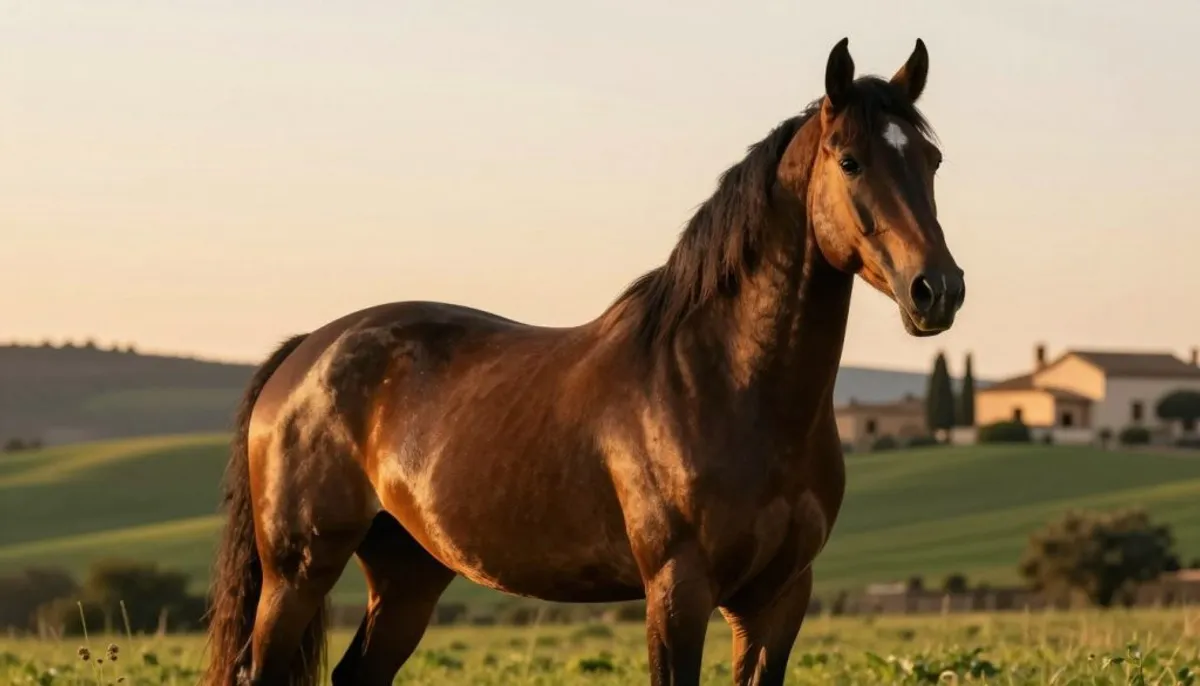
A gentle yet dynamic character, appreciated in leisure as well as in sport
Riders appreciate this type of horse for both leisure activities and competition. It can easily transition from a leisurely ride to more technical training. It is very versatile, which is practical for mixing outdoor excursions with flatwork and jumping exercises.
It suits riders of all ages, thanks to its calm character. It can also show its sporty side, with flair and generosity, especially when more intensity is required in the work.
Docility and receptiveness: a trustworthy companion for different levels
The PRE horse is often recognized for its docility and quick responsiveness. Its sensitivity requires precise control, but it also allows for rapid progress to be seen. In everyday situations, this translates to clean transitions, ease of movement, and good posture.
On the ground, the intelligence of the PRE is equally evident. It respects space, responds well to the halter, and remains focused despite distractions. With simple and consistent rules, it becomes a very reassuring partner.
A horse that loves challenges: progressing through mental and physical stimulation
Monotonous work can bore it or make it anticipate. However, it thrives with challenges suited to its abilities. Varied and stimulating activities, such as games and diverse exercises, keep its motivation high.
Its approach is to understand, try, succeed, and then improve. This ability sets it apart, especially in exercises requiring precision and changes in pace.
Work advice: short, varied sessions, and constant encouragement
It is preferable to divide work into short sessions, interspersed with breaks. This reduces fatigue and keeps the horse's interest. Encouragement, whether through voice or physical rewards, reinforces confidence and the desire to move forward.
- Alternate mounted work, lunging, groundwork, and varied terrain.
- Break down each new exercise into small, easy-to-validate steps.
- Finish on a simple success, even if short, to maintain motivation.
| Session objective | Concrete examples | What the horse learns | Sign that it’s the right dosage |
|---|---|---|---|
| Confidence and calm | Long reins walk, still stop, breathing, neck flexions | To settle, wait, remain available | Soft ears, regular pace, chewing, relaxed neck |
| Responsiveness to aids | Close transitions (walk-trot-walk), canter departures on a wide circle | To respond quickly without tensing up | Clear departures, lifted back, stable contact |
| Mental stimulation | Figure eights, ground poles, amplitude variations, slalom between cones | To concentrate and solve a “little problem” | Attentive gaze, no anticipation, constant rhythm |
| Condition and breath | Outdoor outings, light trotting, walking uphill, recovery at a long walk | Endurance useful in leisure riding as well as in sport horses | Quick recovery, no tension, desire to move forward |
Dressage of the Andalusian horse: the roots of modern dressage and haute école
The dressage of the Andalusian horse impresses with its simplicity and elegance. With its baroque appearance, proud head carriage, and ability to follow the rhythm, it becomes the ideal partner in haute école. It combines strength, serenity, and a real willingness to collaborate.
Baroque horse and heritage: historical foundations of classical dressage
The Andalusian excels in classical dressage thanks to its natural balance. With a short back and strong hips, it easily carries its rider. This makes learning precise, favoring subtle instructions and immediate reactions.
The traditional philosophy of dressage emphasizes lightness above all. Fluid changes, straightness, and measure establish clear rules. They are beneficial in everyday practice and during competitions.
The art of collection: balance, responsiveness, and grace in exercises
Collection is more than just a figure; it is an elegant posture. The horse elevates its frame, engaging its hindquarters more and freeing the front. This increases control, liveliness, and fluidity of movements.
Work often involves changes between walk, trot, and stops, following rounded trajectories. Consistency is favored over strength. A successful collection combines breathing, relaxation, and dynamism.
Advanced figures: piaffe and capriole with precision (with training)
With appropriate training, the Andalusian can perform feats. The piaffe requires stable rhythm, a mobile back, and engaged hindquarters. The goal is concise and clear action, without stiffness in the mouth or neck.
The capriole, a haute école technique, requires patience, meticulous preparation, and safety. When successful, it demonstrates the horse's strength, coordination, and precision.
An asset for progress: from amateur rider to competition level
Experienced amateurs can also appreciate these horses. They are easy to understand and generous in their responses. Short, varied, and structured training sessions foster rapid progress.
In terms of sport, the Andalusian stands out for its flexibility and delicacy. In classical dressage competitions, its qualities of regularity, balance, and precision are highly valued.
| Work objective | What the Andalusian brings | Point of attention |
|---|---|---|
| Basics of classical dressage | Stable cadence, easy balance, good responsiveness to aids | Maintain a clear impulse to avoid a “too restrained” trot |
| Collection | Engagement of hindquarters, lighter posture, clean transitions | Do not confuse collection with slowing down; preserve energy |
| Piaffe | Marked rhythm, sense of gesture, precision in placement | Progress step by step and monitor back relaxation |
| Haute école and capriole | Power, coordination, ability to perform elevated movements | Structured, gradual work, and strict adherence to safety |
Equestrianism with the Andalusian horse: versatility in disciplines and daily work
Equestrianism with an Andalusian horse goes far beyond a simple dressage course. A well-trained PRE is useful and enjoyable, whether in an arena or outdoors. It responds to the rider's requests in a nuanced way, without the need for force.
This horse is attentive, learns quickly, and then acts. This ability is an asset in everyday life, making the horse more independent while remaining responsive. Thus, the work in pairs becomes more harmonious, even in action.
Doma Vaquera and Working Equitation: agility, speed, and finesse
In Doma Vaquera, the Andalusian excels with precise movements, tight turns, and quick departures without losing its composure. Its balance helps control its movements, useful for navigating tight obstacles or difficult curves.
Working Equitation also tests this agility. Here, one must be calm, attentive, and precise. In the face of obstacles, the horse demonstrates its ability to anticipate and choose the best path.
Solid and robust working horse: quick decision-making and composure
With good training, it becomes a reliable and resilient work partner. Capable of assessing a situation and acting quickly without panicking. This calmness is appreciated in many contexts, such as with cattle or outdoors.
Short and targeted training sessions are essential. Walking, stopping sharply, and starting with precision enhance its cooperation. The key is consistency, not strength.
Leisure, spectacle, and competition: a complete mount
In leisure, it offers a comfortable and enjoyable experience while responding well to requests. In competition, it remains focused, which is crucial for good performance, especially with clear directives.
It also shines in equestrian shows, where its elegance is a real plus. Notably at the Real Escuela Andaluza del Arte Ecuestre in Jerez de la Frontera, where it participates in equestrian ballets, such as “How Andalusian Horses Dance”, to Spanish music and in 18th-century costumes. These shows take place on Tuesdays and Thursdays at noon, and tickets must be collected before 11 a.m.
| Usage | What the Andalusian brings | What the rider should aim for | Concrete markers on the ground |
|---|---|---|---|
| Doma Vaquera | Responsiveness, clean rhythm changes, tight turns | Subtle aids, clear transitions, lateral control | Straight stop, short half-turns, clear canter departures |
| Working Equitation | Precision, sense of path, balance over obstacles | Straight horse, mobile shoulders, calm at speed | Regular slalom, calm approach to the gate, walking through the bell |
| Working horse | Calmness, quick decision-making, mental endurance | Simple routines, exposure to the outdoors, walking pauses | Passing through a noisy area, standing still, regaining control after a surprise |
| Equestrian show | Presence, expression, elevated and readable gaits | Regularity, music and cadence, “clean” transitions | Calm entries into the ring, rhythmic straight lines, tension-free salutes |
Coats and aesthetics: the charm of the PRE in service of elegance
The color of the PRE attracts, but that’s not all. The coat of an Andalusian horse shows its strength as well as its neck carriage or the curve of its back. These elements enhance the beauty of the iberian horse, highly appreciated in demonstrations and shows.
Common coats: gray, bay, black
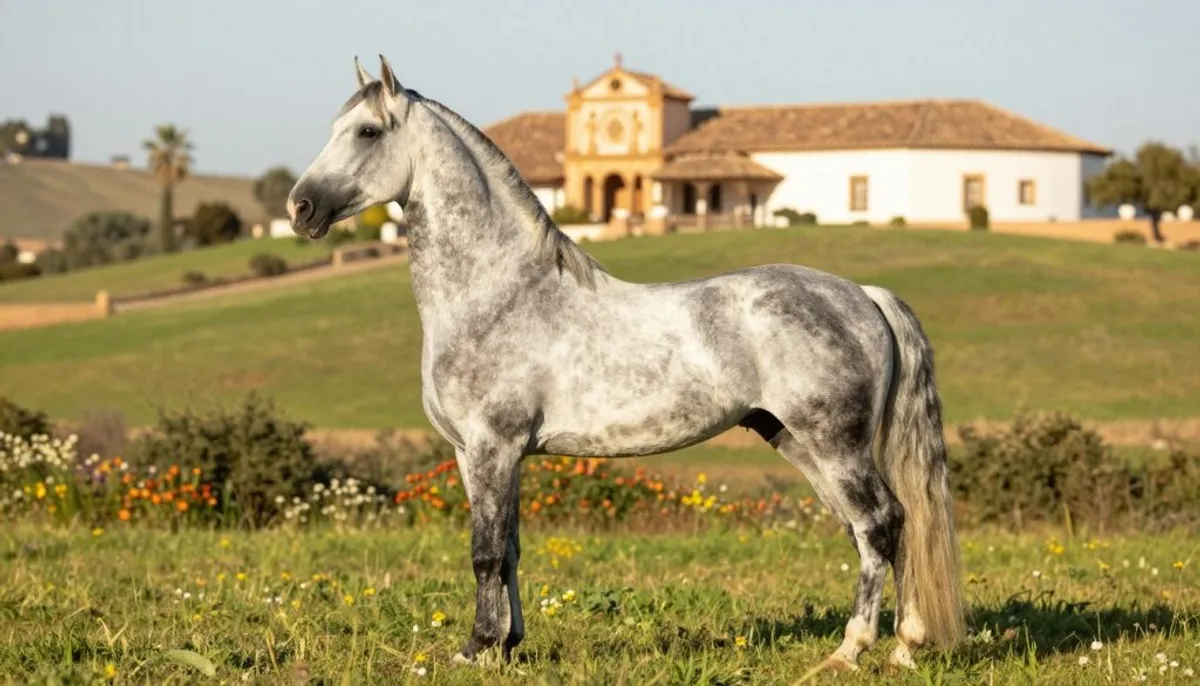
The gray PRE is often seen and becomes lighter with age, sometimes with spots. It beautifully captures light and highlights graceful movements. For many, its color is a distinctive sign, easily recognizable in competition.
The bay horse charms with its warm shades, ranging from chestnut to dark brown, and its dark mane. In contrast, a black horse offers a striking contrast, especially with a long, well-groomed mane. The effect is strongly influenced by the care given and the condition of the coat.
| Coat | Visual impression in motion | Details to observe daily |
|---|---|---|
| Gray PRE | Changing reflections, very readable silhouette at trot and passage | Evolution of shade with age, sensitivity to spots, regular maintenance |
| Bay horse | Warm and sporty appearance, highlights the shoulder and croup | Differences in tones depending on the season, often darker mane |
| Black horse | “Velvet” effect if the coat is shiny, strong presence in the ring | Shininess linked to diet and grooming, sometimes very visible white markings |
Possible variants: chestnut and rarer coats
Chestnuts are also present, although rarer. Some lines show unique colors, with different markings or shades. This variety adds more depth to the beauty of the Andalusian horse while remaining true to the desired type.
Presence and poise: a beauty that reinforces the “noble” image of the breed
The color fully reveals itself with good posture: a high neck, a muscular back, and natural balance. It is at this moment that one perceives the true beauty of the iberian horse, regardless of its color. A majestic gray PRE, an expressive bay, or an impressive black reinforce this noble image, especially with a remarkable entry in competition.
Breeding the Andalusian horse: selection, reproduction, and preservation of the breed
The breeding of the Andalusian horse aims to preserve a specific, recognizable, and consistent type. Selection is based on a precise model, character, and quality of gaits. Crossbreeding has been prohibited since the 12th century, affirming the identity of the Pure Spanish breed.
Since 1570, Felipe II established a royal breeding program in Cordoba. He selected the best horses near the Guadalquivir. This act laid the foundations for PRE reproduction, showing the ancient interest in organizing and improving the breed.
In Andalusia, institutions play an important role on the ground. In Jerez de la Frontera, the Royal Andalusian School helps select PRE horses for breeding. It seeks to preserve lines with performing and stable horses, not just “beautiful” in appearance.
The preservation of the breed has faced challenges. Wars and an epidemic in the 19th century threatened breeding programs. The breed survived thanks to the determination of breeders, concerned with pedigrees, morphological criteria, and careful reproduction.
Here are the key elements of serious breeding, blending tradition and methodology.
| Work axis | What is observed | Why this matters for PRE reproduction |
|---|---|---|
| Selection of the model | Compact back, rounded croup, carried neck, regular conformation | Ensures stable locomotion and a silhouette faithful to the PRE, generation after generation |
| Gaits and balance | Cadence at walk, bounce at trot, upward canter, ease of collection | Transmits a useful gesture for dressage and work, beyond the “show” effect |
| Temperament | Calm, attentive to the rider, responsiveness without nervousness | Promotes reliable horses, suitable for both sport and leisure in France |
| Management of lines | Origins, compatibility of strains, monitoring of foals | Supports breed preservation by limiting deviations and maintaining a coherent type |
Between Seville, Cordoba, and Jerez, Andalusia is important for Andalusian horse breeding. This region illustrates the interaction between selection, stable practices, and work rigor. The Royal Stables of Cordoba remind us that protecting a lineage is an ancient idea.
Buying an Andalusian horse: selection criteria and questions to ask
Before buying an Andalusian horse, it is essential to know what you are looking for. A PRE (Pura Raza Española) can be suitable for various uses. Your riding level, goals, and the horse's character are key points.
When you want to buy a PRE in France, organize a thorough visit. Start by observing the horse in its stall, then handling it, and finish with a mounted trial. Pay attention to what goes well and what needs work.
Equestrian objective
Andalusian horses are prized in dressage for their rhythmic movements, balance, and ability to collect. They must show precision, lightness, and a calm reaction to commands.
For leisure use, prioritize a horse with a determined gait and a regular walk. A good temperament outdoors is crucial. It should remain calm and attentive during rides.
If you want an Andalusian horse for shows, look for an animal that has presence and remains calm under the spotlight. Its ability to acclimate to various situations is also important.
In Doma Vaquera or Working Equitation, the horse's liveliness and flexibility are essential. It must be able to change direction and react quickly. A good PRE is attentive and ready to cooperate.
Rider level
A PRE is not just for experts. They can also suit amateurs with some experience. Choose a horse that is responsive to aids, does not resist, and accepts gentle direction.
A very dynamic horse can be good if it has proper guidance. However, a less responsive PRE may not be suitable for dressage. It may lack liveliness.
Education and mentality
The education of a horse is seen in its daily behaviors. It should be obedient when asked to give its feet, stay tied without problem, load easily into a trailer, and allow itself to be guided without resistance. A well-trained horse learns quickly, especially if training sessions are short and varied.
The horse's character in the face of new elements is also revealing. When faced with a novelty, such as an umbrella or a loud noise, an ideal horse for leisure or shows should observe, then calm down quickly with a bit of encouragement.
| Point to check | What reassures during the trial | What should raise alarms |
|---|---|---|
| Response to aids | Moves forward on request, clear transitions, regular rhythm | Delays, shuts down, or takes off abruptly without control |
| Contact and balance | Stable hand, supple neck, tense back, easy bending | Hard mouth, stiff neck, rushing or losing balance |
| Management of the environment | Curious, attentive, recovers quickly after a surprise | Panics, shuts down, remains tense for a long time |
| Versatility | Comfortable outdoors, on the flat, and on simple devices | Clear refusal to change frame, marked stress as soon as variations occur |
Price of the Andalusian horse: what influences the value of a PRE
The price of an Andalusian horse is not decided by chance. It reflects current skills and future promises. In France, the price of a PRE balances between mentality, physicality, and performance without merely considering appearance.
Age, level of training, and athletic abilities
Experience increases the value of an Andalusian horse. A young horse charms with its appearance and sincerity. But a trained, stable, and calm horse offers more security.
In dressage, precision is essential: fluid changes, balance, and constant contact. Strong foundations make a PRE more valuable. They minimize the training time needed.
When making dressage figures more complex, the principle remains the same. Being ready for advanced movements like the piaffe and staying flexible adds value, especially for competition.
Origins, breeding selection, and conformity to the model
Origins and selection play a significant role in price. The purity of the PRE lineage, without crossbreeding since the 12th century, is highly valued.
The ideal model features a short back, rounded croup, strong limbs, an arched neck, and a noble gait. The more a horse corresponds to this description, the more justified its price, especially for precise dressage.
Coat, presentation, and potential in competition or shows
The color and how a horse is presented can affect its price. Colors like gray, bay, black, and other rare ones attract attention. These count more when they come with presence.
A PRE that moves well, is easy to direct, and expressive without being stiff has a lot of appeal. This includes daily enjoyment and good competition potential. This attractiveness directly influences the price.
| Observed criterion | What we look at concretely | Frequent effect on the price of the Andalusian horse |
|---|---|---|
| Age and training | Regularity, calmness, responses to aids, stabilized foundations | The clearer the progression, the more the PRE price follows a “ready to work” logic |
| Level in dressage | Balance, collection, straightness, quality of transitions | A dressing horse already structured is often seen as a safer purchase |
| Origins and model | Morphological conformity: back, croup, limbs, neck, carriage | A harmonious morphology supports the value of the Andalusian horse over time |
| Coat and presentation | Coat, care, attitude, presence in the ring, mental availability | The impact is strong in “love at first sight” sales, especially for shows |
| Sporting projection | Flexibility, useful amplitude, recovery, concentration, courage | A clear competition potential makes the PRE price easier to justify |
Conclusion
The Andalusian horse has a long history. It has been present on the Iberian Peninsula for over 20,000 years. The Pure Spanish Breed (PRE) has helped preserve this pure breed through the centuries. This breed has become the preferred horse of kings. It stands out for its beautiful compact and harmonious shape. Its movements seem to float like a dance.
The Andalusian horse is a docile, intelligent, and willing companion. It excels in dressage and haute école. It is also skilled in Doma Vaquera and Working Equitation. Whether for leisure, competition, or shows, the flair of Jerez shows that this breed is still appreciated.
If you are considering buying an Andalusian horse in France, take the time to think carefully. It is crucial to define your goals and be honest about your skills. Look for a calm, curious, and well-trained horse. Such a horse will learn quickly, making training more enjoyable.
The price of an Andalusian horse depends on several factors such as age, skills, and follow-up. Equipment is just as important as technique for a rider. French Saddlery offers luxury equipment, made in France. They provide custom or limited edition items made by French artisans. It is a wise choice for those who want to combine elegance and demand in their equestrian practice.
FAQ
What exactly is the Andalusian horse?
The Andalusian horse, also called Pure Spanish Breed (PRE), is a very ancient and respected breed. In France, its elegance and aptitude for various activities are appreciated. It is known for moving gracefully, as if it is dancing.
Why is it said that the PRE has over 20,000 years of history?
Andalusian horses are among the oldest in the world, present since prehistoric times. Already known in the Neolithic, they were ridden by warriors.
What is the difference between “Andalusian horse” and “Pure Spanish Breed (PRE)?”
These two names refer to the same horse. The term PRE emphasizes a purity of breed, with no crossbreeding allowed for centuries.
What role did the Royal Stables of Cordoba play in the history of the PRE?
In Cordoba, the Royal Stables were created in 1570 by order of Felipe II. They mark a key moment for the PRE breed, gathering the best horses.
Why are the Royal Stables of Cordoba so famous?
They have been a historical monument since 1929. García Lorca referred to them as a “cathedral of horses.” It is an iconic place with its buildings, gardens, and collections of carriages.
What are the key Andalusian sites related to the PRE equestrian culture?
In Andalusia, cities like Seville and Cordoba are at the heart of this culture. Local festivals celebrate the horse, important for the heritage of the PRE.
How has the PRE influenced Europe, particularly France?
During the Renaissance, the PRE became popular in European riding schools. Equestrians, including Antoine de Pluvinel, spread its qualities in France.
Why is the Andalusian called the “horse of kings”?
It has been ridden by kings and emperors, giving it a noble status. Its image is linked to elegance and power.
What breeds have been influenced by the Andalusian horse?
The Andalusian horse has influenced many breeds, such as the Friesian and the Lipizzan. Its genetic and cultural mark is significant worldwide.
What are the characteristics of the Andalusian horse (morphology)?
The PRE has a well-proportioned body: a short back and strong limbs. It is known for its elegant and powerful movements.
How to recognize its head and neck carriage?
It has a well-formed head with a gentle yet firm expression. Its arched and muscular neck contributes to its noble appearance.
What is the size of an Andalusian horse?
They have an average size, ranging from 1.50 m to over 1.70 m. This variety allows them to adapt to different riders and activities.
Why is it said that the Andalusian “dances”?
Its gait is fluid and elegant. Many feel that it moves with softness and harmony, especially in dressage.
What is the temperament of the Andalusian horse?
The PRE is both gentle and lively. It is calm, courageous, and energetic, making it appealing to many riders.
Is the PRE suitable for amateur riders?
Yes, even amateurs can enjoy them. They will find a pleasant horse that can evolve, provided they understand its sensitivity.
Why is the Andalusian considered docile and receptive?
It is an intelligent and sensitive horse. It responds well to consistent training, making it a reliable partner.
How to work with an Andalusian horse without boring it?
It enjoys short and varied sessions. Training should stimulate its body and mind, respecting its nature.
Why is the Andalusian a reference in classical dressage?
It is considered the foundation of classical dressage due to its natural balance and suitable morphology.
What is “the art of collection” in the PRE?
Collection enhances its grace and precision in movements. It makes working with the PRE fluid and rhythmic.
Can a PRE learn piaffe or capriole?
With the right training, a PRE can master complex movements like the piaffe and, in some cases, the capriole.
Is the Andalusian horse limited to dressage?
No, it also excels in Doma Vaquera and Working Equitation. These disciplines highlight its agility and responsiveness.
Is the PRE effective in Doma Vaquera and Working Equitation?
Yes, its versatility makes it ideal for events that require finesse and balance.
Where to see the culture of the Andalusian horse in performance?
The Real Escuela Andaluza del Arte Ecuestre in Jerez showcases the talents of the PRE. Their show is a blend of Classical Dressage and Doma Vaquera, set to Spanish music (performances on Tuesdays and Thursdays).
What are the most common coats in the PRE?
Gray, bay, and black are the most common. But there are also other colors, adding to its beauty.
Why do coat and presence matter in shows and presentations?
The color and appearance of the horse highlight its nobility. A gray Andalusian, for example, clearly demonstrates this prestige.
What does “preserving the PRE type” mean in Andalusian horse breeding?
Breeders seek to maintain a pure lineage, without outside crossbreeding. This strategy ensures the continuity of the breed.
What is the role of Jerez in the selection and reproduction of the PRE?
In Jerez, the Royal Andalusian School plays a key role in choosing breeders. This helps maintain the quality and heritage of the PRE.
Has the breed ever been threatened at any point in its history?
Yes, but it survived thanks to the efforts of breeders who preserved its purity and traditions.
Before buying an Andalusian horse, what questions should be asked?
Think about the use you want to make of your horse. Ensure that its abilities match your expectations.
What indicators to look for when purchasing a PRE (mentality and education)?
Choose a calm, attentive horse that adapts well. A horse that progresses well during training is a good sign.
What influences the price of an Andalusian horse?
The price is based on age, training, and the horse's talents. Origin and appearance can also influence its cost.
How does the level of training influence the value of a PRE?
Advanced training increases its value. A horse that masters its movements well is more desirable.
What equipment to prioritize for riding an Andalusian horse with precision?
A: French Saddlery offers all the necessary high-quality equipment, tailored to the morphology of the PRE for precision riding.