
Joining an equestrian club is the start of an adventure: you learn to ride, understand these magnificent animals, and feel comfortable among them. Horse riding in France is as much about pleasure as it is about personal improvement. The sessions combine technique, self-confidence, and fun.
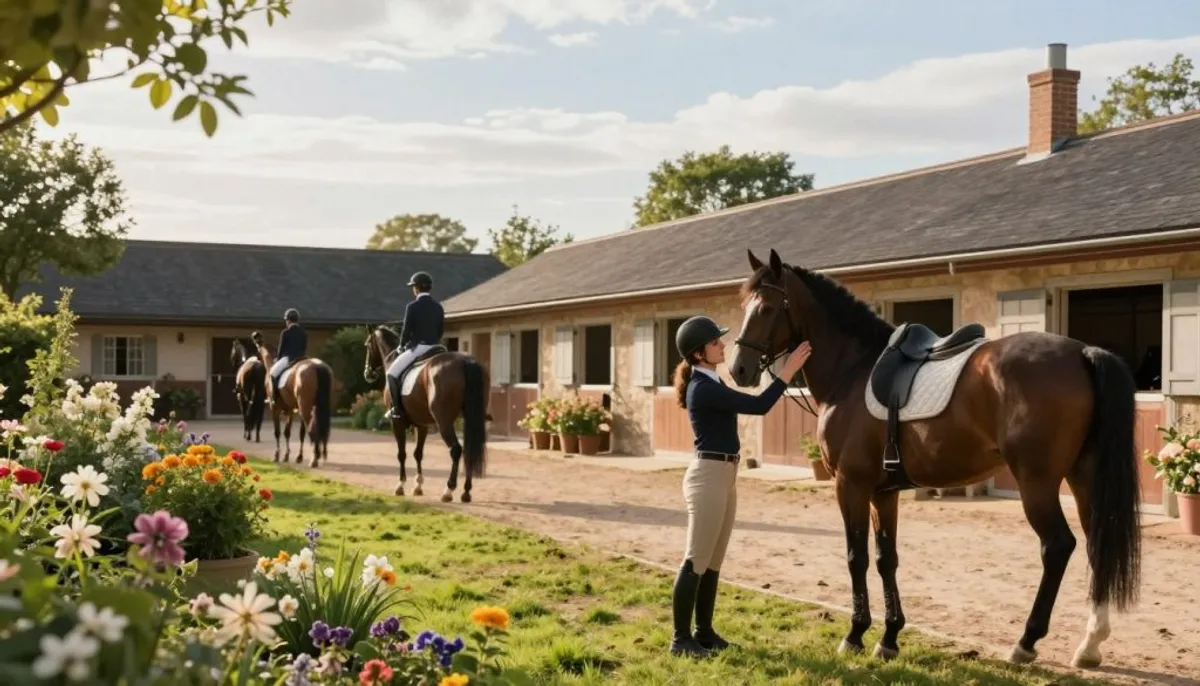
Each equestrian center has its own atmosphere. Some are more sport-oriented, others focus on family, or outdoor activities. You will learn the basics, improve your balance, and better understand how to communicate with horses.
We will explore the different equestrian disciplines, outdoor activities like trail rides, and new trends like western riding. No matter your level, the important thing is to find a club that suits you.
When it comes to equipment, it's better to choose quality and durable items. La Sellerie Française (https://laselleriefrancaise.com) offers high-end gear. Everything is made in France, whether custom-made or in limited editions, by skilled artisans.
Key Points
- An equestrian club allows you to learn, relax, or aim for sports.
- An equestrian center often offers several courses, from beginner to advanced.
- Horses are at the heart of progress: relationship, care, and understanding.
- Horse riding in France is also experienced outdoors, with rides and hikes.
- Classic disciplines coexist with practices like western riding.
- Good equipment enhances comfort and safety, both in the saddle and on foot.
Overview of Horse Riding in France: A Passion Accessible to All
In France, you can ride at any age. From pony clubs to adult outings, there is something for everyone. You will find various approaches, all driven by the desire to move, breathe fresh air, and progress at your own pace. Horses can be used for leisure, learning sports, or simply for walks.
This diversity explains the presence of many profiles of riders. You meet them in arenas, on trails, and during competitions. Equestrian activities combine relaxation and technique. They develop gradually, guided by simple advice and good supervision.
Between Equestrianism, Leisure, and Sport: Why Horse Riding is So Appealing
Horse riding is loved for its unique sensations, precision, and the relationship with the horse. Some seek pleasure, while others aim for athletic progress. Even in racing, where competition matters, there is room for a gentler practice.
There are several styles: classical riding, western, and natural riding. A rider can train in an arena and then explore the outdoors. This teaches them to be more balanced and confident. The school horses play an essential role. They teach good techniques while providing reassurance.
Equestrian Center vs. Ranch: Differences in Atmosphere and Approach
The equestrian center offers regular classes, progression by levels, and technical instruction. Students follow a fixed schedule, learn in groups, and have specific goals. It is a place designed for learning and improvement.
In a ranch, the atmosphere is different: “outdoor” vibe, immersion, sometimes in a “Western” style. For example, at the Ranch des Torrières, near Lyon, you quickly get into trail rides. This allows you to learn to read the terrain and develop other skills. Riding becomes more autonomous while remaining safe.
| Comparison Point | Equestrian Center | Ranch |
|---|---|---|
| Session Framework | Structured lessons, work in the arena, monitored technical progression | “Field” approach, frequent outings, learning through situations |
| Atmosphere | Sport-leisure, stable references, routine that provides security | Outdoor spirit, possible western codes, often a very close-knit group |
| Common Goals | Gallops, dressage, show jumping, skill refreshment | Trail rides, hikes, maneuverability, confidence, and pace management |
| Place of Racing | Often present through competitions and training | More variable, depending on the local culture and projects |
Profiles of Riders: Beginners, Enthusiasts, Horse Owners
Beginners want to learn the basics like steering and managing pace. They also learn to care for horses. With these foundations, riding quickly becomes easier.
Enthusiasts want to go further: exploring without fear, better understanding the horse, and refining their techniques. They explore more technical aspects of riding, even outside of competitions.
Owners seek balance in managing their horse. This includes care, training, and choosing equipment. They juggle leisure, sport, and sometimes competition. But the horse remains their priority. It dictates their daily routine.
Choosing an Equestrian Club Suitable for Your Level and Goals
Each equestrian club is unique. The atmosphere, teaching style, and horses make the difference. It is essential to choose a place that offers a clear and simple plan, whether for pleasure, competition, or becoming more independent.
In a good equestrian center, certain signs are unmistakable: well-maintained horses, clear rules, and a focus on safety. With these elements in place, you feel more confident and progress with each lesson.
Assessing Your Level: First Lesson, Review, and Expectations
The first lesson is crucial for taking stock. The instructor evaluates your position and how you communicate with the horse. They also ask about your goals, how often you want to ride, and what makes you comfortable or not with horses.
This approach helps avoid lessons that do not match your level. By following a structured educational method, we first define your current level, then plan your progression. The intermediate steps are tangible, like maintaining a precise course or managing your pace.
Group Lessons, Private Lessons, Improvement: What to Prioritize
Group lessons provide regularity and create a learning dynamic. They help you learn to manage space and stay focused. Group lessons are often the best way to acquire the basics in riding.
Private lessons are ideal for fine-tuning. They are perfect for working on your posture, refining your technique, or overcoming an obstacle. Personal corrections accelerate progress, especially if you aim for versatility on different horses.
Improvement aims to develop your autonomy. It includes more groundwork, communication with the horse, and sometimes outings. This approach strengthens your ability to understand horses and ride more calmly and precisely, beyond the arena.
| Format | Ideal for | What You Work On | Point to Check at the Equestrian Club |
|---|---|---|---|
| Group Lessons | Establishing a routine | Pace, trajectories, track rules | Group size and horse rotation |
| Private Lessons | Breaking through a plateau | Position, precision of aids, coordination | Session goal announced and followed up |
| Improvement | Gaining autonomy | Outdoor work, groundwork, emotion management | Supervised access to spaces and safety rules |
Framework, Facilities, Supervision: The Criteria That Really Matter
Details make all the difference in an equestrian center. A well-maintained arena, an indoor riding school for winter, and suitable training areas enhance each session. Being able to go outside also diversifies learning and develops good habits.
Good supervision is essential. Instructions must be clear, and the instructor must be qualified. There should be a real sense of progression, not just a one-off activity. The best equestrian centers know how to adapt to each rider, avoiding rushing things.
Quality equipment is crucial for comfort and safety. Having a suitable saddle and durable gear helps a lot, especially if you ride regularly. La Sellerie Française offers high-quality equipment, made in France, perfect for those seeking durable gear.
Classic Disciplines in Equestrian Centers: Dressage, Show Jumping, and Eventing
In many equestrian centers in France, classical riding is fundamental. At Equitation Passion, you discover the basics: dressage, show jumping, and eventing. These disciplines help grasp the why and how. Horses are monitored daily. Each session is rich in meaning.
Dressage: Precision, Posture, and Connection with the Horse
Dressage focuses on the accuracy of aids. It improves balance, posture, and contact. This helps the rider synchronize with their horse.
It is the foundation of all equestrian disciplines. The exercises develop the quality of the horse's movements. The goal is a harmonious dialogue, not just to win.
Show Jumping: Technique, Trajectories, and Safe Progression
In show jumping, turning well is as important as jumping high. You learn to manage space and rhythm effectively. The exercises range from simple to complex.
This builds confidence and reduces mistakes. The rider learns to position themselves better. This discipline prepares well for future competitions.
Eventing: Versatility and Physical Preparation of the Pair
Eventing combines several tests without compromising quality. It tests endurance and versatility. The horse must be well-prepared physically.
This discipline strengthens the rider-horse bond. It requires good energy management. It is very motivating and educational, even close to a professional level.
| Discipline | What We Focus on | Frequent Exercises in Sessions | Concrete Benefits for Horses | Useful References in Racing |
|---|---|---|---|---|
| Dressage | Cadence, balance, precision of aids | Transitions, circles, leg yielding | Flexibility, engagement, better locomotion | More regular gaits, increased availability |
| Show Jumping | Trajectories, pace management, stability | Lines, ground poles, stride contracts | Confidence at obstacles, coordination, impulsion | Course reading, routine, and composure |
| Eventing | Versatility, endurance, couple organization | Sequences, varied terrain, recovery work | Physical condition, calmer mindset, adaptability | Effort management, consistency over a season |
New Practices and Diversification of Equestrian Activities
Equestrian clubs respond to varied demands: learning and having fun. At Equitation Passion, this approach has energized activities since 2010. We maintain the basics while adding fun lessons.
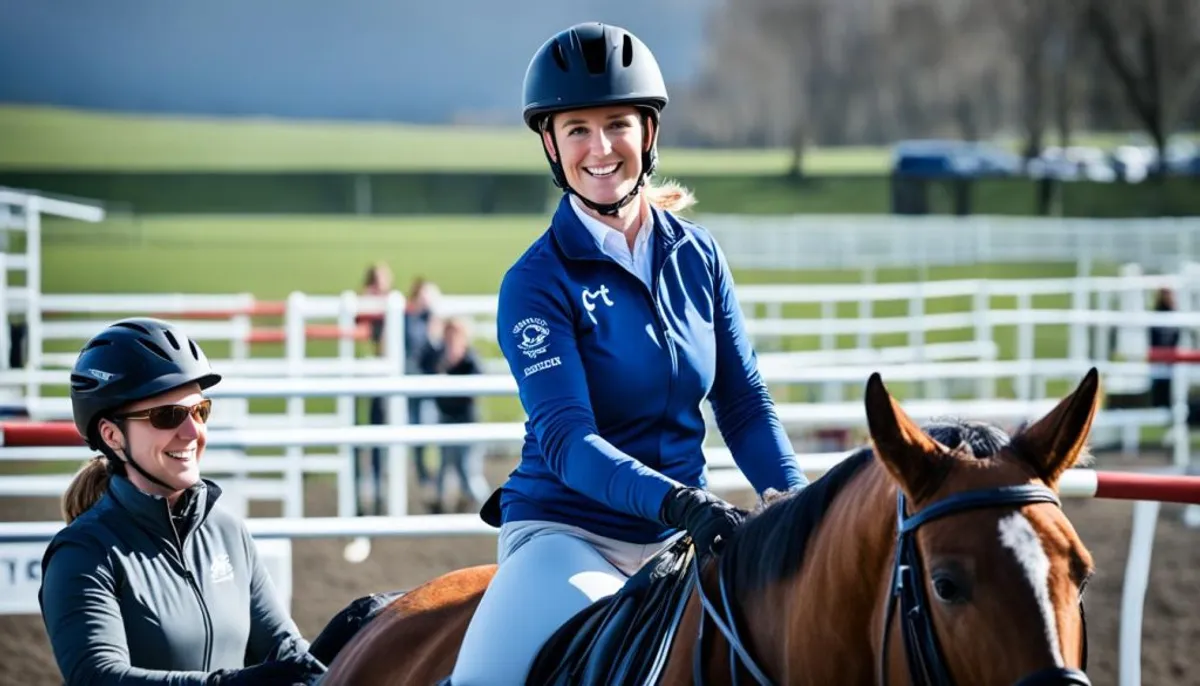
This variety attracts everyone: children, teenagers, and adults. It brings motivation and strengthens the team spirit. Moreover, it reminds us of the importance of suitable equipment for the well-being of both rider and horse.
Pony Games: Fun, Speed, and Team Spirit
Pony games are fun and easy to understand. Children learn to control their mounts and work as a team. This encourages them to take risks while being mindful of safety.
Western Riding: Codes, Equipment, and Sensations
Western riding brings new ways of doing things. This includes a relaxed and precise posture. It is a practice that values the subtle connection with the horse, especially with varied horses.
Equipment is very important for this discipline. La Sellerie Française highlights the importance of having quality gear, made to last and remain comfortable.
Driving: Discovering Control and Coordination
Driving is suitable for those who enjoy precision. You learn to control your carriage with finesse. Staying calm is essential for the horses to feel secure.
| Practice | What We Develop | What Changes in Daily Life |
|---|---|---|
| Pony Games | Reactivity, team spirit, stress management | Short courses, quick instructions, attention to transitions |
| Western Riding | Finesse of aids, balance, stability | Dress codes, work on relaxation, specific equipment |
| Driving | Control, precision, spatial awareness | Careful preparation of harnessing, pace control, enhanced safety |
Natural Riding: Horseback Rides and Hikes
Leaving the arenas means breathing fresh air. Riding becomes peaceful and enriching. The Ranch des Torrières offers direct departures to avoid long trips. This immerses us immediately in the adventure.
Riders learn valuable skills: maintaining a steady speed, respecting distances, and listening to their horses. These outdoor riding lessons are easy to remember for next time.
Hikes Starting from the Site: Organizing Your Outing Safely
Before departing, careful preparation is essential: check equipment and remember important rules. Choose the route based on the weather, terrain, and participants' levels. This way, everyone stays comfortable and calm.
The pace of the hike adapts to the group and a few clear rules. Keeping order, respecting intervals, and planning breaks are essential. This reassures riders and protects the horses.
Nature Routes and Learning: Autonomy, Terrain Reading
In nature, riding requires observing the ground and anticipating. You must choose the best path while taking care of the horses.
Rides enhance the riders' autonomy as they learn to adjust their equipment and manage movements without abruptness. As they practice, they discover without stress.
| Key Point | On Horseback | On a Hike |
|---|---|---|
| Duration | Short outing, ideal for reviewing the basics | Longer outing, with breaks and effort management |
| Objective | Confidence, balance, pace control | Endurance, consistency, autonomy in varied terrain |
| Group Management | Simple instructions, uniform pace | Stricter organization, adapting to levels |
| Attention to Horses | Immediate comfort, reactions to stimuli | Hydration, recovery, vigilance on feet |
Friendly and Family Atmosphere: The “Outdoor” Spirit in Daily Life
The “outdoor” spirit is about experiencing riding in friendliness and simplicity. We talk, share, and learn together before and after each outing.
This way of living riding fosters healthy habits: preparing, organizing, and relaxing together. Outings become special moments for progress and pleasure.
Inspiring Example Near Belfort: Equitation Passion and Its Evolution
Near Belfort, Equitation Passion is a perfect example of how an equestrian club can evolve without losing its essence. This place prioritizes simplicity: easy-to-understand lessons, well-cared-for horses, and a selection of ideal mounts for safe learning.
The daily life in this club is experienced through regular training and horse care. The atmosphere is warm, providing a reassuring environment for both families and riders returning after a break.
A center created in 1997 and run by Anne-Madeleine Schaeffer
Founded in 1997, Equitation Passion is under the direction of Anne-Madeleine Schaeffer. She is a dedicated rider and instructor who emphasizes the fundamentals: maintaining a good position, balancing, and controlling the horses' pace.
Progress is made at each session through clear instructions and specific goals. This methodology allows all riders to feel at home, regardless of their level.
A Green Setting and Facilities Managed by a Local Owner
The club is located in a green area, welcoming upon arrival. The facilities are managed by Sophie Jeannin, who ensures the stability of the site.
The facilities are designed for training without pressure and for easy movement. This comfort is essential for both riding practice and the well-being of the animals.
Since 2010: Keeping the Basics While Opening Up to New Horizons
The center has maintained its principles since 2010: keeping the fundamental disciplines while opening up to new ones. Dressage, jumping, and eventing courses are still essential for properly training riders.
The club has also enriched its offerings with pony games, western riding, and driving. This enhances the offerings without having to leave the club. It diversifies the experiences of riders.
| Reference | What You Find On Site | What It Changes for Riding |
|---|---|---|
| Creation and Direction | Opened in 1997, led by Anne-Madeleine Schaeffer | Stable educational framework, clear references for riders |
| Location | Near Belfort, green environment | Calmer learning, outings, and work in a serene atmosphere |
| Organization of the Site | Facilities managed by Sophie Jeannin, owner of the site | Continuity of the site, regular practice in a well-maintained equestrian club |
| Disciplines Offered | Dressage, Show Jumping, Eventing + Pony Games, Western, Driving | Diverse courses, increased motivation, and expanded equestrian culture |
Ranch Atmosphere Near Lyon: Western Immersion and Outdoor Riding
Want a change of scenery without going far? Experience the ranch spirit with sessions that combine technique and pleasure. The atmosphere is simple and warm, centered around the horse. Between western riding and trail rides, you can fully enjoy.
Activities vary: from the calm arena to horseback rides. The setting resembles an equestrian center with a “Western” touch.
This creates a unique experience.
The Ranch des Torrières is in Neuville-sur-Saône, just outside Lyon. It’s only a 20-minute drive, convenient for frequent visits. Thus, practicing outdoor riding becomes easy on a daily basis.
The site spans 4.5 hectares, surrounded by greenery. The lively environment is ideal for relaxing before or after riding. There are scents of underbrush and shaded spots to recharge.
Lessons are open to everyone from age 14, for all levels. We methodically revisit the basics, then everyone progresses at their own pace. The group spirit is important, whether for precision or for trail rides.
| Practical Reference | What It Changes On Site |
|---|---|
| 20 minutes from Lyon (Neuville-sur-Saône) | Easier to come often, like in an equestrian center, without blocking an entire day |
| At the Gates of Dombes | A varied terrain, useful for outdoor riding and real-condition work |
| 4.5 hectares surrounded by greenery and woods | An immediate sense of nature, pleasant for relaxing and preparing for horseback rides |
| From age 14, all levels | Accessible sessions, with room for progression, in western riding as well as outdoors |
| Annual closure from December 1, 2025, to March 15, 2026 | To be anticipated for planning your season, stages, and resumption goals |
Note: The annual closure invites early planning. It’s the perfect time to set goals. Whether for outdoor riding or western riding, this break helps return with clear ideas.
Supervision and Pedagogy: Progressing with Method and Regularity
In an equestrian club, progress is not random. It is thanks to a clear framework and consistent practice. The Ranch des Torrières guides us step by step, with simple and logical instructions.
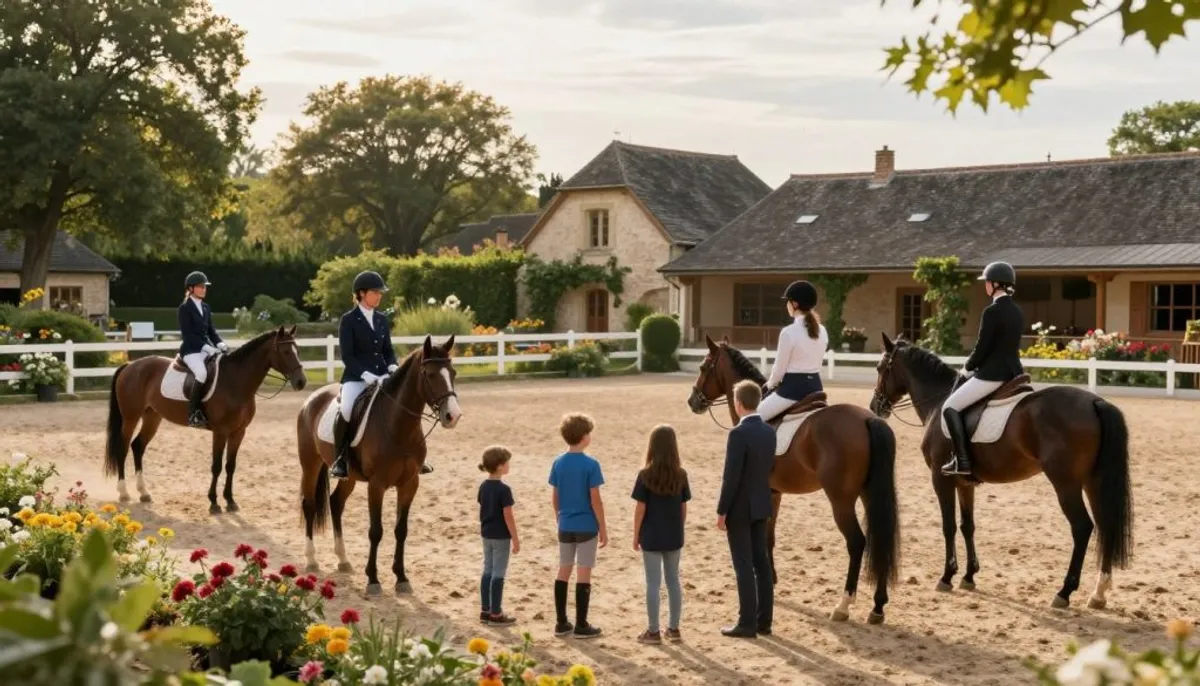
Qualified Instructor: BPJEPS, ATE, and Specific Skills (e.g., TREC Judge)
Nathalie, our qualified instructor BPJEPS and ATE, uses her experience as a TREC judge. She teaches with precision and safety. For riders, knowing how judges evaluate is a real advantage in competition.
Nathalie’s approach combines varied foundations. She always aims to progress with relevant, adapted, and respectful exercises for the horses.
“Why” and “How”: Better Understanding the Horse and Its Work
At the beginning, we conduct a comprehensive assessment: position, balance, and the horse's reactions. Each instruction has a clear purpose: why and how to do it without stressing the horse.
We use simple words to discuss the horse's work. Talking about rhythm, direction, impulsion, and calm makes riding easier. This especially helps to become autonomous with all types of horses.
Project Setup: Intermediate Goals, Perseverance, Regularity
We set precise and measurable goals and closely monitor progress. Being regular and persevering truly makes a difference. This is true for all preparations, whether for a simple lesson or a competition.
| Progression Step | What Is Worked On | Simple Indicator to Follow | Benefit for the Rider and the Horse |
|---|---|---|---|
| Initial Assessment | Posture, balance, response to aids | Stability at walk and trot | Healthy foundation for riding and comfort for horses |
| Intermediate Goals | Transitions, direction, pace management | Clear transitions on demand | More autonomy at the equestrian club |
| Regular Repetition | Warm-up routine, targeted exercises | Fewer mistakes on the same exercise | Reliable progression, stress-free for horses |
| Situational Practice | Course, outdoors, managing the unexpected | Maintained trajectories and constant rhythm | Realistic preparation for equestrian competitions |
Groundwork and Communication: The Basics for Better Understanding Horses
Groundwork in an equestrian club transforms our view of riding. We start by observing, then adjusting, and becoming calmer. This technique enriches our interactions during outings or in the arena.
The goal is not just to appear competent, but to seek clear and safe answers. With horses, clarity is essential, more than strength. Thus, the rider becomes more autonomous, regardless of the discipline practiced.
Liberty, Longe, Long Lines: Building Relationship and Precision
In liberty, we focus on attention and mutual respect for space. The horse learns to follow intention rather than endure constraint. It is in these moments that we often notice the small details.
The longe allows us to work on the horse's rhythm, balance, and straightness. Long lines, on the other hand, help prepare the horse for mounted work, with finesse. These methods are useful, whether in classical riding or western.
Communication and Trust: Codes, Consistency, and Timing
We must follow a simple pattern: a request, a response, then a pause. If the timing is unclear, the horse may become confused, and tension can rise. But if everything is clear, trust quickly establishes itself.
The signals given must be the same each time. Voice, posture, gaze, and pressure all matter. In an equestrian club, being consistent also helps to work with different horses.
- Clarity: give one instruction at a time, avoid unnecessary gestures.
- Progressivity: ask simply, reward quickly, then increase difficulty.
- Regularity: keep the same references, the same framework, for a calm atmosphere.
Biomechanics: Improving Horse Comfort and Aid Accuracy
Biomechanics allows us to grasp the capabilities of the horse's body. For example, we identify a shoulder that is evasive, a tense back, or a reduced stride. Thus, groundwork becomes a fine adjustment, beneficial for all equestrian practices.
What we seek is a smoother movement, without forcing. We want the horse's topline to relax and its movements to be more decisive. This makes riding more enjoyable, and horses remain energetic longer.
| Tool | Main Objective | What the Rider Learns | Desired Effect on the Horse |
|---|---|---|---|
| Liberty | Connection and attention without equipment | Reading signals, managing space, measuring energy | Calm, listening, willing responses |
| Longe | Rhythm, balance, regularity | Observing locomotion, correcting gently, stabilizing pace | More stable stride, more available back |
| Long Lines | Direction and precision close to mounted work | Hand coordination, trajectory control, preparing for transitions | Straightness, precise bending, more trust in contact |
| Biomechanical References | Comfort and efficiency of movement | Recognizing stiffness, asymmetry, decreased impulsion | Flexibility, engagement, balanced distribution of effort |
Horse Boarding and Life at the Club: Services, Comfort, and Routine
Life at the club is more than just the Saturday lesson. Choosing a horse boarding service means following a daily routine. The comfort of horses at the equestrian center depends on small details.
Horse Boarding: What It Can Include Depending on the Structures
A horse boarding service offers accommodation, feeding, paddock access, and cleaning. It may also include supervision, blankets, or special feed. Some clubs have management organized by the site owner, like Sophie Jeannin at Equitation Passion. This improves the welcome and use of spaces.
It’s best to ask precisely what is included to avoid confusion. This helps take care of the horses, especially in winter.
| Checked Point | What Is Often Included | What Varies Depending on the Equestrian Center | Why It Changes the Routine |
|---|---|---|---|
| Accommodation | Stall or shelter, bedding, water | Size of the stall, daily turnout, group shelter | Direct impact on horses' rest |
| Feeding | Hay, basic rations | Supplements, multiple meals, unlimited hay | Provides stable energy and less stress |
| Routine Care | Observation, reporting | Medication, bandaging, blanket management | Reduces surprises when one cannot be there |
| Turnout | Paddock access according to schedule | Duration, type of ground, groups, management of the horses | Improves morale and muscle flexibility |
Training, Horse Work, and Access to Facilities
Access to good facilities is crucial for regular training. The Ranch des Torrières offers quality spaces for learning and practicing. An arena usable year-round, a maintained outdoor arena, and passable trails facilitate work, regardless of the weather.
In some cases, you can choose to work alone, with a coach, or let the team take care of the horse. In any case, good horse management allows everyone to progress smoothly and protects the horses.
Daily Organization: Planning, Supervision, and Follow-Up
To stay organized, a precise schedule is necessary: class times, care, outings, and access to workspaces. With good supervision, you know who to call and when. This avoids stress and ensures the safety of horses and their owners.
Registration often requires basic information: name, address, phone, email. You may also be asked for gender and date of birth for certain activities. Sometimes, there is a verification check confirming you are not a robot before finishing.
Equestrian Competitions and Racing: Preparing and Enjoying
Participating in equestrian competitions is accessible to everyone. You just need to follow a good method to make riding easier and more fun. You progress gradually, from the simple arena to the large field, enjoying each step.
Racing offers a well-defined framework with clear schedules and rules. This structure helps club horses remain calm and consistent. Thus, the rider-horse pair is prepared step by step.
Realistic Goals: From the First Competition to the Sports Season
For your first competition, it is important to set simple goals. For example, finishing a course without faults, maintaining a good pace, and ensuring the horse stays relaxed. In all disciplines, these basics contribute to linking pleasure with performance. It is through regular practice that we progress.
Establishing a clear project can really help. You choose a date, define intermediate steps, and train accordingly. This method reduces stress and makes training sessions more meaningful.
Discipline and Progression: Classical, Western, TREC, and Versatility
In each discipline, there are specific rules to follow. For classical riding, the key is stability and precision. In western, what matters is the softness and precision of movements. Equipment is chosen accordingly for each style.
TREC is an extraordinary adventure: you must manage your effort, control your speed, and understand the environment. Having someone like Nathalie, an expert in TREC, helps. She teaches us to overcome obstacles safely. This expertise is useful for both competition and trail rides.
Always use the right equipment, suited to each discipline. La Sellerie Française offers high-quality gear, made in France. Good equipment contributes to the well-being of horses, especially during competition periods.
| Preparation Step | What We Work On in Riding | Useful Reference in Competitions | Impact on the Horses |
|---|---|---|---|
| “Basics” Cycle (2 to 4 weeks) | Direction, rhythm, clear stops, simple transitions | Fault-free trajectory courses, readable exercises | Calmer horse, more stable responses |
| “Technical” Cycle (3 to 6 weeks) | Pace contracts, bending, lines, approaching bars | Less improvisation, better key points | Less tension, better recovery |
| “Simulation” Cycle (1 to 3 weeks) | Timed relaxation, sequences, transitions under pressure | Routine ready on the day, more confident gestures | Horse reassured by a known pattern |
| “Assessment” Cycle (after competition) | Video analysis, adjustments, next mini-goals | Clear progression from one date to another | Adjusted workload, better availability |
Team Spirit: Riders, Coaches, Recognition, and Competition Routine
During competitions, it’s all about teamwork. The coach guides and adapts their plan as needed. By scouting the terrain in advance, we can better plan our approach.
Having an established routine helps save time. You need to prepare the horse well, check the equipment, and ensure good relaxation before starting. These habits are essential for the horses' well-being and for success, regardless of the competition level.
Conclusion
Choosing an equestrian club in France requires knowing what you truly want. Some seek a center specialized in dressage, show jumping, or eventing. Others prefer activities like pony games, western riding, or driving. Many find that going on horseback rides is the best way to progress, calmly and at their own pace.
The examples illustrate well the diversity. Equitation Passion, located near Belfort, has been operating since 1997 under the direction of Anne-Madeleine Schaeffer. It is a place full of greenery. With the help of Sophie Jeannin, the center has introduced new activities since 2010, while keeping the fundamentals.
Near Lyon, the Ranch des Torrières offers 4.5 hectares of nature and a pleasant western spirit. They accept young riders from age 14. Horseback rides depart directly from the ranch. This helps to become more autonomous. Note that they will close from 12/1/2025 to 3/15/2026. Nathalie, with her qualifications, ensures good supervision.
A good equestrian center is distinguished by the excellence of its supervision, safety, and a well-thought-out project for the rider and their horse. A useful tip as well: choose quality and durable equipment. For this, La Sellerie Française offers luxury products, made in France, custom-made or in limited editions.
FAQ
What do people seek in an equestrian club in France?
We mix passion and learning. We learn to ride and progress in sports. We also establish a deep connection with horses.
A quality equestrian center explains the horse's work to you. It makes you more confident and autonomous.
Is the range of equestrian activities really varied?
Absolutely. French clubs offer dressage, show jumping, and much more. They provide outdoor activities and groundwork.
They often add games like pony games or driving techniques.
What is the difference between a “classic” equestrian center and a ranch?
Equestrian centers focus on technical training. Ranches have a more relaxed “Western” atmosphere.
The Ranch des Torrières is a perfect example of the latter ambiance.
Who is horse riding for: beginners, advanced riders, owners?
Horse riding is for everyone. Beginners seek a safe environment and strong foundations. Advanced riders aim for sports goals.
Owners want a good place for their horse and accessible facilities.
How does a first lesson go in a serious equestrian club?
We start by assessing your level and defining your expectations. Then, a tailored program is proposed.
This approach is used by Nathalie at the Ranch des Torrières.
Group lessons or private lessons: what to choose for progress?
Group lessons offer a good rhythm and group dynamics. Private lessons allow for fine-tuning technique.
Combine both for better results.
What concrete criteria to look for before enrolling in an equestrian club?
Ensure that the club has good facilities and qualified staff. It should also align with your goals.
Choose based on whether you want leisure or competition.
What does dressage bring you, even if you are not aiming for competition?
Dressage improves your precision and posture. It also strengthens your connection with the horse.
It is beneficial for all equestrian disciplines.
How to progress in show jumping without rushing?
Work on your mastery of courses and balance. Gradually increase difficulty while staying safe.
This is crucial, especially for competitions.
Who is eventing for?
For those who love variety and challenges. Eventing trains both the rider and the horse physically and mentally.
It is useful in all aspects of riding.
Why do some centers add pony games, western, or driving?
These activities add variety and motivate riders. They develop specific skills and strengthen team spirit.
They also enrich the relationship with the horse.
Does Equitation Passion offer classic disciplines and new trends?
Yes. Equitation Passion is a diverse club that has offered both classics and new trends since 2010.
It is located in a green and well-equipped setting.
Can you go on hikes starting from a site, like in a ranch?
Absolutely. The Ranch des Torrières offers this possibility. It encourages exploration simply and autonomously.
How is an outdoor outing organized safely?
Everything is planned in advance, from the route to safety instructions. This guarantees an enriching and safe experience.
Where is the Ranch des Torrières and for what audience?
20 minutes from Lyon, the Ranch welcomes everyone from age 14. It offers a friendly environment suitable for learning.
Is there a closure period at the Ranch des Torrières?
Yes, it closes from December 1, 2025, to March 15, 2026. This is good to know for your plans.
What diplomas and skills guide progression in the ranch?
Nathalie, with her diplomas and experience, guides riders. Her expertise ensures comprehensive training.
What is the purpose of groundwork (liberty, longe, long lines)?
It deepens the relationship and communication between horse and rider. It also improves safety and understanding of the horse.
How to improve communication and trust with a horse?
By being clear and consistent in your requests. Understanding your horse strengthens your bond and autonomy.
Is biomechanics useful for a leisure rider?
Yes, it makes your riding more precise and comfortable. It promotes better movement and well-being for the horse.
What can a horse boarding service include depending on the structures?
A boarding service can offer accommodation, feeding, and more. Access to facilities and a good routine are essential.
How is daily life organized at the club?
It relies on clear organization, attentive follow-up, and good management. This ensures everyone's progression.
What administrative steps are often required during registration?
Clubs ask for basic information and a verification captcha. It’s a simple and quick process.
How to transition from leisure to equestrian competitions?
With clear objectives and good preparation. Perseverance and good supervision are crucial for success.
Can you compete in TREC or in an outdoor-oriented approach?
Yes. TREC is ideal for those who enjoy adventure in nature. It combines navigation and technical skill.
What does team spirit change in competitions and racing?
It helps to prepare better and progress. A good team also reduces stress and improves performance.
Why does equipment matter so much for safety and comfort?
Good equipment protects and ensures better communication with your horse. This matters in all circumstances.
Where to find high-end, durable equipment consistent with your discipline?
La Sellerie Française (https://laselleriefrancaise.com) offers custom equipment. Each piece is made in France by expert artisans.