
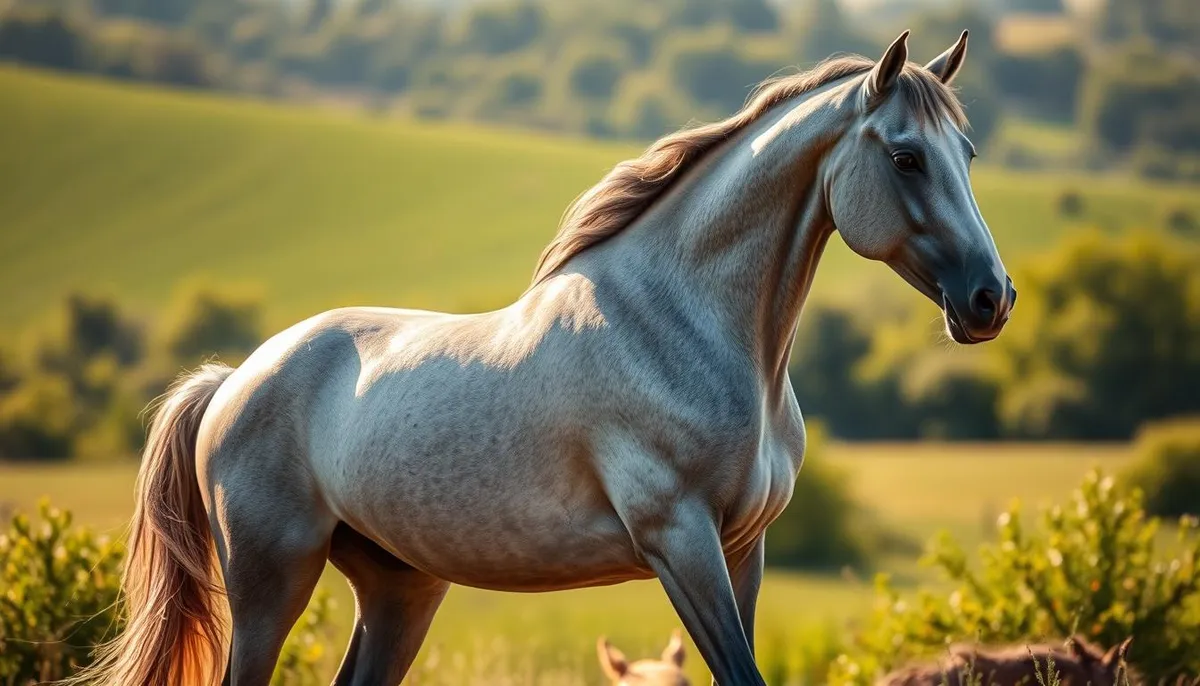
The gray horse captivates us with its coat that evolves from dark to silver, even almost white. Over the years, this transformation occurs, showcasing a natural beauty. It demonstrates an elegance that touches all who love horses.
There are several shades of gray: light, mouse, or dappled. Distinctive marks like stars make each horse unique. And over time, their mane becomes lighter. In their natural environment, this beauty catches the eye, regardless of their activity.
For a long time, these colors have been celebrated in art and literature. Breeds like the Andalusian and the Lipizzaner are renowned for this. They symbolize maturity and elegance, uniting history, passion, and love for these animals.
Key Points
- Silver coat resulting from a mix of white and black hairs evolving with age.
- Dark birth, gradual lightening to a very light gray.
- Varied shades and patterns: light gray, mouse gray, dappled, with distinctive marks.
- Symbol of elegance, nobility, and maturity in the equestrian world.
- Prominent presence in art and literature; renowned breeds like the Andalusian and the Lipizzaner.
- Targeted care: regular grooming, sun protection, and stain management to preserve shine.
Origins, Etymology, and Symbolism of the Gray Coat
For a long time, the gray coat of horses has fascinated us. It links beauty and memories through equestrian history, art, and rituals. It has a special aura, different from that of the white horse, but also evokes purity and nobility. This dual perspective creates a rich symbolism that unites Europe and Iberian traditions.
Etymology of the word "gray" and its link to wisdom
"Gray" comes from the Latin griseus. It symbolizes maturity and prudence. For the coat of horses, it translates to calm and wisdom.
The gray horse, which becomes lighter over time, symbolizes the passage of time. This gives it a unique nobility, different from the white horse.
Historical Presence in Art and Literature
The gray coat has always held a special place in art. It is often the sign of the hero in French and Spanish equestrian literature. It particularly shines in winter landscapes, adding to its majesty.
Artists have captured its quiet strength in several works. Thus, the gray horse occupies a special place in art, symbolizing a sober power.
Figures and Iconic Gray Horses, from Imperial Europe to Iberian Traditions
In Imperial Europe, the gray horse symbolizes authority and elegance. It was seen leading processions and on battlefields, marking its importance.
Gray horses also play a crucial role in Iberian traditions. The Real Escuela Andaluza and the Spanish Riding School in Vienna have shown this well. They perpetuate the elegance of movement, linking the gray and white horse.
Gray Horse
The gray horse is recognized by its gray coat, a mix of black and white hairs. As it ages, it becomes almost silver and shines in the sunlight. Its skin, however, remains dark, which helps to distinguish it from a white horse.
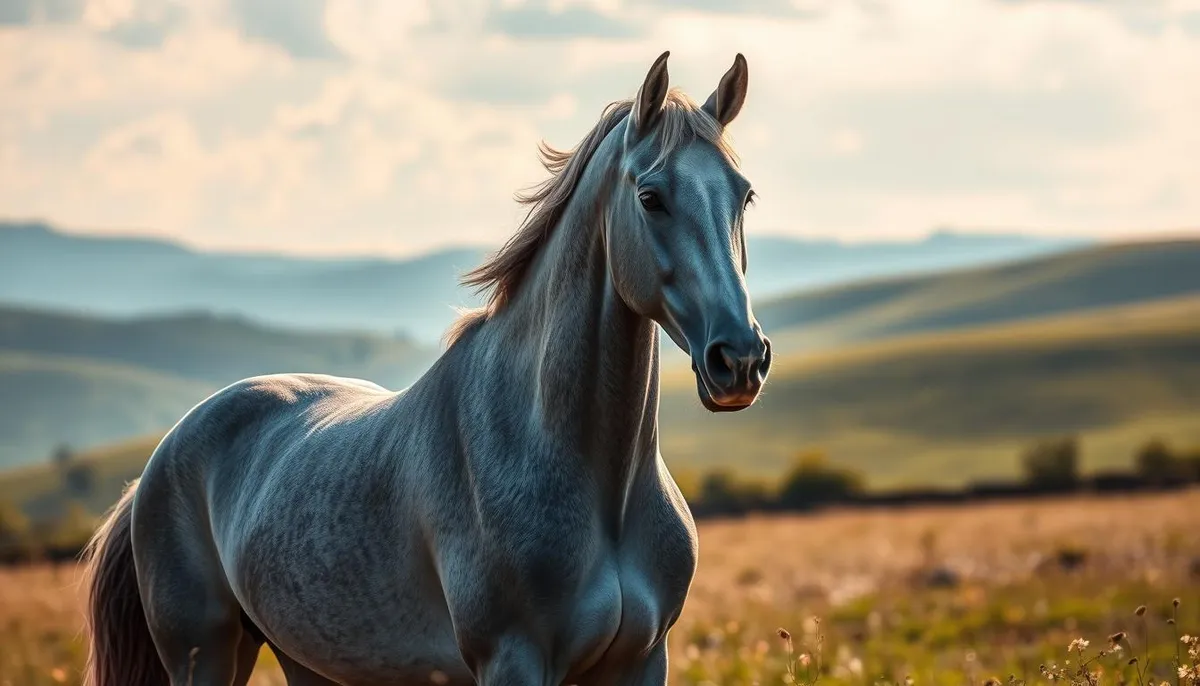
Graying often begins after their first year. The coat can transition from light gray to mouse gray, and even become dappled from 4 to 12 years old. These darker spots highlight the strength of their body.
Gray horses can be found in several horse breeds. They are typical among Andalusians and Lipizzans. They are also seen in Percherons and Lusitanians. In classical equestrian disciplines, they shine with their movements. And in nature, their color blends with elegance.
| Shade of Gray Coat | Visual Aspect | Most Frequent Period | Distinctive Indicators | Presence in Horse Breeds |
|---|---|---|---|---|
| Light Gray | Bright silver, low contrast | Advanced age | Dark skin, very diluted hairs | Andalusian, Lipizzan, Lusitanian |
| Mouse Gray | Slate hue, cool reflections | Young adult | Visible mixed black and white hairs | Percheron, Camargue, Connemara |
| Dappled Gray | Darker circles on a silver base | 4 to 12 years | Clear dapples on the neck and croup | Lipizzan, Andalusian, Selle Français |
| Iron Gray | Steel tone, marked contrast | Adolescence | Persistent dark areas on limbs | Irish Draught, Thoroughbred, Arabian |
Identifying and Understanding the Evolution of the Coat
To recognize a gray horse, one must be attentive. It is important to identify gray horse in equestrian settings by observing the evolution of the coat. One must also pay attention to marks and skin color. Colors change with age, but there are signs that are unmistakable.
Differences Between Gray Horse and White Horse at Birth
A gray foal is born with a dark coat, which can be black, bay, or brown. In contrast, a white horse is light from birth and remains so. For gray, the skin under the hair is dark, even black, while for white, it is pink, especially near the eyes and nostrils.
This difference is crucial for identifying gray horse quickly, well before the coat begins to lighten.
Gradual Graying: From Dark Foal to Silver Shades
The coat of the horse gradually changes, losing its color to become silver. This transition, from brown or black to silver, can lead to a coat that is almost white as it ages. In equestrian settings, this change is very visible, especially under strong light.
Variations and Patterns: Light Gray, Mouse Gray, Dappled, Stars, and Stripes
Grays can be light or have a mouse tone. The dappled pattern, with its dark circles, is common between 4 and 12 years. These circles fade over time.
One can also see stars or stripes blending with the natural marks. Their presence depends on the season, shedding, and coat condition.
Hair, Skin, and Marks: Reliable Indicators for Recognition
Gray hairs lighten to become silver-white, but the skin remains dark. This helps to identify gray horse compared to a white horse. White marks may be found on the head and legs, without obscuring the dappled patterns. Proper coat care can reveal these nuances, especially useful in equestrian settings and during presentations.
Genetics, Breeds, and Frequencies in the Equestrian World
The genetics of the gray horse is fascinating for riders and breeders. It shows how a foal can change from a dark color to silver shades. It also serves to distinguish different horse breeds where the gray color is predominant.
Key Point: a dominant gray gene changes the appearance of the coat without altering its birth color. The skin remains dark, which is useful for recognizing the horse.
Dominant Gray Gene and Hair Depigmentation Mechanisms
The dominant gray gene causes a gradual depigmentation of the hair. This change begins early and develops in stages, from the muzzle to the flanks. The skin color does not change, and the eyes remain the same.
The coat does not lose its original color immediately; it lightens gradually. Over time, the hairs become very light. Some horses retain dark areas longer, while others whiten quickly.
Affected Breeds: Andalusians, Lipizzans, Percherons, Lusitanians, Quarter Horses, Mustangs
Several horse breeds can carry this gene. The Andalusians and Lusitanians are often gray, which is appreciated for dressing. The Lipizzans are known for their beautiful gray color at the Spanish Riding School in Vienna.
The Percherons also often display impressive gray coats. Quarter Horses and some Mustangs can showcase beautiful gray coats.
Frequency of the Gray Coat and Stages of Dappling by Age
It is estimated that one in ten horses has the gray gene. This gene is less common than other colors like bay or chestnut. The frequency varies by breed and region.
The dappled marks appear between 4 and 12 years. They are most visible in the middle of this period. By the age of 9 to 10 years, these marks become less distinct, and the horse becomes almost entirely gray. Genetics can influence the final appearance, as well as the speed of depigmentation.
| Aspect | Observation | Typical Period |
|---|---|---|
| Onset of Graying | Light streaks on head and flanks | 1–3 years |
| Marked Dappling | Light rings on a darker background | 4–12 years |
| Advanced Lightening | Uniformity towards a very light gray | 9–10 years and older |
| Skin | Dark, useful for recognition | All ages |
Aesthetics and Disciplines: From Dressage to Sport Riding
The gray horse captures light and highlights every gesture. In dressing, this equine aesthetics showcases straightness, collection, and cadence. Judges notice the line of the back, the symmetry of the hips, and the engagement of the hindquarters more clearly.
The Iberian origins shine here: Andalusian and Lusitanian offer flexibility and a noble neck carriage. The Lipizzans, made famous by the Spanish Riding School in Vienna, embody classical dressing, their coats becoming very light at maturity. In sport riding, a well-presented sport horse reinforces the visual impact in the arena and paddock.
The dappling is most vibrant between 4 and 12 years, then softens over time. In conformation and gaits competitions, the coat highlights musculature and purity of gaits. Careful grooming, a neat mane, and a well-fitted bridle support performance while elevating equine aesthetics.
Contemporary artists play with gray and white panels, inspired by winter landscapes. This palette recalls the movement of a gray horse in piaffe or passage, where light outlines each joint.
For a sport horse in sport riding, understated and precise tack remains crucial. Black or dark brown leather, fine stitching, suitable bits, and well-balanced saddles support the stability of the torso and the fixity of the leg. In dressing, a clean white saddle pad intensifies contrast and clarifies the silhouette.
| Discipline | Advantage of the Gray Horse | Technical Focus | Impact in Competitions |
|---|---|---|---|
| Classical Dressage | Readability of lines and frame | Straightness, impulsion, stable contact | More consistent scores on regularity |
| Conformation and Gaits | Relief of dappling between 4–12 years | Musculature, stance, amplitude | High memorability by the jury |
| Equestrian Shows | Stage effect under spotlights | Presentation, costume, rhythmic figures | Strong visual presence |
| Sport Riding | Clear silhouette in fast movement | Saddle adjustment, rider fixity | Visibility in the arena and paddock |
In daily life, the shine of the coat supports the clarity of gestures. Before a competition, targeted shampoo, a light layer of hoof oil, and a microfiber cloth on the neck provide the final shine without weighing it down.
In outdoor arenas, the low light highlights muscular masses. The gray horse gains presence there, especially when the cadence remains fluid and the hand stays discreet. This marriage of precision and style serves both the eye and the score.
Care, Well-being, and Specific Care for the Gray Coat
A gray horse is splendid when well cared for. Proper care ensures optimal well-being and keeps its coat shiny. Regular coat maintenance also takes care of its delicate skin.
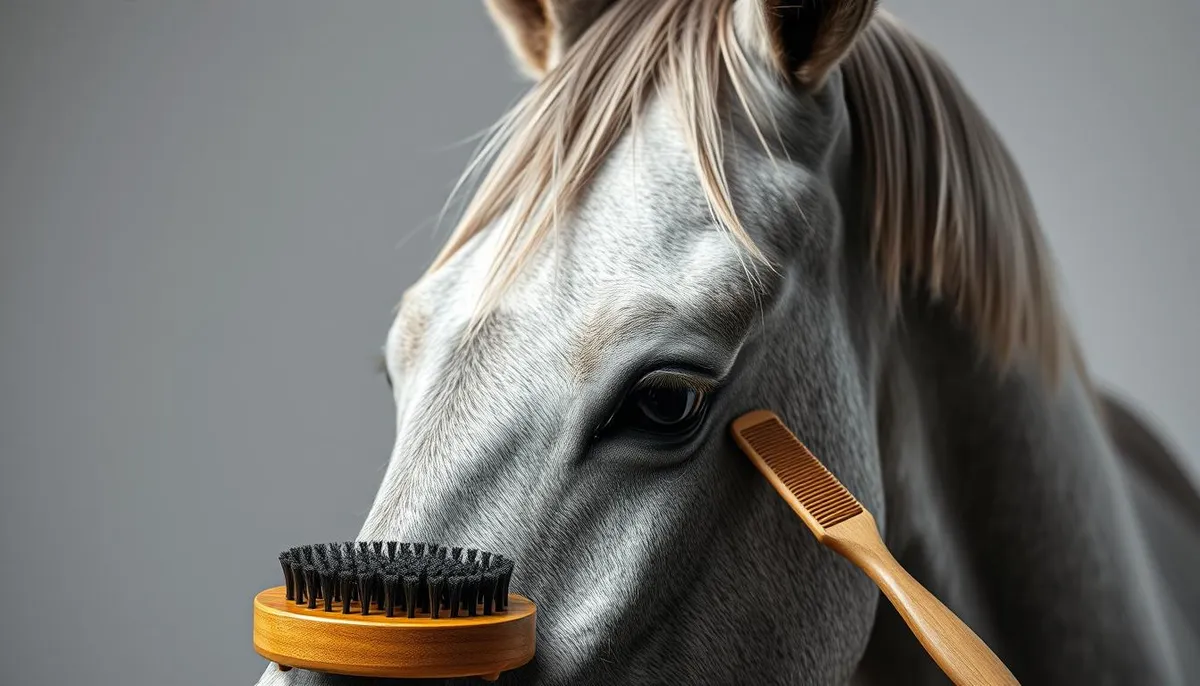
Shine Routine: Grooming, Nutrition (Vitamins A and E), Stain Management
Dedicate 10 minutes to daily grooming. This stimulates circulation under the skin and softens the hair. Start with a rubber glove and finish with a soft brush to reveal the natural shine and help control stains.
Feed it with foods rich in vitamins A and E, after consulting the veterinarian. These vitamins are essential for its skin and coat and contribute to the well-being of the gray horse.
To maintain the bright white, opt for a quality blue shampoo and a special cream for stains. Rinse well afterward and dry thoroughly to prevent water marks and maintain its coat.
Sun Sensitivity and Skin Precautions
Horses with light skin must be protected from the sun. Use a sunscreen designed for them, to be applied on the muzzle, nostrils, and around the eyes.
In summer, ensure they have access to shade, use an anti-UV blanket, and take them out when it is cool. These practices reduce the risk of burns and improve their quality of life.
Veterinary Monitoring: Frequent Benign Melanomas in Older Gray Horses
Gray horses are more likely to develop melanomas as they age. Regularly examine specific areas like the base of the tail and around the mouth.
Schedule annual visits to the veterinarian. Any change in the appearance of nodules should be evaluated quickly to adjust necessary care.
Optimizing the Appearance of Dappled Gray Through the Seasons
The appearance of the dappled coat changes with the seasons. Gentle cleaning, shining sprays, and the use of natural brushes help maintain its look.
Adjust the intake of vitamins A and E during shedding and intensify care for stains before competitions. Use approved grooming products to keep their coat impeccable.
| Objective | Key Action | Frequency | Benefit |
|---|---|---|---|
| Daily Shine | 10 min grooming (glove + soft) | Every day | Smooth coat, better microcirculation |
| Resilient Skin | Ration with vitamins A and E | According to dietary plan | Soft skin, shiny coat |
| Stain Management | Blue shampoo + targeted stain remover | Weekly or before outings | Clean white, consistent silver appearance |
| Sun Protection | Equine SPF cream + shelter + UV blanket | Sunny seasons | Fewer irritations, increased comfort |
| Health Monitoring | Check risk areas for melanomas | Monthly + annual visit | Early detection, tailored care |
| Clear Dapples | Shine spray approved by professionals | After grooming | Lasting definition, optimized coat maintenance |
Equipment and Style: Enhancing the Beauty of the Gray Horse
Choosing equipment for a gray horse highlights its grace. A good style for riding combines comfort, technicality, and looks. An expert saddlery guides you in selecting materials, cuts, and finishes.
Colors that Enhance the Coat: Black, Dark Brown, Navy Blue, Tonal Gray
Black highlights the horse's silhouette. Dark brown adds a perfect touch of softness for nature. Navy blue modernizes, while the harmony of gray creates a subtle elegance.
High-End Saddles and Tack: Comfort, Fit, and Performance
A well-fitted saddle ensures comfort and performance. One should choose quality leather, a good tree, and suitable panels. This helps the horse move better and receive clear instructions. With a thoughtfully designed bridle and bit, the equipment becomes understated and efficient.
La Sellerie Française: Exceptional Products Made from A to Z in France
La Sellerie Française manufactures each item in France with great care. The brand offers limited and custom creations, using quality leathers. Each piece is designed to last, whether for training or competition.
Technical Accessories for Dressage and Sport Horses
Technical accessories should enhance comfort without compromising style. Choose items like ventilated saddle pads and protective gear to avoid pressure points. Details in navy blue, gray, and tonal shades make the equipment both beautiful and functional.
| Element | Key Benefit | Recommended Color Choice | Usage | Saddle Advice |
|---|---|---|---|---|
| Mono-flap Saddle | Precise contact, rider stability | Black or dark brown | Dressage | Adjustment at the withers and panels suited to the back |
| Anatomical Bridle | Pressure distribution, neck comfort | Tonal gray | Sport Horse | Adjusted noseband to free breathing |
| Ventilated Saddle Pad | Heat management, stability | Navy Blue | Dressage and flatwork | Memory foam with an open channel for the spine |
| Firm Lined Boots | Tendon support, shock absorption | Black | Sport Horse | Secure closures and breathable lining |
| Girth/Hunting Collar | Saddle stability | Dark brown | Outdoors and work | Progressive adjustments for shoulder freedom |
| Brand and Manufacturing | Quality, traceability, durability | Consistent palette | Equestrian Style | La Sellerie Française, complete manufacturing in France |
Conclusion
The gray horse is truly special. From its youth, its color changes, shifting from dark to silver and then to a unique shine. In young horses, it is often darker with shades that become lighter between 4 and 12 years. Its skin remains dark, even when its hairs turn white, distinguishing it from a truly white horse. It is thanks to a dominant gene that the gray horse has traversed time with elegance.
Different horse breeds showcase this magnificent color: Andalusians, Lusitanians, Lipizzans, and many others. They carry within them a rich cultural history, inspiring artists and writers. Whether in competition or in dressage, the gray horse excels, captivating with its performances.
Care is crucial to maintain the beauty of these horses. This includes regular grooming and a diet rich in vitamins. It is also important to care for their skin and protect them from the sun. And let’s not forget the importance of veterinary check-ups to monitor any risk of melanoma in the older ones.
The gray horse is much more than just a color. With its coat evolving over time, it symbolizes nobility and grace. It remains a source of inspiration for those who love equestrianism, offering a rich experience of tradition and beauty.
FAQ
What is a gray horse and how does it differ from a white horse?
A gray horse is born with black and white hairs. Over time, they become lighter, giving a silver look. They are dark at birth and then change gradually. Their skin remains black, unlike the white horse which has pink skin from birth. This fascinates those who love horses.
Where does the term "gray" come from and why does this coat symbolize wisdom?
“Gray” comes from the Latin word “griseus.” It symbolizes maturity and wisdom through tradition. These horses represent elegance and power, which is highly appreciated.
What are the main shades of a gray horse?
There are several types: light gray, mouse gray, and dappled gray. The dappled gray shows circular spots on a silver background. These special marks make each horse unique.
At what age does a gray horse become almost white?
The color changes slowly. After ten years, many become almost white. The circular spots stand out between 4 to 12 years before fading.
Which horse breeds frequently exhibit the gray coat?
Several breeds have gray horses. The Andalusians, Lusitanians, and Lipizzans are known for this. The Percherons, Quarter Horses, and some Mustangs also. They are highly appreciated in equestrian sports.
What is the genetic origin of graying?
A “gray gene” dominant causes loss of pigmentation. It is passed on and explains the color change. The skin remains dark, which helps to identify them.
How to quickly distinguish a gray horse from a white horse on the ground?
Look at the skin around the eyes and lips. In a gray horse, it is dark. The white horse has pink skin. The hairs of the gray change color over time.
What care is needed to maintain the shine of a gray horse?
Take care of the coat with daily grooming. Provide a nutrient-rich diet. Use suitable products to keep their beauty.
Are gray horses more sensitive to the sun?
Yes, they are, especially in hairless areas. Protect them with sunscreens and shelters. This keeps their skin and coat healthy.
Are melanomas common in older gray horses?
Gray horses can develop melanomas after 15 years. Most are benign. It is important to check them regularly.
How to highlight a gray horse in dressage competitions?
Use understated colored equipment to enhance them. Choose quality accessories that showcase their beauty.
What technical accessories should be prioritized for a gray sport horse?
Choose breathable and comfortable accessories. Durable materials enhance their performance without hindering their movement.
Where to find high-end equipment made in France?
The Sellerie Française offers high-quality products made in France. Their craftsmanship ensures durability and beauty for your horse.
Is the gray horse appreciated in all disciplines?
Its unique look shines especially in dressage and shows. But it is also popular in sport riding for its appearance.
Is the frequency of the gray coat high in the equine population?
It is quite common, but less so than other colors. About one in ten horses has the gray gene, with variations by breed.
Does dappling vary by season?
Yes, it depends on several factors including the season. Good skin care maintains their appearance longer.
What are the best quick tips for a gray horse in daily care?
Frequent grooming and skin care are key. Protect them from the sun and choose appropriate equipment. These actions keep their coat beautiful.