
Choosing a bridle, saddle, or blanket may seem simple. But it becomes complex without knowing the size of your horse. This guide helps you understand how to measure correctly. It emphasizes that every horse is unique. Standard charts provide an idea, but they are not perfect.
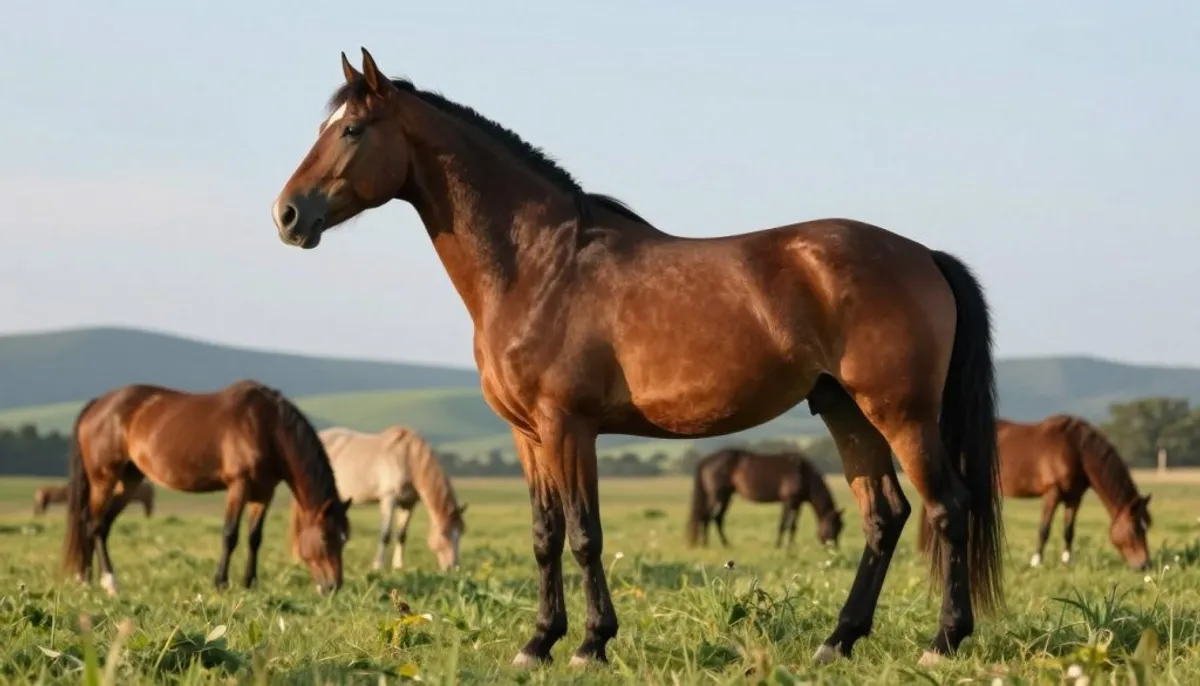
To be sure, measure your horse yourself. Then compare these measurements with equipment that already fits. Take these measurements calmly, on flat ground. In France, this method avoids many exchanges and ensures the horse's comfort.
A good harmony between the horse and the rider changes everything. A well-fitted size improves stability and reduces pressure. It also boosts confidence in the saddle. Ophena emphasizes this in its advice for maximum comfort and safety. This is what distinguishes acceptable equipment from high-end equipment.
La Sellerie Française offers superior quality. Each piece is made in France by recognized artisans. They are unique, custom-made, or in limited editions. The goal is a perfect, tailored, and elegant fit.
Progress step by step. Start by accurately measuring your horse. Then compare these measurements to choose the ideal equipment, from head to toe. This way, you will know how to match standard sizes with reality for each purchase.
Key Points
- Size guides the choice, but the shape of the horse is also crucial.
- Measurements taken directly from your horse are the best reference.
- Starting with well-fitted equipment and verifying through measurements minimizes errors.
- A well-matched horse-rider duo increases comfort and safety, according to Ophena.
- La Sellerie Française offers luxury equipment, made in France, with custom or limited options.
- To choose well, measure, compare, and then select each piece carefully.
Understanding Horse Size and Proper Measurements
Before deciding on a horse or its equipment, it is crucial to know a few basic reference points. Size may seem obvious at first glance, but it does not reveal everything. Knowing the difference between height, measurement, dimensions, and size of a horse can save you time.
Measuring Horse Height at the Withers: The Most Common Reference
The height of a horse is measured in centimeters just at the withers. The withers is that high point on the horse's back, where the neck meets the shoulders.
Ensure the horse is on flat, calm ground for an accurate measurement. Use a measuring stick or tape measure and check the measurement twice.
Horse Measurements and Horse Dimensions: What to Observe Beyond Centimeters
The height at the withers gives a first idea, but the dimensions of the horse are equally important. The width of the chest, the shape of the shoulders, and the length of the back influence the choice of equipment, such as saddles or blankets.
Do not forget the horse's load capacity. A horse can generally carry 15 to 20% of its own weight. For example, a 450 kg horse can carry between 68 to 90 kg, counting the rider and equipment. Consult a veterinarian or a professional for more precision.
| Rider Size | Reference Horse Height at the Withers | To Watch for Horse Dimensions | Impact on Horse Measurements in Practice |
|---|---|---|---|
| < 162 cm | 142–152 cm | Back not too long, free shoulders, consistent chest circumference | Easier to find a stable saddle if the width and withers are harmonious |
| 162–178 cm | 152–162 cm | Arcade width, wither shape, regular topline | Size alone is not enough: two horses at 160 cm may require very different adjustments |
| > 178 cm | > 162 cm | Carriage, back musculature, depth of the rib cage | Comfort often depends more on carriage than on the stated centimeters |
Horse Size vs. Morphology: Why Two Horses of “The Same Size” Can Fit Differently
A horse can appear larger or more robust depending on its shape. For example, a “short and wide” horse often looks bigger than a “tall and thin” one, even if they have the same height at the withers. Morphology plays a significant role.
Trying several horses of similar sizes is the best approach. Remember that a horse's body changes with exercise, age, or seasons. Therefore, it is important to regularly readjust measurements and equipment.
Size Correspondences for Pony/Horse Equipment
Between brands, the same label can vary in size. To minimize returns, rely on a correspondence based on withers height. Then, adjust according to the horse's anatomy.
The proportions of the horse are as important as the measurements in centimeters.
Using this method helps choose the right halter, bridle, or protection. But, it is just a guide. For example, a pony may have a wider head or a large horse a finer neck.
The standard size helps us avoid mistakes before trying the equipment.
Standard Sizes SHT, PS, CS, FS: Definitions and Uses
Product sheets often display acronyms like SHT, PS, CS, FS. SHT stands for Shetlands, also marked as S/S. It is suitable for very small ones.
PS means pony size, also noted as P/S. It is found on halters and blankets.
CS indicates Cob size, used for Thoroughbreds or small horses, marked C/S. FS is for full size, F/S, seen on bridles and boots.
These acronyms facilitate purchasing. However, they do not replace checking proportions, especially for the headpiece, cheek pieces, or noseband.
Withers Reference Points: From Shetland to Draft Horse
To find the right size, referring to the withers is helpful. Below 90 cm, it is the Shetland category. Between 90 and 145 cm, it is considered a pony. This category varies widely.
Between 145 and 158 cm, it is often Cob / Thoroughbred. The standard size can sometimes be too tight.
Above 158 cm, we talk about classic horse size, often FS. For horses over 180 cm, special cuts may sometimes be necessary.
Indicative Size Chart: Shetland < 1m10, PS 1m10–1m45, CS 1m45–1m55, FS > 1m55
| Height at Withers | Category | Equipment Code | Simplified Equivalence | Point of Vigilance (Adjustment) |
|---|---|---|---|---|
| < 1m10 | Shetland | SHT (S/S) | XXS | Often needs shorter cheek pieces, even if the noseband is wide |
| 1m10–1m45 | Pony | PS (P/S) | XS–S | Check the ear passage and the width of the noseband according to horse proportions |
| 1m45–1m55 | Cob / Thoroughbred / small horse | CS (C/S) | M | Often “in between”: compare with a bridle already adjusted to secure the size |
| > 1m55 | Horse | FS (F/S) | L–XL | Check the length of the headpiece and the opening at the cheek pieces |
This chart is a good starting point for understanding sizes. But the best is to measure (noseband, headpiece length, cannon circumference) or compare with well-fitting equipment. This is the best way to ensure that the standard size fits.
Horse Size: Choosing the Right Size of Bridle, Halter, and Bit
To properly equip your horse, start by measuring its height at the withers. Then, adjust according to the shape of its head. This avoids equipment that is too tight or uncomfortable.
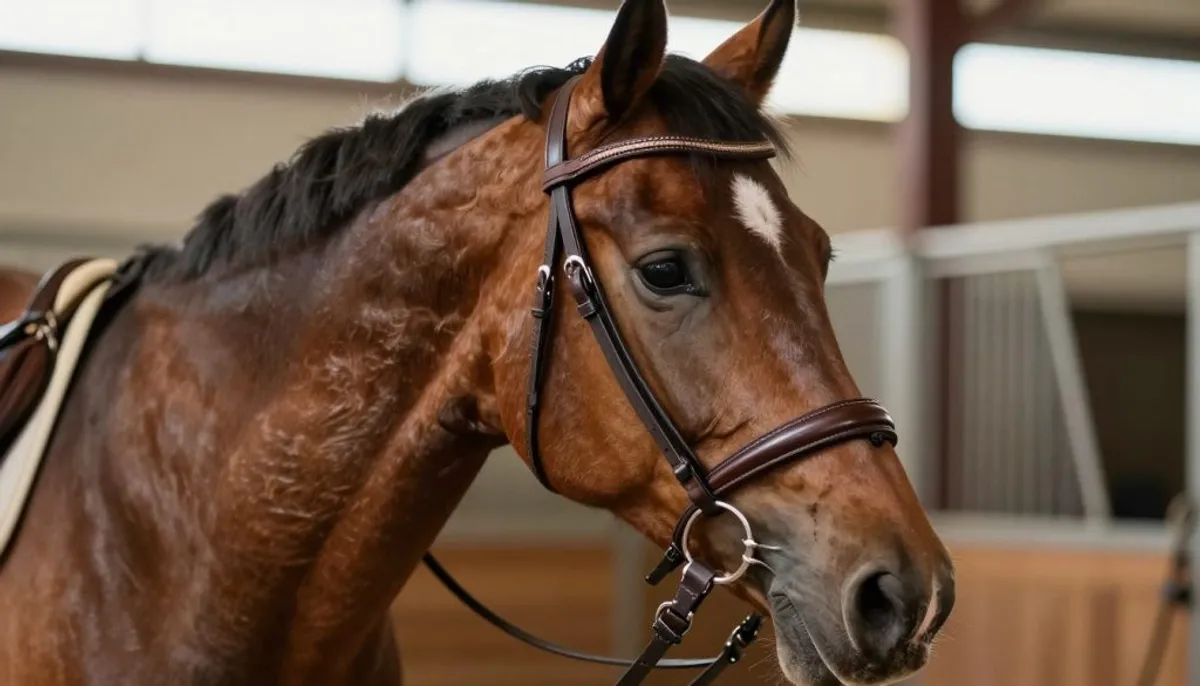
The height at the withers is a reference for choosing the bridle, halter, bit, and other equipment. But be careful, every horse is unique. Therefore, adjustments are needed for a gentle and stable contact.
Bridle/bit: correspondence SHT, PS, CS, FS according to horse size
| Withers (reference) | Recommended Format | Common Use (bridle, halter, bit) | To Check at the Fitting |
|---|---|---|---|
| < 1m10 | SHT | Bridle, halter horse, bit horse in Shetland format | Length of cheek pieces and space under the cheek |
| 1m10–1m45 | PS | Standard pony size for bridle and halter | Flat noseband, centered buckles |
| 1m45–1m55 | CS | Cob, often ideal on compact horses | Headpiece not tight, no pressure on the ear |
| > 1m55 | FS | Full, common in riding and competition | Stability of the bit and symmetry of adjustments |
When the Head Makes All the Difference: “Fine Head” vs “Wide Head” and Impact on Adjustment
The shape of the head may require a size change. A fine head may go with smaller equipment. Conversely, a wide head needs more space.
It is important to observe the width of the cheek pieces and the space at the bridge of the nose. This ensures a correct and comfortable fit.
| Reference (mm) | Head Type | Indicative Size | Desired Effect |
|---|---|---|---|
| 105 | Pony A, B, or C (fine heads) | Small model | Avoid the bit “floating” and keep a neat adjustment |
| 115 | Horses with fine heads (Thoroughbreds) | Often large but fine | Maintain lightness without tightening the headpiece |
| 125 | Ponies with large heads / horses up to 1m65 | Versatile | Gain comfort on the cheek pieces |
| 135 | Horses 1m65–1m75 | Large standard | Stabilize the bridle without pulling on the corner of the mouth |
| 145 | Horses > 1m75 | Very large model | Avoid tight buckles and keep an adjustment margin |
Practical Tip: Rely on Equipment That Already Fits and Confirm with Measurements
Use a halter that fits your horse well as a reference. Observe the length of the headpiece and where the noseband sits. This facilitates adjustments for the bridle or bit.
The height at the withers helps to choose the right sizes for the draw reins. Charts are useful, but trying is still the best way to ensure a good fit.
Horse Bit Specifications: Choosing the Right Mouthpiece
Choosing a bit means looking for stable and pleasant contact. It is not enough to look at the metal or the model. The width and shape are equally important. A good mouthpiece ensures a relaxed mouth and precise hand movements.
At first, one must think about the “measurement” rather than the “style.” The size of the bit is based on a simple data point. Then, adjustments are made based on the head, lips, and thickness of the horse's cannons. The goal is to avoid pressure points by getting closer to the ideal size.
The mentioned size is the length of the cannon in millimeters. The cannon is the central part of the bit that rests in the horse's mouth. It should be measured without including the rings for accurate comparison.
These reference points allow for quick adjustments of the bit size to the horse's morphology. This is especially helpful if the horse's mouth is fine or thick.
| Horse Size | Cannon Length (mm) | Adjustment Reference to Check |
|---|---|---|
| Small Shetland Pony | 95 | Rings close to the lips without pinching |
| Pony A–B | 105 | Alignment of the cannon, no excessive protrusion |
| Pony C–D / Thoroughbred | 115 | Free corners, mouth that closes without discomfort |
| Pony with a wide head / horse < 1m65 | 125 | Lateral stability, no “corkscrew” effect |
| Horse 1m65–1m75 | 135 | Regular contact, rings that do not rub |
| Horse > 1m75 | 145 | Comfort at the bend, no lip compression |
If you hesitate between two sizes, take the larger one. This reduces the risk of pinching. A size that is too small can cause injury, especially if the horse chews or works for a long time. This tip aims to choose the ideal size without discomfort.
Consulting a trainer or a bit-fitter is always beneficial. They assess the movement of the bit and the opening of the mouth. With their advice, choosing the mouthpiece becomes easier and safer on a daily basis.
Choosing the Saddle Well: Ideal Horse Dimensions for Comfort for Horse and Rider
Choosing a saddle is about finding a good duo. It must fit both the rider and the horse. A poor choice causes tension and a hollow back. Finding the right size ensures the well-being of the withers, proper weight distribution, and comfort for both.
English Saddle Sizes: Reference 14” to 18” According to Rider and Pony/Horse
The size in inches is a good starting point for English saddles. It depends on the rider's size and the type of horse. Then, it must be adjusted with the horse's back size so that the saddle sits well.
| Rider / Mount Pair | Reference in English Saddle | What It Often Implies |
|---|---|---|
| Shetland Pony + Child < 6 years | 14” | Short seat, suitable for small legs, be careful not to overload the back |
| Pony + Child 8–10 years | 15” | More ease in the pelvis, useful when the child grows quickly |
| Pony / Small Horse + Adult Size 34–36 | 16” | Frequent compromise, to be checked according to the length of the back |
| Horse + Adult Size 38–40 | 17” | Common format, stable if the horse saddle is well balanced |
| Large Horse + Adult Size 42–44 | 18” | Wide seat, to be monitored to avoid extending pressure on the kidneys |
Rider Size/Weight Correspondences: Useful Comparison Points
The rider's size and weight influence how the saddle fits. These figures help choose but do not replace a trial. They are there to ensure lasting comfort for both the rider and the horse.
| Rider Size / Weight | English Saddle (Reference) | Western Saddle (Reference) |
|---|---|---|
| 1m30–1m40 / 35–40 kg | 15” | 14”5 |
| 1m40–1m55 / 40–50 kg | 16” | 15”5 |
| 1m55–1m70 / 50–75 kg | 17” | 16”5 |
| 1m70–1m90 / 75–90 kg | 18” | 17”5 |
Beyond Inches: Tree, Opening, Curvature, and Length to Respect the Withers and Back
Inches do not tell everything. Especially not about the tree. A narrow opening squeezes the withers. A poor curvature puts pressure. And too long, it bothers the back. For ideal dimensions, we want good contact, a clear channel, and well-distributed padding.
If in doubt, consult a saddle fitter. They check the balancing, shoulder freedom, and fitting on the back. A good saddle is one that feels natural, with well-placed legs and constant comfort for you and your horse.
Girths, Stirrups, and Saddle Pads: Adjusting Dimensions to the Build
To adjust properly, you must adapt the equipment to the horse's morphology. The stated size is not always sufficient. For example, even if two horses look identical, their needs may be different.
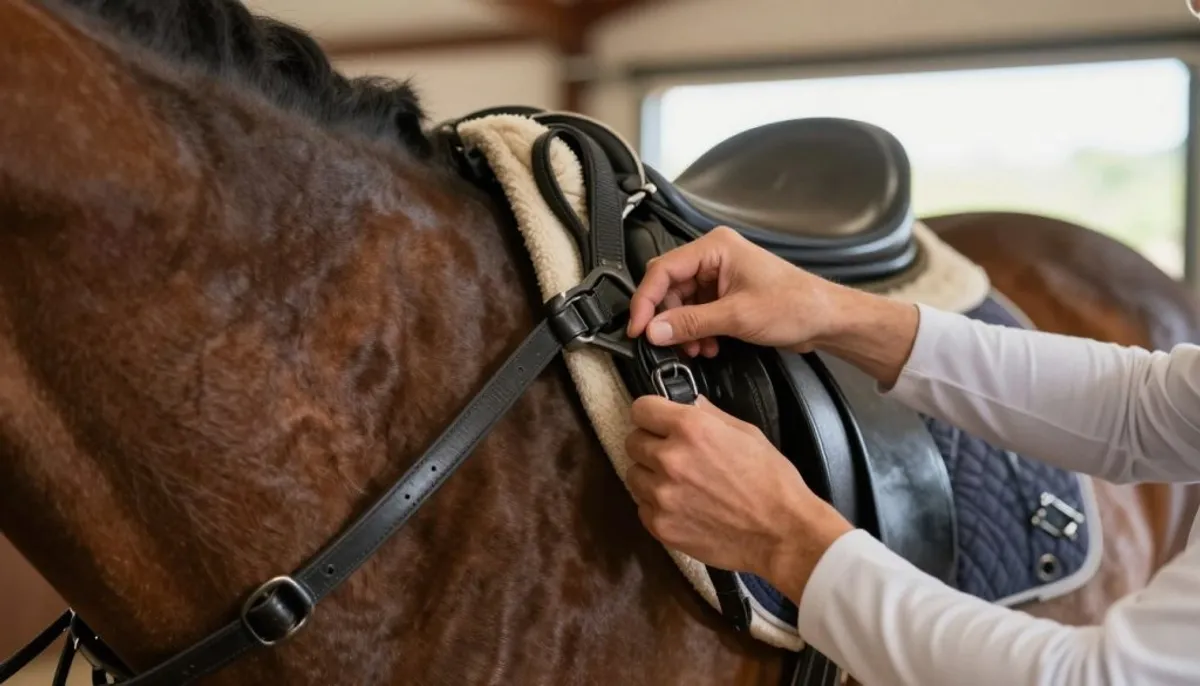
Classic Girths vs Short Girths (Dressage)
The classic girth is common for the mixed and show jumping saddle. Short girths are preferred in dressage. This is because the dressage girth straps are lower.
The goal is to avoid folds and pressure points. The girth buckles should be positioned above the horse's elbow. The size of the girth also changes if the horse gains or loses weight.
Girth Reference Points: From 55–75 cm (Shetland) to 145 cm (large horse)
These size reference points help quickly choose the right girth. They avoid confusion between pony and horse sizes.
| Build (Reference) | Classic Girth | Short Girth (Dressage) | Point to Check |
|---|---|---|---|
| Shetland | 55–75 cm | 35 cm | High buckles, far from the elbow |
| Pony B–C | 75–105 cm | 45 cm | Saddle stability at the rising trot |
| Pony D / Small Horse | 105–115 cm | 55 cm | Girth passage without pinching |
| Horse 1m60–1m65 | 125 cm | 65 cm | Regular spacing of the girth straps |
| Horse 1m65–1m75 | 135 cm | 75 cm | Symmetrical buckles on both sides |
| Horse > 1m75 | 145 cm | 85 cm | No rubbing in front of the elbow |
Stirrups: Choosing Length According to Rider Size
The stirrup influences your position and stability. Too short, it tightens the knee. Too long, you will lose support.
- < 1m50: 115 cm
- 1m50–1m60: 125 cm
- 1m60–1m70: 135 cm
- 1m70–1m80: 145 cm
- > 1m80: 155–160 cm
Using safety stirrups reduces the risk of getting stuck in case of a fall. Ophena offers models with The Twister and a magnetic version. These elements are important, just like the quality of the stirrups.
Saddle Pads: Pony/Horse Sizes and Why Oversizing Can Prevent Direct Contact
Saddle pads generally come in two sizes: pony and horse. Taking a slightly larger size prevents direct contact between the saddle and the horse's back.
The right pad stays in place and does not constrict the spine. If the pad slips or folds, it often means it is not the right size. It must fit well on the horse's back, even when the horse is in motion.
Leg Protection: Boots, Bell Boots, and Transport
Protecting the legs reduces shocks and friction, whether at work or in the trailer. To do this, you must choose the right size by combining the height at the withers with the horse's dimensions. It is crucial that the equipment fits well, without being too tight or moving.
Work Protection: Reference XS to XL According to Pony/Horse Size
Sizes XS to XL help choose boots and bell boots. It is important to consider the shape of the cannon and the thickness of the fetlock as this varies from model to model.
| Height at Withers | Pony/Horse Size | Boots & Bell Boots (Reference) | Bell Boots (Reference) |
|---|---|---|---|
| < 1m30 | PS | XS | XS (Shetland 90 cm: XXS) |
| 1m30–1m45 | PS | S | S (ponies C & D: S or M) |
| 1m45–1m55 | CS | M | M or L (small horse 1.49–1.60 m) |
| 1m55–1m70 | FS | L | L or XL |
| > 1m70 | FS | XL | XL or XXL |
Bell boots should cover the heel well without hindering. If they move, the size needs to be adjusted. Choose a cut suitable for fine legs.
Transport Protection: PS/CS/FS and Possible Alternatives (Resting Wraps)
For transport, you need protection that stays in place. Use sizes PS/S for ponies, CS/M for horses from 1m45 to 1m55, and FS/L for those larger.
- Key Point: The closure should be well adjusted, while allowing a finger to slide underneath.
- Resting wraps are a good alternative if the size is difficult to find, especially for ponies.
- Ensure that nothing touches the ground and that the bottom stays in place.
Useful Measurements: Fetlock Circumference and Cannon Height to Refine Size (XS to XL)
If the size guide is not sufficient, measure the fetlock circumference and the cannon height. These dimensions help choose the right equipment, which will not move or constrict.
| Size | Fetlock Circumference (cm) | Cannon Height (cm) | What to Check Once Fitted |
|---|---|---|---|
| XS | 23 | 24 | The protection does not touch the knee and stays centered |
| S | 25 | 26 | The straps tighten without marking, little rotation |
| M | 30 | 28 | The fetlock is well covered, without compression |
| L | 33 | 30 | The cannon is totally protected, without space |
| XL | 36 | 36 | Good height for large horses, no rubbing |
These reference points help choose without error, respecting the specifics of each horse. The measurements of the fetlock and cannon are often key for a good fit, especially for technical equipment.
Blankets and Quarter Sheets: Horse Proportions and Standard Sizes
Choosing a horse blanket requires attention. It must fit perfectly without hindering the animal's movements. Standard sizes are a good start, but nothing beats a direct trial. You must check that the blanket fits well in motion and at rest.
Blanket Sizes: Reference 105 to 165 (and Equivalence in Feet)
To choose the right size, start with the height of the animal. There are basic sizes, but each horse is unique. Comparing the length of the back and the cut at the neck is crucial.
| Height at Withers | Blanket Size (cm) | Simplified Format | Equivalence (feet) |
|---|---|---|---|
| < 1m20 | 105 | XS | 4.9” |
| 1m20–1m40 | 115 | S | 5.3” |
| 1m40–1m50 | 125 | M | 5.9” |
| 1m50–1m60 | 135 | M | 6.0” |
| 1m60–1m70 | 145 | L | 6.3” |
| 1m70–1m80 | 155 | L | 6.9” |
| > 1m80 | 165 | XL | 7.0” |
Choosing the Size When in Doubt: Limiting Rubbing and Injuries
In case of doubt about the size, opting for the larger one is often safer. A blanket that is too small can cause rubbing. Taking a size up offers more space, especially for an active horse.
- Check the fit at the shoulders.
- The blanket should stay well in place on the back.
- If the horse's physical condition changes, test the size again.
Quarter Sheets: Correspondences PS, CS, FS According to Morphology and Horse Size
The choice of a quarter sheet must also take into account the shape of the horse. Sizes PS are often used for ponies, CS for those between 1m40 and 1m60, and FS for the larger ones. But be careful, morphology also matters. Sometimes, a different cut is necessary even for the same size.
Conclusion
Start by measuring the height at the withers of the horse. This is a good start to understand the necessary size. It prevents you from relying solely on what you see, which can be misleading.
Then use the SHT/PS/CS/FS grids and charts for each piece of equipment. Whether for bridles, bits, saddles, and more, everything has a logic. Nevertheless, always confirm with the horse's measurements. Sizes can vary depending on several factors such as the neck.
Ensuring comfort is crucial. The horse-rider duo works well if the weight is well managed, around 15–20% of load capacity. If in doubt, consult an expert for the choice of mouthpiece or saddle. An instructor can also help make the necessary adjustments on-site.
The adjustment must last over time, so quality is essential. For high-quality and durable equipment, La Sellerie Française offers top-of-the-line products. They are custom-made or in limited series, all made in France. The finish is perfect, fully respecting the horse's morphology.
FAQ
How do you reliably measure horse size?
Height at the withers, measured in centimeters, is often used. The withers is the highest point of the back, at the neck. Taking measurements on your horse helps better than reference charts.
What other horse dimensions should be observed beyond height at the withers?
Measurement is not limited to centimeters. You need to look at shoulder width, wither shape, back length, chest width, and musculature. These proportions influence the choice of equipment.
Why can two horses of the same horse size fit differently in equipment?
Even if the withers are the same, differences such as head fineness, back length, or rib cage roundness influence. Therefore, it is necessary to measure and try, then check regularly.
What “rider → horse size” references can be used to form a good horse-rider pair?
Here are practical references: rider 178 cm for a horse > 162 cm. Size influences comfort, safety, and performance, depending on morphology and discipline.
What is a horse's load capacity, and how can it be estimated?
A horse can carry 15 to 20% of its weight. For example, a 450 kg horse carries about 68 to 90 kg (rider + equipment). This depends on age, breed, and physical condition. A professional can help refine this.
What do the sizes SHT, PS, CS, and FS mean for equipment?
These are standard sizes. SHT = Shetland. PS = Pony size. CS = Cob size / Thoroughbred / small horse. FS = Full size / horse. They indicate the size of bridles, halters, and other equipment.
What withers reference points help choose a category (Shetland, pony, horse)?
Small reference points: up to 90 cm = Shetland; 90–145 cm = pony; 145–158 cm = Cob / Thoroughbred; 158–180 cm = horse; over 180 cm = draft horse. These reference points help, but measuring and trying is necessary.
What is the simplest indicative chart to relate height at the withers and format SHT/PS/CS/FS?
Simple chart: Shetland 1m55 = FS. Morphology can change the necessary size.
How to choose the right size of bridle, halter, or bit according to horse size?
There is a simple guide: Shetland 1m55 = FS. This guide works for halters, bridles, and must be adjusted on the horse's head.
“Fine head” or “wide head”: what numerical references can help for a bridle or bridle?
References in millimeters: 105 for fine ponies; 115 for horses with fine heads; 125 for ponies with large heads or horses up to 1m65; 135 for horses 1m65–1m75; 145 for horses > 1m75. The correct size should not create pressure.
What size of draw reins (e.g., martingale) to choose according to height at the withers?
Simple references: Shetland to pony C & D for pony size; small horse for Thoroughbred / Cob Size; horse for Horse / Full Size. Adjustments must be made for freedom.
What is the best method when hesitating between two sizes of head equipment?
Start from already adjusted equipment and measure on the horse. Charts are useful but indicative. Check if the morphology changes.
How is a bit measured, and what does the size in millimeters correspond to?
The size of the bit is the length of the cannon, in millimeters. Measuring precisely avoids pinching and ensures comfort.
What are the most common bit sizes according to the build?
References: small Shetland pony 95 mm; pony A–B 105 mm; pony C–D / Thoroughbred 115 mm; pony with a wide head or horse 1m75: 145 mm. The size is checked with the mouth closed.
If hesitating between two sizes of bits, why choose the larger one?
A small bit can cause injury. A larger size reduces the risk. A professional can help choose.
How to choose the size of an English saddle (14” to 18”) according to the rider and the horse?
Here are references: child
What rider size/weight references can help choose an English or western saddle?
Examples: small rider = English 15”, western 14”5; medium = English 16”, western 15”5; large = English 17”, western 16”5; very large = English 18”, western 17”5. Always try before.
What saddle specifications count “beyond inches”?
The important thing is the tree. It distributes weight and prevents injuries. A professional can help choose well.
What is the difference between a classic girth and a short girth (dressage), and what impact does it have on size?
The classic girth is for mixed/show jumping. The short one is for dressage. The size varies widely between them.
What girth references to use from Shetland to large horse?
References: for Shetland, classic girth 55–75 cm, short 35 cm; and so on up to the large horse. Morphology and body condition must be considered.
How to choose the length of stirrups according to rider size?
References: small rider = 115 cm; medium = 125 cm; large = 135 cm; very large = 145 cm; extreme = 155–160 cm. The discipline influences the adjustment.
Why talk about safety stirrups in a guide to horse dimensions and equipment?
Safety is crucial. Safety stirrups prevent getting stuck in case of a fall. Some models like Ophena include innovations for safety.
What size saddle pad to choose, and should it be oversized?
There are two main sizes: pony and horse. Taking a larger size can protect the horse's back. The pad must stay in place.
What sizes of work protection (boots, bell boots) according to horse size?
References: for pony 1m70 = FS / XL. Brands vary, so trying is better.
How to choose the size of bell boots according to height at the withers?
References: for Shetland 90 cm = XXS; large horse > 1.70 m = XL or XXL. Choose well to avoid turning.
What sizes for transport protection, and what alternatives if the right one is not found?
If difficult to find, resting wraps can be an alternative for ponies, if well fitted.
What measurements to take to refine the size of boots beyond sizes S, M, or L?
Measuring the fetlock circumference and cannon height helps. This ensures the fit to the horse's actual dimensions.
How to choose the size of a blanket according to horse height and dimensions?
References: pony 1m80 = 165 (XL). Choose according to the width and morphology of the horse.
In case of doubt about a blanket, should you choose larger or smaller?
Choose larger to avoid rubbing. Check for ease and absence of pressure points.
What size of quarter sheet to choose according to horse size?
References: for a small pony = PS; large horse > 1m60 = FS. Morphology matters; a thick horse may require a size up.
How to summarize a reliable method for choosing equipment to the right horse size?
Measure the height at the withers and consult the size charts. Validate with actual measurements and do trials. Check regularly as the shape changes.
When should you consult a professional to validate sizes and adjustments?
If there is discomfort, injuries, or doubts about the adjustment, consult a professional. They can help adjust perfectly.
Where to find high-end, precise equipment consistent with ideal horse dimensions?
La Sellerie Française (laselleriefrancaise.com) offers high-end, custom equipment. They are made in France by talented artisans. This ensures a perfect fit and finish.