
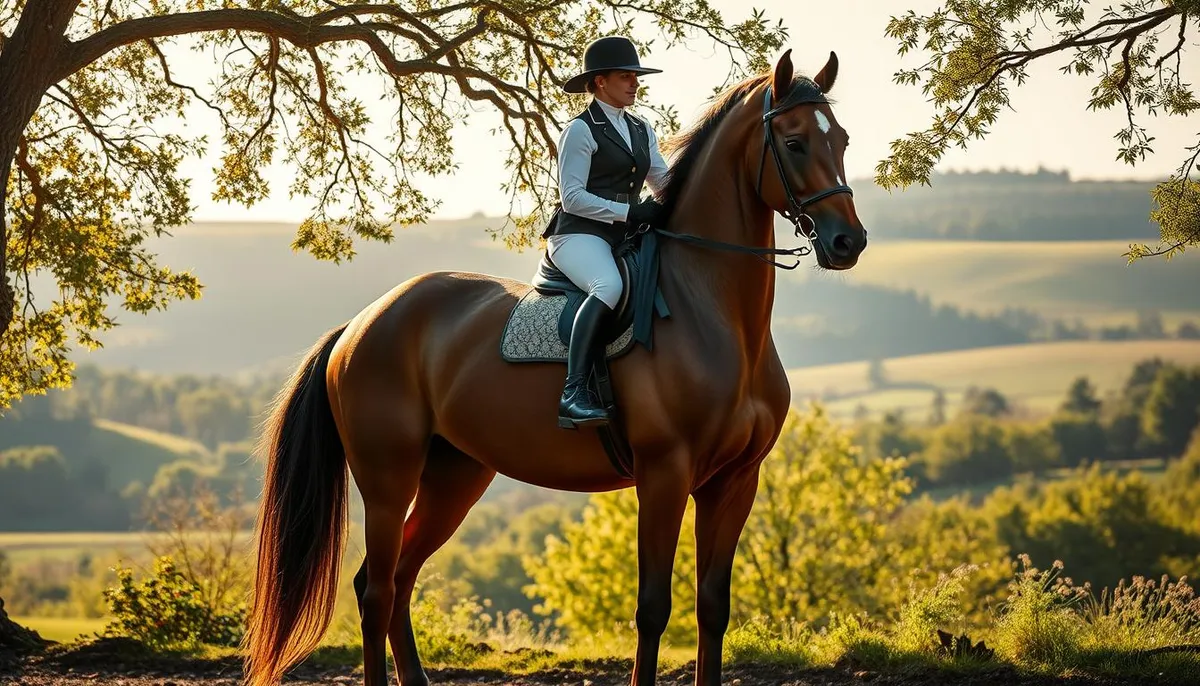
The French horse is an emblem of equestrian heritage. It combines sport with art with precision and elegance. Its birth results from a long selection process and training where every detail matters.
It excels in various disciplines such as dressage and show jumping. Its presence is remarkable, from international competitions to the Olympic Games. Its charm does not stop there. Since 2011, French equestrianism has been recognized by UNESCO. It values lightness and harmony between the rider and their mount.
From the National Riding School to the Cadre noir de Saumur, France honors its equestrian heritage. Artisans, trainers, and breeders perpetuate a high level of craftsmanship. Thus, the French horse symbolizes a bond of respect, combining technique and elegance.
Key Points
- The French horse combines sporting performance and equestrian art culture.
- The traditional equestrian riding of France has been inscribed in the equestrian heritage of UNESCO since 2011.
- Guiding principles: lightness, harmony, and respect for the horse.
- Major role of the Cadre noir de Saumur and the National Riding School.
- Visible excellence from CDI to the Olympic Games, carried by the French rider.
- Breeding ecosystem, stables, and saddle makers serving equestrian elegance.
Heritage and History of the Horse in France
France is known for its rich equestrian history. At the heart of this history, royal courts played a significant role. They developed equestrian traditions that combine elegance and utility. From Paris to Versailles, this culture gave rise to a unique school.
From Renaissance Academies to Versailles
The equestrian academies emerged during the Renaissance, influenced by Italy. They taught young nobles much more than combat. At Versailles, the riding schools combined architectural beauty, movement sciences, and the art of presentation.
The French equestrian history is characterized by its innovation. The equestrian traditions value lightness, balance, and precision. This model has been imitated throughout Europe.
Pluvinel, La Broue, La Guérinière: Founding Masters
In 1594, Antoine de Pluvinel opened an influential equestrian academy. His book L’instruction du Roy en l’exercice de monter à cheval advocated for a gentle and thoughtful method. Salomon de La Broue formalized essential techniques, establishing a consistent teaching approach.
François Robichon de La Guérinière perfected the equestrian art at the riding school of the Tuileries. He improved training techniques, creating a model followed by many equestrian traditions in France.
From the Tuileries Riding School to the Cadre noir de Saumur
The training method spread from Paris to Versailles, influencing European courts through the French language. After the Revolution, this tradition was integrated into the Cavalry School of Saumur. Masters like Cordier maintained this teaching.
The Cadre noir de Saumur embodies this ongoing heritage. This institution keeps the history of the horse in France alive. It adheres to the principles of the equestrian academies and still reflects the spirit and form of its origins in Versailles.
French Traditional Riding and UNESCO Recognition
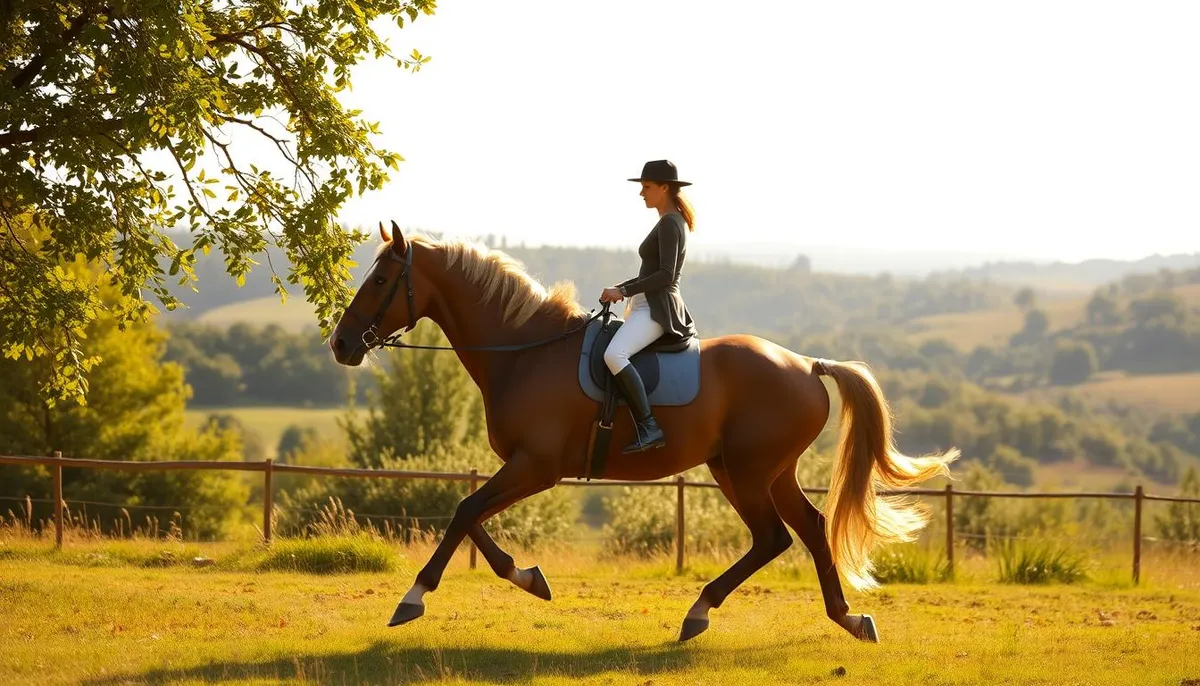
The French traditional riding values art more than strength. It aims for lightness and a perfect horse-rider harmony that is easy to see. Thanks to the National Riding School and the Ministry of Culture, this unique and demanding approach was recognized globally at UNESCO 2011 in Bali.
Key Principles: Lightness, Harmony, Absence of Constraints
Jean‑Yves Le Guillou explains that the horse must respond to light commands, remain relaxed, with its neck well carried. Lightness makes movements simple and precise. Horse-rider harmony is essential. All this creates a lasting and respectful relationship without visible constraints.
The Role of the Cadre noir and the National Riding School
The Cadre noir de Saumur maintains and shares this philosophy through its instructors, demonstrations, and courses. Robert d’Artois and Colonel Jean‑Michel Faure championed this cause up to UNESCO 2011. They were supported by Frédéric Mitterrand and David Douillet. Since 2014, the IFCE has united professionals to exchange practices and research.
Influences and Reach in Europe and Beyond
From Nuno Oliveira to Diogo de Bragance, the French influence has marked European riding schools. Experts such as Michel Henriquet, Philippe Karl, and Christian Carde have enriched this heritage. The Cadre noir de Saumur continues to travel, publish, and teach. They ensure that French traditional riding retains its lightness and horse-rider harmony, even in a world that values performance.
The French Horse in the Art of Dressage
The French dressage horse is a symbol of precise gestures and lightness. Carefully selected, it aims for excellence on both national and international levels. This creates a beauty based on its ability to perform complex movements.
Origin, Selection, and Refinement for Performance
It comes from meticulous breeding in France. It combines straightness, flexibility, and powerful hindquarters. Rigorous selection optimizes its dressing performance. Stud books guide crossings to ensure optimal balance and good learning aptitude.
The training of the French dressage horse is a mix of varied exercises. It includes gymnastics, walks, and rest periods. This helps maintain its enthusiasm and ensures consistent performance.
Physical Characteristics and Iconic Coats
Height typically ranges from 1.60 m to 1.70 m at the withers, weighing between 500 to 600 kg. Horses with a well-defined neck, sloping shoulder, strong back, and fine legs are sought after. These qualities contribute to good maneuverability and stable connection.
The main colors are bay, black, and gray, with often shiny coats. Accepted standards ensure the quality of the lineage and long-term health while preserving the natural beauty of movements.
Temperament, Docility, and Desired Mental Qualities
A calm and curious spirit is crucial. A good horse is attentive, patient, and capable of managing the stress of competitions. Its cooperation enhances the precision of movements, the consistency of rhythm, and the effectiveness of aids.
Docility does not mean a lack of energy. The ideal is a lively but focused horse, capable of converting its momentum into precise and expressive movements. This is essential for excelling in dressing daily.
From the Dressage Arena to CDIs and Olympic Games
International competitions such as CDIs demonstrate the quality of preparation. Judges look for straightness, purity of movements, and flawless execution.
The Olympic Games represent the pinnacle of this discipline. The French dressage horse showcases its art, blending precision, fluidity, and elegance. Its goal is to transform its strengths into measurable success.
| Key Criterion | Observable Indicators | Impact in Performance |
|---|---|---|
| Morphology and Balance | Ascending neck, solid back, regular engagements | Stable contact, easy collection, sharper lines |
| Locomotion | Controlled amplitude, bounce, active hindquarters | Fluid transitions, pure walk, expressive trot, cadenced canter |
| Mental and Docility | Attention, patience, stress management | Precision of figures, consistency of scores in CDI |
| Condition and Training | Progressive plan, recovery, veterinary follow-up | Seasonal regularity, peak fitness for Olympic Games |
| Coats and Presentation | Bay, black, gray; silky coat, well-fitted harness | Movement beauty highlighted, overall impression improved |
Horse Breeds in France and Sport Lines
In France, the Selle Français is a highly regarded sport horse breed. It shines due to selective breeding that focuses on performance, style, and balance. Breeders aim to produce balanced horses that learn quickly, with expressive movements and excellent ability.
Sport lines prefer horses with a well-formed body, strong back, and resilient legs. Their mentality is as important as their physique: they must be docile, calm, and patient. These qualities are essential for success in dressing and show jumping.
The genetic selection relies on using high-level breeders from performing lines. Crossbreeding is carefully chosen to improve gallop, movement extension, and endurance. Each year, a mare gives birth to a foal, with particular attention paid to fertility and performance.
Recognized breeding farms in France offer foals and young horses for sale, ready for dressage, eventing, or show jumping. Their prices depend on their origins, the performance of their parents, and their own aptitude tests. This rigorous approach helps keep the Selle Français and the French sport horse in general competitive in both national and international markets.
| Breed / Type | Sport Assets | Selection Criteria | Key Disciplines |
|---|---|---|---|
| Selle Français | Power, responsiveness, style in jumping | Balanced model, gaits, stable mentality | Show jumping, eventing, dressage |
| French sport horse | Versatility, amplitude, endurance | Verified sport lines, selective breeding, performances | Dressage, CCI, CSI |
| Anglo-Arab | Energy, finesse, measured blood | Traced genetic framework, agility, courage | Eventing, endurance, dressage |
The daily management of sport lines requires studying pedigrees, evaluating locomotion, and conducting thorough veterinary visits. The goal remains the same: to breed a French sport horse that is reliable, expressive, and ready to face the challenges of international competitions.
Equestrian Disciplines and Competitions in France
In France, traditional riding seeks harmony in its competitions. To achieve this, riders use light aids, good impulse, and careful preparation. These elements are key, whether in training or competition.
The French horse shines through its precision, regularity, and beauty of gaits. This is true whether in local or international competition.
Dressage, Show Jumping, Eventing
Dressage focuses on balance. Riders work patiently for the horse to learn complex movements. They often use lunging to improve its flexibility and strength.
In show jumping, choosing the right path, respecting the barriers, and controlling the canter are essential. Eventing is a mix that requires a strong, straight, and calm horse. It must be capable of facing various natural obstacles.
Preparation, Training, and Judging Criteria
- Preparation consists of transitions and changes. It also develops the ability to remain stable and manage breathing.
- Training focuses on straightness, engagement, and confidence in the unknown.
- Judging values precision, fluidity of movements, stability, and harmony between the rider and their horse.
The Cadre noir de Saumur illustrates this quest for harmony. This vital principle influences dressage, show jumping, and eventing throughout France.
Calendar of Major Events and Circuits
The horse competition calendar includes national and international events. From Fontainebleau to Saumur, this organization aids the progress of riders. It also paves the way to the Olympic Games.
| Discipline | Key Skills | Judging Criteria | Equestrian Calendar Milestones |
|---|---|---|---|
| Dressage | Straightness, collection, lightness of aids | Precision, quality of gaits, harmony | CDI, French Championships, Olympic Games |
| Show Jumping | Trajectories, rhythm, respect for the bars | Faults, time, style of jumping | CSI 3*/5*, Longines Global Champions Tour, Nations Cups |
| Eventing | Endurance, honesty, versatility | Dressage scores, penalties for cross-country/CSO | CCIO, 4*/5* Stars, Pau Stars |
Equestrian competitions follow a well-organized calendar. Dressage, show jumping, and eventing complement each other. They form a clear set for riders, trainers, and the public.
Equine Breeding, Genetics, and Equestrian Centers
In France, equine breeding follows precise rules. Each year, a mare gives birth to a foal. This makes it easy to track generations and their abilities. Genetics helps choose the best characteristics for French riding.
The studs and equestrian centers adhere to strict quality standards. They rely on the advice of the National Riding School in Saumur. Young horses are meticulously trained to show their potential while remaining healthy.
The selection of horses is based on their performances. This ensures balanced and attentive animals, ideal for competition. Equine breeding in France also helps improve breeds through careful crossbreeding.
Organizations like the IFCE and the Cadre noir offer training and exchanges. These initiatives enrich knowledge, from the countryside to specialized centers. Rigorous procedures are followed for the well-being of the horses.
The goal is to produce healthy horses that are pleasant to ride. With good breeding and careful training, the quality of horses increases. This benefits the entire equine industry.
Horse Care and Equipment
Taking care of horses means blending tradition and performance. It is essential to harmonize care and equipment for their well-being. From grooming to technical gear, every small detail plays a significant role.
Nutrition, Veterinary Follow-Up, and Daily Maintenance
Nutrition must be rich and balanced. This includes quality forage, abundant clean water, and minerals. Regularly providing hay and concentrates in small amounts helps with good digestion.
Regular care is crucial. This includes up-to-date vaccinations, annual dental care, and farrier visits. Also, taking care of their skin and movements daily is important.
Warm-up and relaxation routines help the horse. They maintain its flexibility and tranquility. These practices ensure continuous and effective care.
Tack, Saddle Makers, and Equipment Choices
Good equipment allows for proper posture and better breathing for the horse. A well-chosen saddle and a precise bit are essential. They aid in better assistance and relaxation.
The choice of a French saddle maker is important. They ensure the horse's back and the rider's seat are well-fitted. Quality materials and a perfect fit guarantee comfort and safety. The equipment should be simple, well-fitted, and regularly checked.
The French Saddle: 100% Handmade Craftsmanship in France
The French Saddle offers luxury handmade items in France. They guarantee quality and durability through custom-made and limited series. Saddle makers choose the best leathers and perfectly adjust each piece.
Their expertise ensures perfect balance and great lightness. This know-how perpetuates the tradition of the French saddle maker and meets the needs of riders.
Equestrian Tourism and Responsible Practices
Equestrian tourism is environmentally friendly. It takes into account the needs of horses and nature. Regular breaks, good foot care, and proper hydration are essential.
Appropriate equipment reduces friction and provides comfort during long trips. Sharing French equestrian practices helps build a strong and lasting relationship with the horse.
| Key Need | Practical Indicator | Recommended Frequency | Main Benefit |
|---|---|---|---|
| Quality Forage | Unlimited hay, 1.5–2% of body weight | Daily | Stable digestion, regular energy |
| Equine Dentistry | Balancing dental tables | Once a year | Effective chewing, comfortable bit |
| Farriery/Trimming | Angles and balance checked | Every 6–8 weeks | Fluid locomotion, injury prevention |
| Saddle Adjustment | Checked by a French saddle maker | Twice a year | Pressure distribution, lightness |
| Grooming and Check-Up | Inspection of skin, limbs, back | Before and after work | Well-being, early detection |
| Equestrian Tourism | Adapted stages, optimized load | According to itinerary | Healthy endurance, harmonious relationship |
Conclusion
The French horse is a symbol of art, sport, and culture. From Pluvinel to La Guérinière, France has created a unique equestrian method. It emphasizes gentleness, harmony, and respect.
UNESCO recognized this tradition in 2011. It continues to influence modern riding. This method is taught to riders and guides education in equestrian centers.
Its impact is seen in competitions, from dressage contests to the Olympic Games. The way riders communicate with their horses is essential. Simplicity and respect are priorities.
The breeding of horses also follows these principles, seeking to combine performance and temperament. Artisans, like those from The French Saddle, also contribute with their craftsmanship.
Thus, the French horse continues to pave the way. It represents a link between equestrian tradition and innovation. This tradition enriches the cultural heritage of Europe and the world.
FAQ
What is meant by "the French horse" and how does it stand out?
The French horse includes sport horses and French riding, recognized by UNESCO. It is famous for its lightness and harmony. Renowned horsemen have carried these values. It excels in dressage, show jumping, and eventing.
What are the key stages in the history of the horse in France, from academies to Versailles?
The Renaissance academies trained noble riders. Versailles became a model of riding. After the Revolution, Saumur and the Cadre noir continued this tradition.
Who are Pluvinel, La Broue, and La Guérinière, and why are they considered founders?
Pluvinel, La Broue, and La Guérinière established the foundations of French riding. They taught gentleness and balance. Their ideas are still taught today.
How did the transition from the Tuileries Riding School to the Cadre noir de Saumur occur?
The transition was ensured by horsemen after significant political changes. The Cadre noir perpetuates traditional French riding.
What are the key principles of French traditional riding recognized by UNESCO?
The principles include lightness, harmony, and absence of force. The horse reacts with finesse. This practice has been recognized as a cultural heritage since 2011.
What is the role of the Cadre noir and the National Riding School in this heritage?
The Cadre noir teaches and disseminates French riding. The ENE supports education and research. They promote respectful riding.
How does the French influence radiate in Europe and beyond?
The influence comes through inspired masters and their works. French methods enrich global equestrian sport.
What are the origins and selection goals of the French dressage horse?
Originating from historical selection, it seeks the beauty of gaits. Genetics allows for improved competition performance.
What physical characteristics and coats are most commonly found?
Horses often measure between 1.60 and 1.70 m. Bay, black, and gray coats are common. They are chosen for their gaits and functionality.
What temperament is sought for dressage?
A patient, docile, and attentive horse is desired. Responsiveness to aids is essential. Education must be careful.
How does the French horse perform from national arenas to the Olympic Games?
It shines through its harmony with the rider and its regular gaits. French horses have excelled at the Olympic Games.
What horse breeds dominate sport lines in France?
The Selle Français and the French Sport Horse are dominant. They are selected for their performance and aptitude.
What equestrian disciplines are most practiced in France?
Dressage, show jumping, and eventing are popular. France has a network of equestrian centers and competitions.
How to prepare and what are the judging criteria in dressage?
Preparation includes multiple exercises. Judges look at the quality of gaits and horse-rider harmony at all levels.
What are the major events in the equestrian calendar?
Many FEI events are held in France. Saumur and other locations host significant competitions.
How does performance-oriented equine breeding work in France?
Breeding follows controlled practices. The IFCE coordinates selection to improve performances.
What is the role of equestrian centers in the industry?
They train riders and promote young horses. They advocate for respectful riding and offer equestrian tourism activities.
What horse care is essential on a daily basis?
They require a balanced diet and regular veterinary care. Proper maintenance ensures their well-being and performance.
How to choose equipment for horses and tack?
Choose based on adjustment precision and quality. A good saddle promotes lightness. Experts can assist in your choice.
What does The French Saddle provide for dressage and sport riders?
It offers custom equipment made in France. Their excellence ensures comfort and durability.
How to practice equestrian tourism responsibly?
Be attentive to the environment and the horse's well-being. Opt for committed centers and appropriate equipment.
What makes the French rider unique in the equestrian world?
Their unique training combines art and respect for the horse. They use equipment and methods aimed at excellence.
Where can one learn more about French traditional riding and its masters?
Consult publications from French institutions and the works of the masters. Workshops and demonstrations are also available.