
The riding helmet or riding hat is essential for riders. It protects the head in case of a fall or impact. This reduces the risk of serious injuries.
It originated in England and evolved in the 18th century. It was used by jockeys and hunt riders. Today, wearing a helmet is mandatory in many places for safety.
The riding helmet is also a fashion accessory. It is available in various styles, colors, and materials.

Key Points to Remember
- The riding helmet is essential safety equipment for riders
- It protects the rider's head in case of a fall or impact
- Its use is mandatory in many equestrian contexts
- The riding helmet has also become a fashion accessory
- A wide range of styles, colors, and materials is now available
What is a riding helmet?
The riding helmet, or riding hat, protects the rider's head. It dates back to the Middle Ages, with the “bonoin,” a helmet shaped like a projectile. Since then, it has become essential for riding.
Its History and Origin
It was created in England in the 18th century. Jockeys and hunt riders in the royal stables used it. In the 20th century, its use became mandatory in riding centers for safety.
Its Essential Role for Rider Safety
The riding helmet is crucial for protecting the rider. It reduces the risk of serious injuries in case of a fall or impact. With the brain being vital, its protection is essential. Therefore, wearing a helmet is mandatory for every rider.
Features of a Riding Helmet
A classic riding helmet has key elements to protect the rider. It has a reinforced shell covered with velvet, a visor, and sometimes a neck guard. Advanced models have three attachment points and a chin strap for better head stability.
Technological advancements have brought innovations from motorcycle and mountain bike helmets. This has improved the protection of riding helmets. Thus, safety in case of impact is stronger.
Safety Standards to Follow
Riding helmets comply with strict safety standards. They meet the European standard EN 1384 or the VG1 standard. These standards are provided after control tests to verify resistance and effectiveness in case of impact.
Only models that meet these safety and certification criteria can be sold. It is crucial to choose a certified riding helmet that complies with safety standards for the rider's protection.
Different Types of Riding Helmets
The world of riding offers several types of helmets, or “hats.” Each is designed to meet the needs of different disciplines. Let's explore these various models.
The cross helmet does not have a visor. This allows the rider to see better during jumps. The polo helmet has a large visor to protect against sunlight. The endurance helmet is designed for good ventilation, ideal for long rides.
The horse ball combines polo and rugby. Its helmet has a short visor for better visibility. The dressing helmet is simple and comfortable, designed for aesthetics and comfort.
Each model is designed to provide the best protection. Whether you play cross, polo, endurance, or horse ball, you will be well protected.
Choosing a riding helmet goes beyond protection. It also reflects your style. With many models, colors, and designs, you will find the perfect helmet for you.
Criteria to Consider When Buying a Riding Helmet
When considering buying a riding helmet, several important points deserve attention. The equestrian discipline, safety standards, and your budget are crucial. They influence your choice.
Practiced Equestrian Discipline
Each equestrian sport, such as show jumping or trail riding, requires a suitable helmet. Thinking about the use of your helmet is essential to choose the most appropriate model.
Safety Standards and Technologies
Safety is paramount when choosing a riding helmet. Ensure that the helmet meets safety standards, such as EN 1384. Technologies and materials like carbon provide strength and lightness. Ventilation is crucial for outdoor activities.
Price and Available Ranges
The prices of helmets vary according to models and brands. Entry-level models start at 60 euros. For better quality, prefer models starting from 150 euros. High-end ranges can cost up to 1,000 euros. Finding a balance between budget and needs is essential.
| Criterion | Considerations |
|---|---|
| Equestrian Discipline | Show jumping, dressage, trail riding, etc. |
| Safety Standards | EN 1384, quality materials, ventilation |
| Price and Ranges | From 60 € to 1,000 €, entry-level, high-end |

A Riding Helmet: Between Protection and Style
The riding helmet protects the rider's head. However, it is also a fashion accessory. Manufacturers offer numerous models, colors, and materials. This allows riders to showcase their personal style.
Fashion Invades Rider Equipment
Limited edition helmets are highly sought after. They feature gold accents, rhinestones, or unique patterns. Thus, fashion and safety blend in equestrianism.
Helmet Customization to Stand Out
There are many customization options for riders. Helmets come in various colors, patterns, and materials. Accessories like covers or pom-poms can be added.
This trend of customization helps riders express their personality. They can thus connect with a certain equestrian culture.
Fit and Comfort of the Riding Helmet
The fit and comfort of the riding helmet are crucial for safety. A well-fitted helmet provides good protection in case of a fall. It should be chosen based on the rider's head circumference, measured 2 centimeters above the eyebrows.
Adjusting the chin strap and the dial is also important. This ensures stable support without discomfort for the rider.
The comfort of the helmet is crucial. The rider will wear it for a long time. Therefore, it must be comfortable and not cause fatigue.
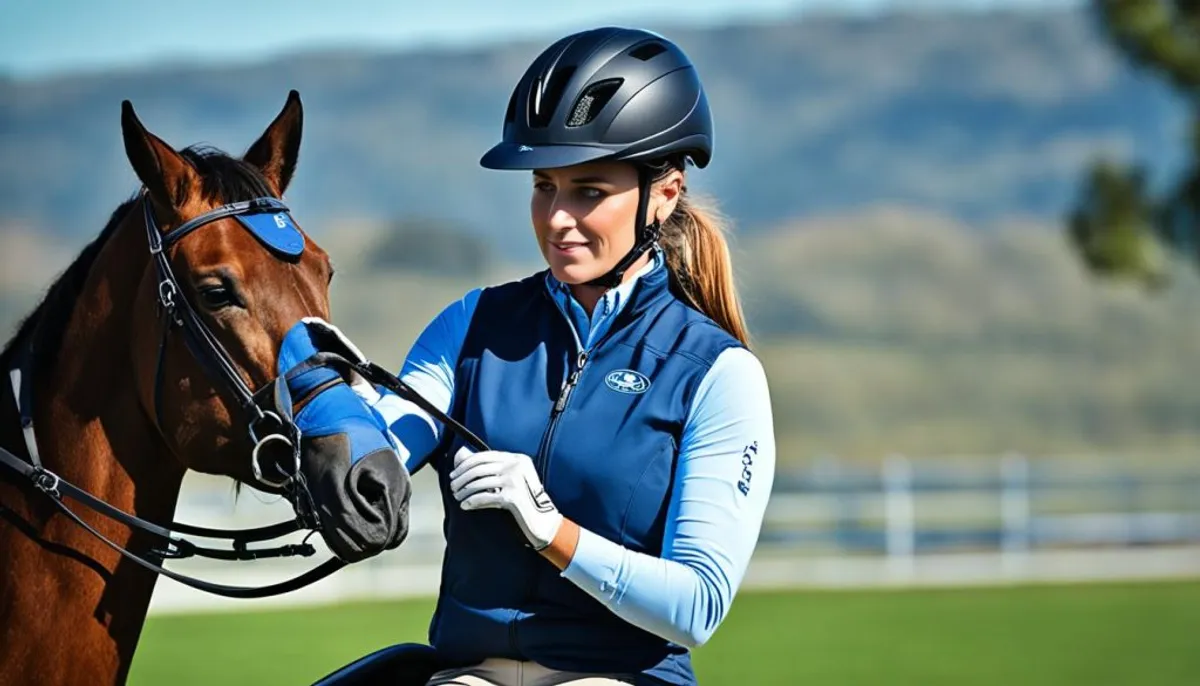
A good fit and comfort ensure optimal protection. This is essential when purchasing a riding helmet.
Maintenance and Lifespan of a Riding Helmet
It is crucial to properly maintain your riding helmet for it to protect effectively. Regular maintenance and periodic replacement are essential. After a fall or impact, even if the helmet appears intact, it must be replaced. Internal damages may compromise its protection.
It is recommended to replace your helmet every 5 years, even without an accident. This ensures its reliability. To preserve it, keep it in a protective bag and clean it often with appropriate products.
| Recommended Maintenance | Average Lifespan |
|---|---|
|
|
By following these maintenance and renewal tips, your riding helmet will remain effective. This way, you can fully enjoy your sessions in the saddle with optimal protection.
Conclusion
The riding helmet is essential for the safety of riders. It protects the head and ensures safety. Originally from England, it has become a must-have in equestrian equipment.
It is not only for safety. The riding helmet is also a sign of fashion. There are many styles, colors, and technologies available.
Choosing a helmet allows riders to showcase their personality. It is a way to stand out in equestrian culture. It is crucial for protection and style.
The riding helmet is more than just an essential piece of equipment. It is an emblem of equestrian fashion. It helps riders stand out, both in competition and in their daily lives.
FAQ
What is a riding helmet?
The riding helmet, or riding hat, protects the rider's head. Its name comes from the “bonoin,” an ancient helmet. Riders used it for protection.
It was created in England in the 18th century. Jockeys and hunt riders used it. Today, wearing a helmet is mandatory in riding centers for safety.
What is the essential role of the riding helmet?
The riding helmet is crucial for the rider's safety. It reduces the risk of serious injuries, especially to the head. With the brain being vital, its protection is essential.
Wearing a helmet is therefore mandatory to protect against accidents.
What are the features of a riding helmet?
A riding helmet has a reinforced shell and a visor. Some models have a neck guard. The best helmets have three attachment points and a chin strap.
Motorcycle and mountain bike helmet technology improves their protection. They must meet strict safety standards to be effective.
What are the different types of riding helmets?
There are several types of riding helmets for each discipline. The cross helmet has no visor, while the polo helmet has a large visor for sun protection. The endurance helmet is ventilated to wick away sweat.
The horse ball helmet has a short visor for better visibility. Each model is designed to meet the needs of its discipline.
What criteria should be considered when buying a riding helmet?
When buying a riding helmet, consider the equestrian discipline. Each activity requires a specific helmet. Ensure that the helmet is certified according to safety standards.
Materials like carbon and aluminum make the helmet lightweight and strong. The price varies based on the model and brand.
Is the riding helmet only a safety accessory?
The riding helmet protects the head but is also a fashion accessory. Manufacturers offer many models, colors, and materials. This allows riders to stand out and express their style.
Limited edition helmets, with gold accents or rhinestones, are highly sought after. Fashion is making its way into equestrianism, offering both safety and elegance.
How to properly adjust and maintain your riding helmet?
A riding helmet must be properly adjusted for optimal protection. Knowing your head circumference is essential for choosing the right size. Adjusting the chin strap and dial is crucial for stable support.
It is important to properly maintain and regularly replace the riding helmet. After a fall, even if it seems intact, it should be replaced because internal damages can compromise its protection.