
Outdoors or in competition, the palomino horse attracts all eyes. It has a coat that shines almost like gold in the sun. This special color creates an impressive effect, whether you are an amateur or a pro in competitions.
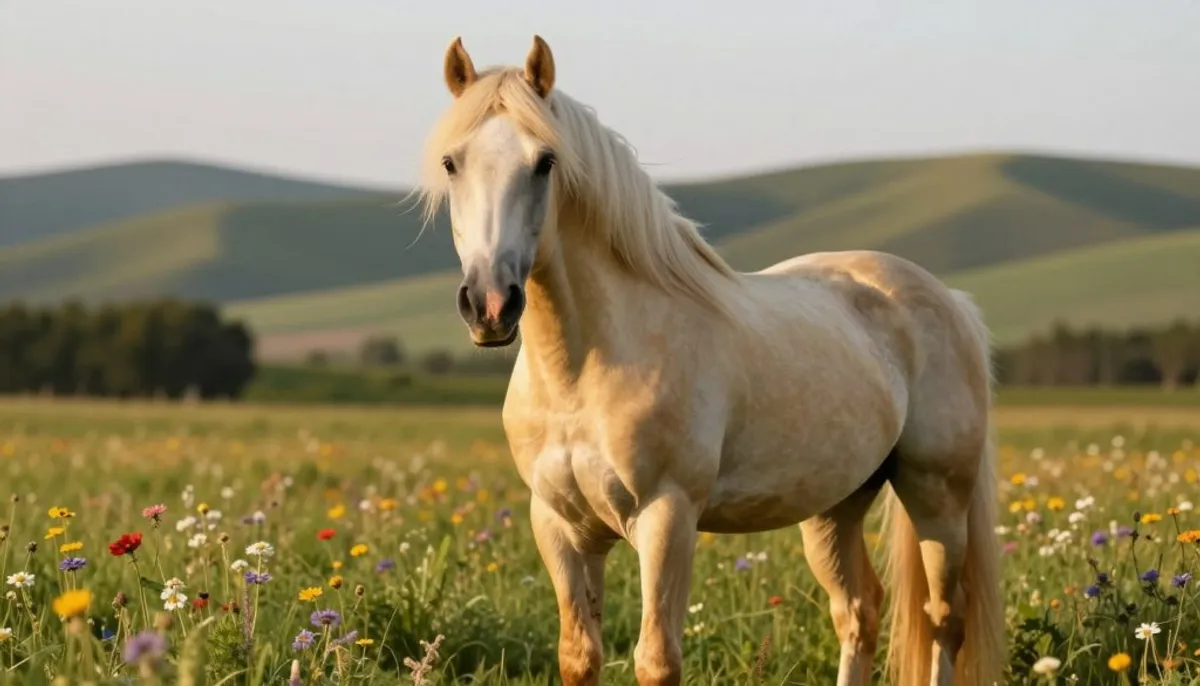
It is important to know that the palomino is not a breed. It is a color that can be seen on different types of horses. You can therefore choose this color while finding a horse that meets your needs.
We will explore the history of this unique shade, from royal palaces to maritime adventures. We will also detail the genetics behind this color, particularly the cream gene. This will help us understand why some crosses produce a palomino... or not.
You will learn to identify a true palomino horse, avoiding common mistakes. This knowledge will help you choose the ideal companion for riding, sport, or shows. We will also discuss specific care, such as caring for light manes and protection from the sun. You will receive tips for buying a horse in France.
Key Takeaways
- The palomino horse is distinguished by a very bright golden palomino coat.
- The palomino color is not a breed: it exists in several breeds.
- The cream gene plays a central role in the appearance of the palomino coat.
- One can learn to identify a palomino horse and avoid color confusions.
- The article will also cover disciplines, temperament, care, and health.
- Goal: to help you choose a palomino horse suited to your needs in France.
Why the Palomino Fascinates Riders in France
In France, the palomino horse captures attention due to its shiny coat. Its color is easy to see from afar, making the horse very elegant. It quickly stands out in competitions, alongside arenas, or during gatherings.
The precise details are also captivating. The unique characteristics of the palomino appeal to those looking for a distinctive horse. Its golden coat and light mane reflect light and draw attention.
A golden coat that attracts all eyes in competitions, parades, and shows
In parades and shows, color is essential. A palomino stands out against a dark background or under lights. Its visual presence is one of the reasons it is chosen for sophisticated presentations.
Popular culture adds to its fame. Trigger and Mister Ed are famous palominos that have left a lasting impression on many. They have created a lasting legacy that still inspires today.
A versatile horse for leisure and sport
The palomino describes a color, not a breed, so it varies greatly. It can be found in leisure riding, western riding, or in sports. This diversity is reassuring for those looking for an evolving companion.
| Common Uses | What Riders Like | Highlighted Palomino Characteristics |
|---|---|---|
| Trail rides and hikes | Visible horse, striking look in photos, good outing companion | Golden coat that remains visible even in underbrush |
| Competitions and presentations | Noticed entrance in the ring, presence under lights | Contrast between coat/light mane, “clean” look in the arena |
| Shows and parades | Immediate visual impact, silhouette easy to follow | Natural shine that catches the spotlight |
A beloved companion for its often pleasant and balanced temperament
Riders appreciate their pleasant temperament. They are curious and diligent. Of course, this also depends on their education and breed.
A palomino horse is generally perceived as easy to handle. This appeals to both club riders and owners. This ease is a significant part of its charm.
Their appeal comes from their aesthetics, versatility, and temperament. Adding in the famous palominos from pop culture enriches their legend. Thus, the palomino becomes more than just a color. It represents a striking presence.
Historical Origins of the Palomino Color
The palomino color was initially a sign of recognition. In the past, it symbolized luxury and power through stories and images. The golden hue of the palomino coat and its light mane were admired in Europe.
From Spanish royal courts to symbols of prestige
In the 16th century, palomino horses were signs of prestige in Spain. They shone during important parades and ceremonies. Thus, the palomino color became a symbol of wealth, often seen among the elite.
The term “Palomino” comes from the Spanish uva palomina, a golden grape. This origin evokes both a simple and strong image. The palomino coat has been seen as a “bright” color for generations.
The conquistadors and the introduction of golden horses to America in the 16th century
The conquistadors brought these horses to America. In 1519, Hernán Cortés landed in Mexico with Spanish horses. These horses were valued for their endurance over long distances.
In America, palomino horses evolved. Through crossbreeding, their color could range from light gold to honey. They always maintained that beautiful contrast between their body and mane.
Palominos in myths and legends: the symbolism of the “golden horse”
Golden horses have already appeared in ancient myths. Among the Norse, horses like Gullfaxi and Gulltoppr symbolized brightness and the divine. In Europe, tales linked these horses to ideas of light and nobility.
Their fascinating image has transcended time. Palominos were often the stars of shows and films. They have always known how to captivate attention and remain memorable.
Understanding the Genetics of the Palomino Coat
The palomino color is not linked to a specific breed but to genetics. To grasp the palomino nuance, one must study the base color and the gene that transforms it. This allows for the recognition of palomino traits without relying solely on appearance.
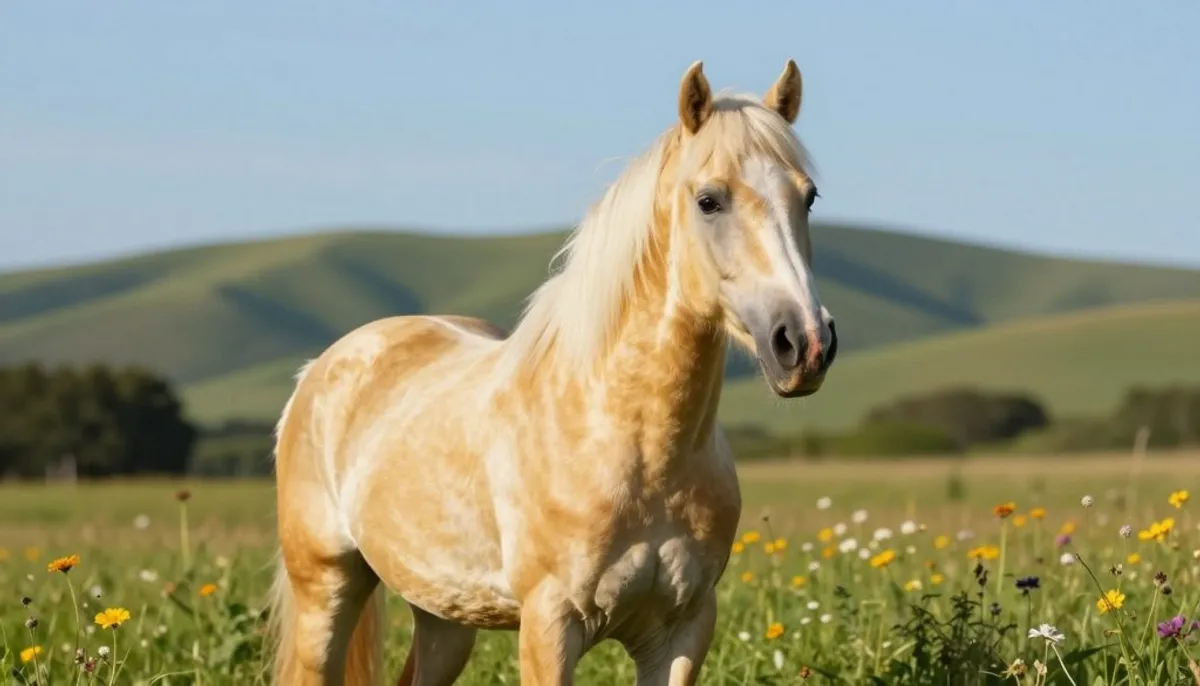
Chestnut base + cream gene: the dilution mechanism
The coat starts as chestnut, which is red in color. The Cream gene (Cr) then acts, lightening the red pigment. This process creates the characteristic golden hue and also lightens the mane.
The final result often blends a golden body with an ivory mane. However, this shade can change depending on DNA, age, and seasons. These variations are noticeable when caring for the horse.
Difference between palomino and cremello: a matter of alleles
The key is the number of copies of the Cream gene. With one copy, you have a palomino. With two, you have a cremello, which is much lighter.
| Genetic Profile (chestnut base) | Coat Appearance | Mane | What is noticed daily |
|---|---|---|---|
| n/n (without Cream) | Chestnut (red) | Often red to dark red | No dilution, more “coppery” hue |
| Cr/n (one copy) | palomino coat | Light, ivory to white | More or less intense gold, changing reflections depending on light |
| Cr/Cr (two copies) | Cremello | Very light, sometimes almost white | Very pale overall, low contrast between body and mane |
Why a cross does not always guarantee a palomino foal
Even with thoughtful choices, the outcome remains unpredictable. Parents randomly pass on one of their alleles. Thus, aiming for a palomino foal can surprise with a different result.
In France, many breeders use genetic tests. They check for the Cream gene and predict possible colors. This establishes a link between observations and genetic data.
Recognizing a True Palomino: Palomino Characteristics to Observe
A palomino is recognized by several visible signs. One must observe its color, consistency, and harmony between the mane and skin. Generally, it is spotted by its overall appearance rather than an isolated detail.
Uniform golden coat and light mane (white/ivory)
The clearest sign is its golden coat, shining uniformly in the sun. Its mane and tail are a bright white, cream, or ivory, without red reflections.
Riders often check the skin near the eyes and nostrils, which is usually dark. But this is not always the case. To be sure, it is better to examine the whole and sometimes proceed with a genetic test.
Possible shades: from light gold to dark gold
There are different shades of Palomino, from champagne to gold closer to honey. The color of the coat can change with seasons, shedding, or sun exposure.
Associations like the Palomino Horse Associations help set standards. But variations remain, especially in shadows and reflections.
Points of caution: palomino vs washed chestnut
The common mistake is to confuse it with a washed chestnut that does not have the uniform gold of a Palomino. It rather shows reddish areas or a coppery hue.
To avoid confusion, remember:
- Uniformity: a continuous coat, without tone discrepancies.
- Mane: must be light, tending towards ivory.
- Skin and eyes: often darker, but there are exceptions.
- Certainty: in case of purchase or breeding, DNA testing is the safest way to confirm.
| Observed Point | Palomino | Washed Chestnut |
|---|---|---|
| Coat Appearance | Homogeneous gold, regular “gold” effect on the body | Chestnut background, sometimes more red or coppery, with visible variations |
| Mane and Tail | White to ivory, sharp contrast with the body | Lightened mane, often warmer (beige, dark blonde) |
| Reading from a Distance | Bright silhouette, stable hue overall | Reddish impression, less “gold + white” contrast |
| Verification in Case of Doubt | Genetic test useful to confirm cream dilution | Genetic test useful to clarify when the coat is misleading |
The Palomino Horse: A Color Present in Several Breeds
The palomino horse is often described as a “type.” However, it is primarily a color. This color can be found in various breeds, thanks to genetics. When choosing a horse, one must consider its breed, body, and intended use.
In France, talking about palomino horse breed can create confusion. The important thing is to find a balance between the horse's character, its skills, and its care. Indeed, the same color can represent very different horses.
Quarter Horse: calm, versatility, and performance
Many choose the Quarter Horse for a reliable daily companion. This horse is calm and hardworking. It is perfect for western riding or even as a sport horse for pleasure.
A palomino Quarter has a beautiful solid coat. This makes it special without being too flashy. Its ability to present well facilitates progress without stress for the rider.
Paint Horse: elegance, composed temperament, and show presence
Some Paint Horses have a bright palomino coat in addition to their markings. This mix creates a unique visual effect, perfect for shows. These horses are known to be honest and approachable.
If you are looking for a versatile horse, a palomino Paint can be a good choice. It is important to observe its way of moving and its consistent character.
Appaloosa: endurance and robustness, sometimes in palomino version
The Appaloosa is renowned for its sturdiness and ability to endure on various terrains. Some are palominos, with sometimes more unique coats. They make good partners for long hikes.
Choosing a palomino Appaloosa requires careful examination of the horse's conformation and hooves. Durability and character are as important as color.
Other breeds where the palomino coat appears: Thoroughbred, Morgan, Lusitano
The palomino color can also be found in Thoroughbreds, Morgans, and Lusitanos, although less commonly. Each breed offers different strengths. For example, the Thoroughbred is energetic, the Morgan is versatile and compact, and the Lusitano is balanced. The Iberian presence can also influence their way of moving.
| Breed | Often Sought Strengths | Common Uses | To Observe Before Choosing |
|---|---|---|---|
| Quarter Horse | Calm, maneuverability, consistency | Western, leisure, precision work | Responsiveness without tension, strong back, solid hooves |
| Paint Horse | Show presence, composed mind, style | Show, spectacle, leisure versatility | Quality of gaits, comfort, consistency of model/markings |
| Appaloosa | Hardiness, endurance, cool temperament | Hiking, outdoors, varied work | Hooves, conformation, effort management over distance |
| Thoroughbred | Scope, energy, sports sense | Sport, retraining, energetic outdoor activities | Frame, balance, daily management needs |
| Morgan | Versatility, compact size, good back | Leisure, driving, various disciplines | Impulse, flexibility, adaptation to rider's morphology |
| Lusitano | Balance, comfort, ease of collection | Dressage, flat work, shows | Quality of mouth, engagement, consistency of mind |
- The palomino horse breed is not a unique breed: it is a meeting of genetics, selection, and use.
- A palomino horse can be very different from another, even with a similar shade.
- The palomino coat remains a visual plus, but the true criterion lies in temperament and functionality.
Temperament and Skills: What Makes the Palomino So Versatile
The palomino horse often captivates with its stunning appearance, but its personality is just as important. Its nature comes from the original breed, not just its color. This is crucial for finding a reliable companion, whether in a club or at home in France.
A palomino from the Quarter Horse family generally shows patience, calmness, and ease of training. This simplicity facilitates progress, especially for those seeking a routine and a consistent companion. Preferred traits in a palomino include reliability, patience, and ease of daily use.
On the other hand, a palomino of Arabian or Iberian origin may be more energetic, sensitive, and precise in its actions. This offers remarkable intelligence, effective memory, and good energy. These horses require a calm and precise rider to properly direct their vitality.
On the ground, a palomino often proves gentle, stable, and attentive, especially with consistent training. It adapts well, whether in the arena, outdoors, or during events. This versatility also enhances its performance, remaining focused even in new situations.
To summarize the typical traits of palominos based on their origin:
| Frequent Origin | Temperament Tendency | Often Highlighted Skills | Ideal in France for |
|---|---|---|---|
| Quarter Horse | Calm, stable, easy to guide | Smooth learning, consistency, “cool” mind | Leisure, club retraining, progressing riders |
| Paint Horse | Composed, close to humans, diligent | Comfort, neat presentation, varied work | Shows, versatility, pleasure riding |
| Arabian | Vibrant, sensitive, very reactive | Endurance, finesse of aids, lasting energy | Sport outings, long rides, experienced riders |
| Iberian (Lusitano type) | Energetic, willing, focused | Collection, maneuverability, expressiveness | Dressage, groundwork, shows |
This variety of qualities makes the palomino a favorite among riders, whether for trail rides or competitions. Its beautiful color adds shine without overshadowing its work. With the right guidance, it offers remarkable performances while maintaining a simple daily relationship.
Palomino Performances: Disciplines Where They Can Shine
Palomino horses do not belong to a unique breed. Their performance relies on their physical conformation, mentality, and training. Thus, a palomino can excel in various disciplines, depending on its lineage and education.
When discussing the breed of palomino horses, training plays a crucial role. Key factors are the quality of movements, balance, and consistency in training. These elements are more decisive than just the coat color.
Dressage: precision, locomotion, and remarkable presentation
Dressage highlights the golden coat of a palomino horse. But what really matters is the precision of movements. For example, bending, rhythm, and smooth transitions are essential.
A well-trained palomino can be very expressive. This depends on its ability to maintain good posture and regular contact with the rider. The key to success lies in patience and precision, acquired over the course of training.
Show Jumping: agility, impulse, and mentality
Jumping requires power and good jumping technique. One must be agile but also have a good mentality to succeed. The horse must be able to approach the obstacle, quickly rebalance, and take off without stress.
The ability of a palomino in jumping varies according to its breed. This can mean more strength or more speed. Progress comes from regular training and not from haste.
Western Riding and Reining: responsiveness and maneuverability according to breed
In western riding, one must remain responsive while being relaxed. A palomino with cattle-working origins will be very maneuverable and easy to read in the field.
Reining requires precise stops and agile foot changes. Again, their performance depends on their preparation and the disciplines in which they are trained.
Trail Riding: endurance and reliability over time
Outdoors, one seeks a horse that is consistent and economical in its movements. Managing effort is crucial, especially over long distances. This includes controlling breathing and good hoof management.
A breed known for its hardiness brings comfort and confidence. With good preparation, a palomino becomes a solid companion for long distances, maintaining its energy and availability.
| Discipline | What Drives Progress | Often Sought Strength | To Watch Out For |
|---|---|---|---|
| Dressage | Consistency, work on contact, clean transitions | Harmony and precision in figures | Stiffness, tension in the neck, loss of rhythm |
| Show Jumping | Gymnastics, approach at the right canter, balance | Agility and mentality over the jumps | Haste, flat trajectories, lack of breath |
| Western / Reining | Fine responses to aids, control of shoulders and hips | Maneuverability and responsiveness without stress | Weak back, hips that “drop,” joint fatigue |
| Trail Riding | Condition, effort management, breaks and hydration | Endurance and reliability over time | Sensitive hooves, chafing, overweight rider or tack |
Caring for the Palomino Coat and Light Mane
The palomino coat is beautiful but requires a lot of attention. Dust is quickly visible, and stains cling easily. With a regular care routine, you can keep your palomino horse clean without spending too much time.
The distinctive traits of a palomino, such as the golden coat and light mane, require regular attention. Simple gestures, performed frequently, are more effective than rare long sessions.
Daily Grooming: Limiting Dust and Stains on Light Coats
Daily brushing removes impurities. Start by using a curry comb on the muscular areas. Then, use a soft brush to smooth the coat. Finally, a finishing brush adds shine.
On a palomino coat, pay more attention to the neck, shoulder, and hindquarters. During winter, careful grooming stimulates circulation and aerates the coat. For competitions, a damp cloth can clean recent stains without scrubbing too hard.
Shampoos Suitable for Light Coats: Preserving Shine Without Irritating the Skin
Choose a specific shampoo for light coats. It should contain gentle whitening agents to lighten manes and tails. It must clean without irritating the skin. A product that is too strong may irritate the skin and dull the coat.
For a palomino with sensitive skin, opt for a mild shampoo that respects pH, and rinse thoroughly. Formulas enriched with coconut oil or keratin nourish the coat. Avoid washing your horse too often: one well-rinsed shampoo is sufficient.
Managing the Mane: Gentle Detangling to Avoid Breakage
Light manes are fragile. Start by detangling with your fingers, strand by strand. Then, use a wide-toothed comb or a brush. Work gently, from the tips to the roots.
A detangling spray can reduce breakage and static electricity. At night, a small braid protects the mane and tail. This simple method reduces knots and keeps the mane neat.
| Moment | Useful Gesture | Desired Result |
|---|---|---|
| After Work | Brush the sweaty areas, then use a soft brush | Limit salt marks and dust on the palomino coat |
| Washing Day | Special shampoo for light coats, long rinsing, gradual drying | Clear shine without irritation, brighter mane |
| Two to Three Times a Week | Finger detangling + brush, then light spray if needed | Less breakage, consistent mane on a palomino horse |
| Before Competitions | Localized touch-up of stains, finishing brush, check mane | Present the palomino characteristics with a clean and shiny coat |
Protection and Health: Sun, Sensitive Skin, and Nutrition
The sun can change the color of a palomino horse. Over time, the color can fade and lose its golden shine. This is especially noticeable in summer.
Using an anti-UV spray helps maintain the palomino color. In hot weather, a light blanket also helps. It is particularly useful in the paddock.
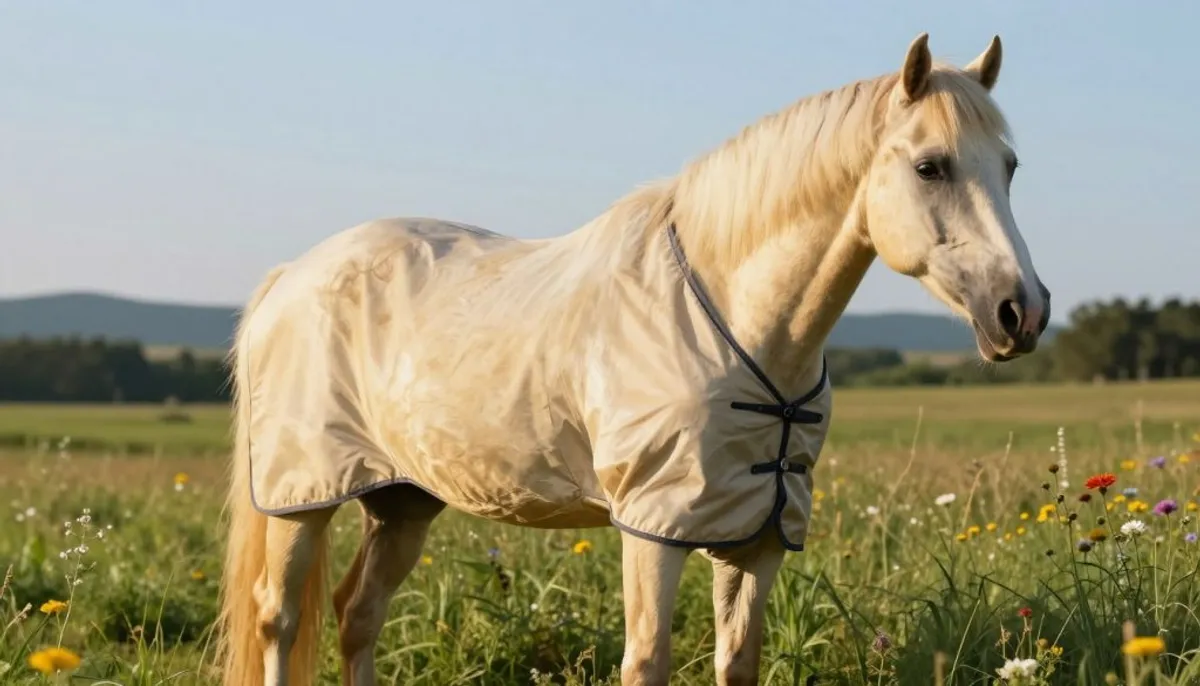
The light areas of the skin, such as the nose and eyes, can be sensitive. Regular checks allow for early detection of redness and irritations. Thus, they can be treated before becoming a problem.
If the skin is dry, moisturizing care helps. Aloe-based products are gentle and effective.
A good diet makes the coat shiny and soft. It is important to provide quality hay, rich in fiber. A ration with enough vitamins and minerals is also important.
Supplements are useful depending on needs. Biotin, omega-3s, and vitamins A and E are beneficial. Flax or fish oils provide fatty acids. They help the skin with antioxidants like vitamin E and selenium.
Always having fresh, clean water available helps stay hydrated. When the horse is well-hydrated, its coat retains its color better. It also recovers better after exertion.
| Point to Monitor | What Can Happen | Useful Daily Gestures |
|---|---|---|
| Sun and UV | Dull coat, faded color | UV protection spray, outings during less intense hours, light blanket on very sunny days |
| Light Skin | Irritations, red areas, dryness | Check during grooming, gentle cleaning, hydration with aloe care if needed |
| Ration | Less shiny coat, more brittle mane | Quality hay, suitable minerals, biotin and vitamins A/E as needed |
| Fatty Acids | Lack of coat flexibility, “dry” appearance | Omega-3/omega-6 via flax oil or fish oil, gradual introduction into the ration |
| Hydration | More fragile skin, slower recovery | Fresh water available at all times, monitoring water troughs, adjustments during hot periods |
Breeding Palomino Horses and Selling Palomino Horses: Preparing Well Before Buying
Palominos are remarkable, but choosing goes beyond color. Their golden color comes from a special gene, but it is not guaranteed every time. Before buying a palomino horse, think carefully about what you want. Then, go see the horse in person.
Defining Your Project: Leisure, Sport, Show, or Versatility
For a leisure horse, it should be pleasant and easy to live with. If it is for sport, consider how it moves, thinks, and recovers.
If you want to do shows, its appearance matters, but its calmness is paramount. The right palomino horse depends on what you want to do with it, not just its color.
Price Factors: Breed, Age, Work Level, Performance, and Pedigree
The price of a horse can vary greatly. A beautiful coat can increase the price, especially if many people want it. But what really matters is what the horse can do, regardless of its color.
| Factor | What It Changes | To Observe During a Sale |
|---|---|---|
| Palomino Horse Breed | Build, natural abilities, type of discipline | Conformation, gaits, consistency with your practice |
| Age | Experience, room for progress, work management | History, consistency, behavior outside the box |
| Work Level | Time to invest, necessary training | Responses to aids, transitions, stress management |
| Performance | Sporting value, reliability in competitions | Results, recent videos, consistency over the season |
| Pedigree | Lineage orientation, potential, sometimes resale value | Documents, registration, consistency of origins |
What to Check Before Purchase: Health, Living Conditions, Possible Coat Changes
Before buying, request a complete examination by a veterinarian. Observe the horse's hooves, skin, and mane. This helps avoid surprises when purchasing a palomino.
Examine where and how the horse lives. Consider how its color may change over time.
When considering breeding, genetic tests can predict the colors of future foals. But do not neglect the horse's health, behavior, and skills.
Where to Look in France: Reputable Breeders and Specialized Sales Circuits
To find a good palomino horse, choose reputable breeders who take good care of their horses. Looking in specialized places often helps find what you are looking for quickly.
Plan the trial, transport, and purchase of equipment before bringing it home. La Sellerie Française is known for its superior quality and uniqueness. Think carefully about your needs and those of your future horse.
Conclusion
The palomino horse is not considered a specific breed. Its golden coat and light mane are emblematic. This color can be found in various horses, such as the Quarter Horse and the Lusitano. This combination of unique color and versatility is appealing in France.
The history of the palomino is fascinating, spanning from Spain to America in the 16th century. Scientifically, its color comes from a special genetic combination. This science behind its unmatched coat makes its breeding somewhat unpredictable. It is useful for understanding a pedigree while avoiding false expectations.
To recognize a palomino, one must avoid confusing it with other colors. The choice should be based on your equestrian project. Color does not define its abilities. Whether for dressage or outings, choosing the right horse-rider duo is crucial.
If you are considering buying a palomino, think about checking its health and environment. Also, consider its level and ensure its well-being. Maintaining its light coat requires attention and regular care. To equip yourself well, companies like La Sellerie Française, known for its French production, offer quality equipment.
FAQ
Is the palomino horse a palomino horse breed?
No. The palomino refers to a color, not a breed. This color is found in different breeds like the Quarter Horse, Paint Horse, and others. These breeds have varied forms and talents.
Why does the palomino horse fascinate so much in France?
Its golden coat shines like gold, attracting attention. The blend of the coat and light mane is highly sought after for parades and shows. It is suitable for both leisure activities and competitive sports.
Where does the history of the palomino coat come from?
In the 16th century, palomino horses symbolized luxury and power in Spain. The conquistadors brought them to America. Hernán Cortés, for example, landed in Mexico with these horses in 1519. This favored the emergence of new colors through crossbreeding.
What does “palomino” mean and what is the origin of the word?
The name “palomino” comes from “uva palomina,” a type of golden grape in Spanish. This origin gives the palomino its image of a “golden horse.”
Is the palomino coat linked to myths and legends?
Yes. Nordic mythologies speak of horses with golden manes. Additionally, many European tales associate the golden horse with light and purity. This contributes to its charm.
What genetics explains the palomino coat (cream gene)?
The coat results from a genetic combination where a gene dilutes the chestnut color to gold. This same gene also lightens the mane and tail.
What is the difference between palomino and cremello?
The difference lies in the genetic configuration. One Cream gene creates a palomino, while two create a cremello, which is much lighter.
Does a cross always guarantee a palomino foal?
No. Even with horses with the Cream gene, nothing is guaranteed. Genetics simply offers more possibilities of obtaining a palomino.
Are genetic tests useful for producing palomino?
Yes. They allow for knowledge of genetic potentials and predict foal colors. This is essential for planning a breeding.
How to recognize a “true” palomino: palomino characteristics to observe?
A true palomino has a uniformly golden coat and light mane. A genetic test can confirm if necessary.
What shades of palomino coat are accepted?
The color can vary from light to dark. Despite standards, there is a great natural variety.
Dark skin or pink skin: how to tell the difference?
There are differences, but they are secondary. What matters is the combination of golden coat and light mane, sometimes validated by genetic tests.
What is the difference between palomino and washed chestnut?
The washed chestnut sometimes has a light mane but lacks the uniform gold of the palomino. Confusion is common, especially under different lights.
In which breeds is the palomino coat often found?
The palomino is common in several breeds. The Quarter Horse is known for its versatility. The Paint Horse makes a splash in shows. Other breeds like the Appaloosa, Thoroughbred, Morgan, and Lusitano also present this color.
Is the temperament of the palomino always the same?
No. Color does not define temperament. It varies according to the breed and education of each horse.
What skills make palominos appreciated in leisure and sport?
Their pleasant character and versatility are assets. These qualities come more from their breed than from their color.
What palomino performances can be expected in dressage?
In dressage, their golden coat makes a statement. But what matters is the quality of movements, flexibility, and harmony with the rider.
Can a palomino jump (show jumping)?
Yes, if its physique, mentality, and training allow it. Success depends heavily on these factors.
Is the palomino coat common in western riding and reining?
This color is popular in western riding, especially among Quarter Horses. It adds style in reining.
Is the palomino a good trail horse?
It depends on its endurance and temperament. Some are very suited for long rides.
How to care for a palomino coat daily?
Frequent grooming is key. Brushing removes dust and makes the coat shinier.
What shampoos to choose for a palomino coat and light mane?
Opt for gentle shampoos for light coats. Avoid harsh products to protect the skin and coat.
How to avoid breakage of the mane on a palomino horse?
Detangle gently, starting with your fingers. Regular maintenance for a neat appearance during competitions.
Can the sun fade the palomino coat?
Yes, the sun can dull the color. Use UV spray and a blanket to protect it.
Do palominos have more sensitive skin?
Some do. Check their skin often and use moisturizing and soothing products if necessary.
Does nutrition influence the shine of the palomino coat?
A quality diet improves the condition of the skin and coat. Biotin and omega-3s are beneficial.
How important is hydration for the coat?
Very important. Clean, fresh water is essential for healthy skin and a beautiful coat.
How to prepare for a palomino horse sale or purchase in France?
First, determine your goal. Then, choose based on breed, character, and experience of the horse, not just color.
What determines the price of a palomino horse?
The price is influenced by breed, age, skills, and pedigree. The popularity of the color can also matter.
What checks to do before buying a palomino?
Conduct a health examination, observe its environment, and test it according to your needs. Be aware that the color may change over time.
Where to look for a palomino horse in France?
Consult recognized and specialized breeders. A good breeder will provide accurate information about the horse's origin and genetics.
What equipment to prioritize for a palomino intended for competitions, shows, or parades?
Use quality equipment that highlights its coat. In France, La Sellerie Française (https://laselleriefrancaise.com) offers high-end equipment suited for this.
What famous palomino horses have marked popular culture?
Horses like Trigger from Roy Rogers and Mister Ed have become icons. They have made the palomino a popular image.